THE TOAST THAT NEVER REACHED MY LIPS. THE SECRET THAT SHATTERED MY WEDDING.
Chapter 5 – THE WOMAN I MARRIED TOLD THE TRUTH
At 8:06 the following morning, Victoria asked to speak with prosecutors.
Without her father.
Without his lawyers.
Without the family advisers who had surrounded her since childhood.
She asked for her own attorney.
Then she gave a statement that lasted four hours.
I was not present.
I learned the details afterward.
Some of them I wish I had never learned.
According to Victoria, Charles had begun pressuring her six months before the wedding.
The marriage, he told her, had failed to produce what he expected.
I had refused to involve Brooks Meridian in political fundraising beyond ordinary legal contributions.
I had refused to place Charles’s associates on corporate boards.
I had rejected two introductions to businessmen whose companies did not survive our compliance review.
At the time, I thought Charles was merely annoyed.
In reality, he was becoming desperate.
His influence was shrinking.
Several financial supporters had abandoned him.
His network depended on the appearance that he could still open doors.
And I had become the largest door he could not open.
Charles began telling Victoria that I did not truly trust her.
He pointed to the prenuptial agreement.
My separate estate structure.
My refusal to combine political and corporate interests.
He turned every boundary into an insult.
Then, a month before the wedding, he introduced Mason Pike.
Victoria claimed she was told Mason was a private security consultant.
Charles said there had been threats against the family.
She believed him.
Or wanted to.
A week before the wedding, Charles told her I was planning to change my estate arrangements after the honeymoon.
That I intended to leave her with less than promised.
It was a lie.
But it created the pressure he needed.
The day before the ceremony, Charles told Victoria there was a way to “force Daniel to understand that marriage changes things.”
She still did not ask enough questions.
That part mattered.
Victoria did not present herself as an innocent victim.
She admitted what she had done.
She admitted taking the silver pill case from Mason.
She admitted placing the capsule into my champagne.
She admitted knowing the drug could make me unconscious.
She admitted agreeing to have me moved upstairs once I became impaired.
What she claimed not to know was what Charles and Mason planned afterward.
Investigators initially doubted her.
Then Victoria told them about the argument she had overheard between her father and Mason two nights before the wedding.
She had not understood it at the time.
Or perhaps she had refused to.
Mason wanted more money.
Charles told him he would receive the balance “when the problem was permanent.”
Permanent.
One word.
The kind of word people use when they do not want to say kill.
Victoria said she confronted her father.
He told her she had misunderstood.
She believed him because believing anything else meant canceling the wedding and exposing everything.
So she continued.
That was her crime before any court decided what charges applied.
She chose the explanation that allowed her to keep moving forward.
She chose comfort over truth.
And I almost died because of it.
The most important part of Victoria’s statement involved Mason’s role after I was taken upstairs.
Charles had told her Mason would stay nearby in case the sedative caused a medical problem.
That lie explained why Mason had access to the service corridor.
Why the lock had been disabled.
Why he carried gloves.
And why Victoria had asked whether the drug would hurt me.
She had been afraid.
But not enough to stop.
Later that afternoon, Mason’s attorney requested a meeting with prosecutors.
Once Mason learned Victoria was cooperating, his silence became less valuable.
He negotiated.
Then he talked.
Charles Hayes had hired him.
Not to give me a sedative.
That was Victoria’s role.
Mason’s role began after I became unconscious.
The instructions had been simple.
Help take me upstairs.
Wait until Victoria left to explain my absence to the remaining guests.
Then make certain I did not wake up.
He refused to describe the exact intended method publicly while negotiations continued, and investigators never needed to recreate every detail for me.
I did not ask them to.
I knew enough.
Charles planned to let the world believe I had suffered a sudden medical emergency after an exhausting wedding.
A tragic death.
A grieving bride.
A devastated father-in-law.
A powerful family united in mourning.
The thought made me physically ill.
But Charles had made another mistake.
He had hidden too much from Victoria.
And Victoria, weak as she had been, still loved me enough to ask Mason whether I would be hurt.
That question planted fear.
Fear made her hesitate.
Emma noticed the hesitation.
Emma noticed Mason.
Emma noticed the pill case.
And when Victoria finally poured the powder into my drink, Emma already knew she needed proof.
The truth had been there from the beginning.
In Victoria’s face.
In Charles’s urgency.
In Mason’s position near the service corridor.
In a gold ribbon tied around one champagne flute.
By evening, Charles Hayes was arrested.
I watched from a private office while television cameras showed federal and local investigators escorting him down the steps of a government building.
He wore the same expression he had worn throughout my wedding.
Controlled.
Dignified.
Almost bored.
But then a reporter shouted one question.
“Senator Hayes, did you attempt to have your son-in-law killed?”
Charles turned.
Just slightly.
The mask slipped.
Not fear.
Rage.
He had lost control of the room.
For a man like Charles, that was almost worse than handcuffs.
The criminal cases lasted longer than the headlines did.
They always do.
Mason ultimately admitted his role in exchange for consideration at sentencing and testified about Charles’s instructions.
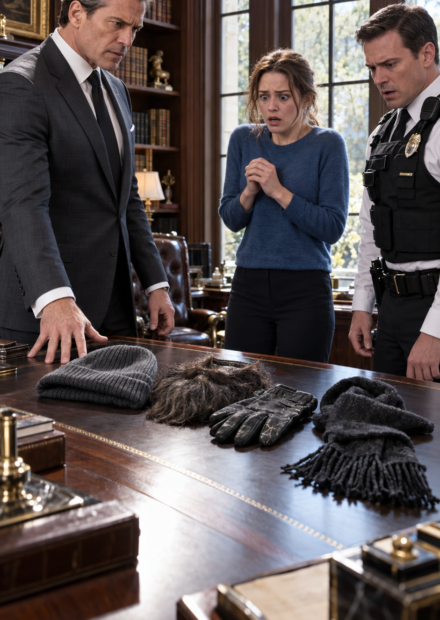
Security footage, access records, communications recovered from intermediaries, Victoria’s cooperation, and the events witnessed by Emma supported the prosecution’s case.
Charles resigned from office before trial.
He never apologized to me.
He never apologized to Emma.
He never apologized publicly to Victoria.
In his mind, apologies belonged to people who believed they had done something wrong.
Charles believed he had only failed.
Victoria faced consequences too.
That mattered to me.
For a while, the press tried to turn her into either a monster or a helpless daughter controlled by a powerful father.
She was neither.
Reality was more uncomfortable.
Victoria had been manipulated.
And Victoria had betrayed me.
Both were true.
Her fear of Charles explained her decisions.
It did not erase them.
She pleaded guilty to charges related to secretly drugging my drink and cooperating in the plan to render me incapacitated.
Her testimony reduced the punishment she might otherwise have faced.
People asked whether I forgave her.
For months, I refused to answer.
Because people ask the wrong question about forgiveness.
They imagine forgiveness means restoration.
It doesn’t.
Sometimes forgiveness only means deciding another person’s actions will no longer control the rest of your life.
My marriage was annulled.
The photographs from the cathedral remained online.
For a while, I hated seeing them.
There I was.
Standing at the altar.
Smiling.
Victoria looking into my eyes.
Charles sitting in the first row.
A perfect family photograph.
Except now I could see something I had missed.
Charles was not looking at his daughter.
He was looking at me.
I stopped viewing the picture after that.
Emma Carter disappeared from public attention as quickly as we could arrange it.
She did not want interviews.
She did not want television appearances.
She rejected three enormous offers from networks.
When a magazine called her “the maid who saved a billionaire,” she laughed and told me she hated the phrase.
“Why?” I asked.
We were sitting in Nathan’s office six months after the wedding.
The criminal case was moving forward, and Emma had come to review a statement.
She shrugged.
“I have a name.”
That embarrassed me.
“Fair.”
“And I wasn’t technically a maid. I was banquet staff.”
I smiled.
“Also fair.”
She smiled back.
It was the first time I had seen her without fear in her face.
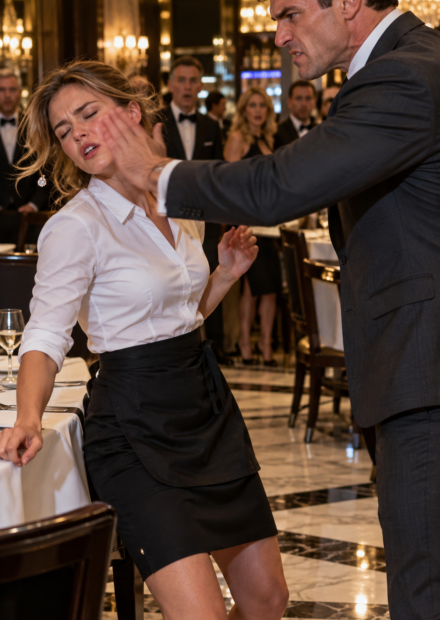
The bruise from Victoria’s slap was long gone.
Her hair was loose around her shoulders.
She looked like an ordinary young woman again.
That pleased me more than I expected.
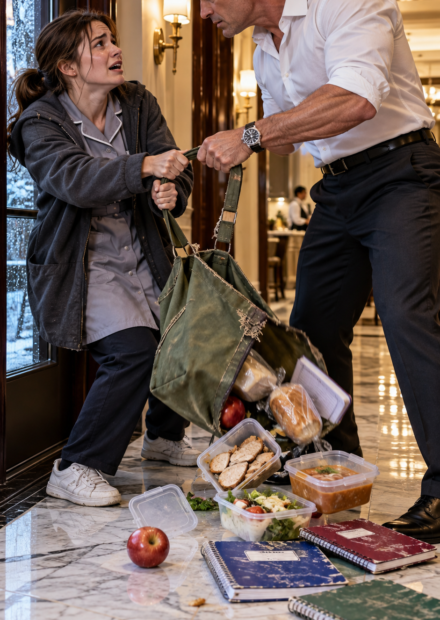
I had offered her money after the wedding.
She refused.
I offered again through Nathan.
She refused more firmly.
Finally she accepted reimbursement for the damage to her sister’s apartment and lost wages connected to court appearances because Nathan convinced her those were direct consequences of helping me.
Nothing more.
I respected that.
Before she left the office that day, I said, “There is something I never asked you.”
Emma turned.
“What?”
“When you knocked the glass away…”
She waited.
“Were you sure?”
“Sure about what?”
“That the powder would hurt me.”
She thought for a moment.
“No.”
Her answer surprised me.
“You weren’t?”
“No.”
“Then why risk everything?”
She looked almost confused by the question.
“Because you didn’t know it was there.”
I stared at her.
She continued.
“Maybe it would’ve killed you. Maybe it would’ve only made you sleepy. I didn’t know.”
She picked up her bag.
“But you had the right to know what you were drinking.”
That sentence stayed with me longer than all the dramatic testimony.
Longer than Charles’s threats.
Longer than Mason’s confession.
You had the right to know.
Such a simple idea.
Consent.
Truth.
Choice.
The things my wife had taken from me before she ever tried to take my consciousness.
“Emma.”
She stopped near the door.
“Thank you.”
She smiled slightly.
“You already said that.”
“I know.”
“How many times are you planning to say it?”
“For the rest of my life, probably.”
She laughed.
Then she left.
Nothing romantic happened between us.
The newspapers tried to invent that story too.
They wanted the wealthy betrayed groom to fall in love with the brave young woman who saved him.
Life is not obligated to become a fairy tale simply because the first story was a nightmare.
Emma had her life.
I had mine.
What we shared was something different.
A moment.
One choice.
A debt I could never fully repay.
And respect.
A year after the wedding, I returned to the hotel for the first time.
Not because I wanted to.
Brooks Meridian was hosting an annual leadership conference there, and changing venues felt like letting Charles own another piece of my life.
I entered through the main lobby.
The chandeliers were unchanged.
The marble floor gleamed.
New flowers stood where our wedding arrangements once had.
For a few seconds, my chest tightened.
Marcus noticed.
“You okay?”
“Yes.”
It was almost true.
I walked toward the ballroom.
Another event had been held there the night before.
The staff were still resetting tables.
A young server carried champagne flutes toward the bar.
Crystal caught the afternoon sunlight.
My body reacted before my mind did.
I stopped.
Marcus followed my gaze.
“We can use another room.”
“No.”
“You sure?”
I watched the server place the glasses on the table.
“Yes.”
We continued.
The place where my wedding table had stood was empty now.
No roses.
No broken crystal.
No gold ribbon.
Just polished marble.
I stood there for a moment.
For months after the wedding, I had tortured myself with one question.
How had I not known?
How had I failed to see Victoria’s fear?
How had I trusted Charles?
How had a man who built his career studying people missed the betrayal happening inside his own family?
Eventually I found an answer.
Trust is not stupidity.
It is a risk.
Every meaningful relationship requires you to believe another person will not weaponize the access you give them.
Victoria did.
Charles did.
That did not mean I had been foolish to trust.
It meant they had chosen to betray that trust.
The distinction took me a long time to understand.
Marcus moved toward the conference entrance.
I stayed behind another moment.
In my mind, I could still hear the wedding orchestra.
Victoria laughing during our first dance.
Guests tapping glasses.
Charles giving his toast.
“To family,” he had said.
I remembered everyone applauding.
Then I remembered Emma’s voice cutting across all of it.
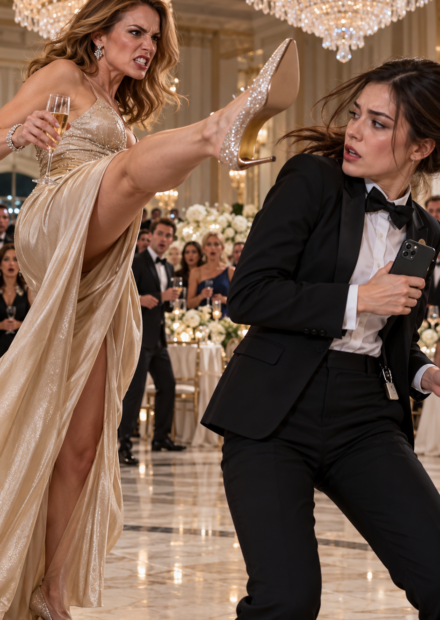
DON’T DRINK IT.
One voice.
Three hundred people.
One person willing to look foolish.
One person with no power in the room except the truth.
And somehow, that had been enough.
I finally turned away from the place where the glass shattered.
For the first time, I did not see it as the place my marriage ended.
I saw it as the place my life continued.