THERE WAS NO ROOM FOR ME IN MY OWN BEACH HOUSE—THEN I LEARNED WHAT MY SON HAD SIGNED MONTHS EARLIER
Chapter 1 – THERE’S REALLY NO ROOM FOR HER
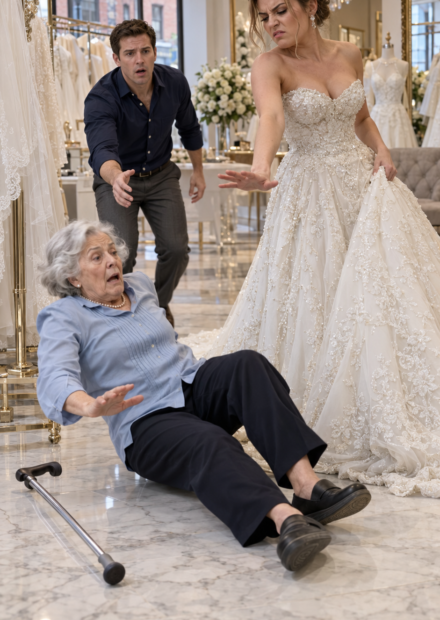
I heard my daughter-in-law say, “There’s really no room for her,” while I was standing six feet away in the doorway of my own beach cottage.
For a second, I honestly thought I had misunderstood.
At seventy years old, I had learned that hearing changes. Sometimes a word disappears under the hum of an air conditioner or the crash of waves outside an open window. Sometimes you hear what you expect rather than what someone actually says.
But Megan was facing me.
She saw me.
And she repeated herself.
“Well,” she said, glancing around the packed living room, “there really isn’t.”
Nobody laughed.
That was how I knew she meant it.
I stood there holding my overnight bag with one hand and the handle of my rolling suitcase with the other, staring into a house so crowded that for a moment it did not look like mine.
There were shoes everywhere.
Sandals under the console table.
Sneakers kicked beside the staircase.
Children’s water shoes abandoned on the rug Henry and I had bought twenty-seven years earlier from a little shop in town.
Two coolers blocked part of the hallway.
Beach towels hung over the backs of dining chairs.
Someone had moved the blue armchair from the sunroom into the living room to make space for an inflatable mattress.
Music played from a portable speaker balanced partly on top of a framed photograph.
Our wedding photograph.
Henry and me.
I could only see half of his face.
I did not know the young woman sitting cross-legged on the floor.
I did not know the man carrying paper plates toward the kitchen.
I recognized Megan’s sister, her parents, and two of Robert’s college friends.
There were children everywhere.
Seven, I would later learn.
At that moment, they seemed like twenty.
One little boy ran past me wearing only swim trunks and shouted, “Mom! Liam took my goggles!”
A woman I barely recognized called after him.
Someone else laughed.
A baby cried upstairs.
The sliding doors were open, letting humid salt air into the room.
And standing at my kitchen counter was a young man drinking coffee from Henry’s chipped navy mug.
That mug stopped me more completely than Megan’s sentence.
Henry had used it every morning for almost thirty years.
The handle had a thin white crack near the bottom.
The glaze was worn around the rim.
There were twelve nicer mugs in the cabinet.
I kept Henry’s because when I wrapped both hands around it, I could still picture him standing barefoot in the kitchen at six in the morning, complaining that coffee should be illegal before sunrise while making himself another cup.
The young man noticed me staring.
He immediately looked embarrassed.
“Oh, I’m sorry,” he said. “Is this yours?”
Before I could answer, Megan laughed lightly.
“Everything here is basically family stuff.”
Basically.
Family stuff.
I looked from the mug to her.
Then I looked at my son.
Robert stood on the other side of the island holding a bottle of sparkling water.
He was forty-six years old.
My only child.
His father’s height.
My eyes.
Henry’s habit of rubbing the side of his jaw when he knew a conversation was going somewhere unpleasant.
He was doing it then.
“Mom,” he said.
Not hello.
Not what are you doing here?
Not I’m sorry.
Just Mom.
I put my suitcase down.
“I came home early.”
“I can see that.”
My heart gave a small, painful squeeze.
“I finished with Elaine sooner than expected.”
My sister Elaine lived two hours inland. I had gone to stay with her for four days after a minor procedure because she hated recovering alone.
The plan had been to return to the cottage Sunday morning.
It was Saturday afternoon.
One day.
I had come home one day early.
And apparently that was enough to make me an unexpected guest in my own house.
Robert looked toward Megan.
Then back at me.
“You were supposed to come tomorrow.”
There was no apology in his voice.
That was the part I noticed.
He sounded inconvenienced.
As though I had arrived early for a hotel reservation.
As though the problem was scheduling.
Not the twenty-one people filling a house they had never asked to use.
I looked around again.
“How many people are here?”
Nobody answered immediately.
Megan busied herself moving something on the counter.
Robert finally said, “It’s just family and friends.”
“That isn’t a number.”
He sighed.
That sigh.
I knew it too well.
It meant I was making something harder than it needed to be.
“Fourteen adults,” he said.
“And?”
“Seven kids.”
Twenty-one.
Twenty-one guests.
Plus Robert and Megan.
Plus their two teenagers.
Twenty-five people if you counted everyone who had arrived for the weekend.
In a cottage designed for eight.
I looked toward the stairs.
“Where is everyone sleeping?”
Megan answered this time.
“We worked it out.”
“How?”
“There are people in the bedrooms. The kids are doubling up. A few are on air mattresses.”
“Which bedrooms?”
She blinked.
“All of them.”
“All?”
“Yes.”
I looked at Robert.
“What about my room?”
Silence.
Megan crossed her arms.
“That’s why I said there’s really no room.”
Something inside me became very quiet.
Not angry.
Not yet.
Quiet.
For most of my life, anger had taken time to reach me.
First came explanation.
Maybe they misunderstood.
Maybe there was an emergency.
Maybe I had forgotten agreeing to something.
Maybe Robert thought I would not mind.
Maybe Megan had assumed he asked me.
Maybe.
Maybe.
Maybe.
Women of my generation became very good at maybe.
It kept dinner peaceful.
It kept marriages running.
It kept holidays pleasant.
It kept other people comfortable.
I looked toward the staircase.
“Where are my things?”
Robert frowned.
“What things?”
“The things in my bedroom.”
“Oh.”
That one word told me everything.
“They’re still there,” he said.
Megan added quickly, “We didn’t touch anything personal.”
“Someone is sleeping in the room.”
“Yes, but—”
“On my bed.”
“They put their suitcase by the dresser.”
I stared at her.
She seemed genuinely confused about why that mattered.
I stepped around a stack of beach bags and walked farther into the room.
A wet towel was hanging over the patchwork quilt on the back of the sofa.
My quilt.
I had sewn it the first winter after Henry retired.
Blue and cream squares, each cut from shirts, curtains, fabric scraps, and old pillowcases I could not bring myself to throw away.
A beach towel soaked through one corner.
I lifted it.
Water had already darkened the fabric beneath.
“Who put this here?”
A woman near the sliding door raised a nervous hand.
“I’m sorry. I didn’t realize.”
“That’s all right.”
And I meant it.
She did not know.
That distinction would matter greatly before the afternoon ended.
I carried the towel into the laundry room and dropped it into the sink.
On the way back, I saw three suitcases stacked beside Henry’s restored sea chest.
He had found that chest half-rotted in an estate sale when we were in our thirties.
He spent an entire winter stripping it down, repairing the hinges, replacing rotten cedar inside, and preserving every scratch he said belonged to someone else’s story.
Now a pink hard-shell suitcase leaned against it.
I moved the suitcase gently away.
Then I looked at the Bluetooth speaker.
Still sitting on our wedding photograph.
I picked up the speaker.
A man on the sofa immediately said, “Sorry, ma’am. That’s mine.”
I handed it to him.
Then I lifted the frame.
Henry and I came fully into view.
He was twenty-nine in that photograph.
I was twenty-six.
We looked absurdly young.
He was laughing because the photographer had told him not to move and Henry had whispered something inappropriate into my ear.
I touched the corner of the frame.
Robert saw me.
His expression changed slightly.
But when I looked at him, his face closed again.
“Mom,” he said. “Don’t do this.”
There it was.
If Megan’s comment had shocked me, those three words wounded me.
Don’t do this.
For years, that sentence had meant the same thing in our family.
Don’t point out that Megan spoke sharply.
Don’t mention that Robert forgot your birthday dinner.
Don’t ask why you were told about the school concert after everyone else had tickets.
Don’t bring up the loan.
Don’t talk about the beach cottage.
Don’t make someone else uncomfortable just because you are hurt.
Stop noticing.
Stop naming.
Stop requiring an answer.
“Do what?” I asked.
He gestured around us.
“Turn this into something.”
I almost smiled.
“Robert, there are twenty-one people I did not invite sleeping in my house.”
“Most are leaving tomorrow.”
“That is not an answer.”
“You weren’t supposed to be here.”
Again.
As if my early return were the violation.
“Whose house is this?”
His face tightened.
“You know what I mean.”
“No, I don’t think I do.”
Megan stepped in.
“Can we please not do this in front of everybody?”
I looked around.
People had become very quiet.
A woman was folding a child’s sweatshirt.
One of Robert’s friends stared at the floor.
Megan’s sister had gone red.
The young man with Henry’s mug had put it down untouched.
Good.
Let it be uncomfortable.
Maybe discomfort had been missing for too long.
I turned back to Robert.
“How did you get in?”
He stared at me.
“You’re serious?”
“Very.”
“We used the code.”
“What code?”
“The lockbox.”
Of course.
The lockbox.
After Henry died, I had installed a small coded key box near the side entrance.
Robert had the code.
So did my neighbor June.
So did the woman who watered my plants if I was away.
The purpose was emergencies and approved visits.
A pipe burst once while I was inland.
Robert had driven over.
Another time he arrived before me at Thanksgiving and used it.
It was not a standing invitation.
It was certainly not a reservation system.
“You used the emergency lockbox.”
“We’ve used it before.”
“With permission.”
He rubbed his jaw.
“You’ve never cared.”
“I have never cared when you came after telling me.”
Megan gave a little shrug.
“We thought you knew.”
“Who told me?”
Neither answered.
“Did one of you call me?”
No answer.
“Text?”
Silence.
“Email?”
Robert’s jaw hardened.
“Mom, we planned this weeks ago.”
That sentence was almost worse.
Weeks.
Not spontaneous.
Not an impulsive decision after someone’s rental fell through.
Not an emergency.
A planned weekend.
“Who planned it?”
“Megan and I.”
“Together?”
“Yes.”
“You invited fourteen adults and seven children into my house together.”
His expression shifted toward impatience.
“It’s a family weekend.”
I looked at the strangers.
“Some of these people are not family.”
“They’re close friends.”
“To you.”
“Yes.”
“Not to me.”
Megan spoke before Robert could.
“Why are you making it sound sinister?”
“I’m not making it sound like anything.”
“You’re acting like we broke in.”
“You used a key code to enter without asking.”
Robert exhaled loudly.
“Mom.”
I held up my hand.
“No. I want a direct answer.”
He stopped.
“What did you tell everyone?”
His eyes narrowed.
“About what?”
“The house.”
Megan answered too quickly.
“We called it the family beach house.”
Family beach house.
The words landed with surprising weight.
I looked at her.
“It is my beach house.”
Her face stiffened.
“Obviously.”
“No.”
The room was completely quiet now.
“Not obviously.”
I spoke slowly.
“This is my beach house. Family is invited.”
Megan’s cheeks reddened.
Robert muttered, “Nobody is saying it isn’t yours.”
But three weeks earlier, I had heard something that suggested otherwise.
I had not told them.
Not Robert.
Not Megan.
Not anyone except my attorney.
It had happened after dinner at my house inland.
Robert and Megan had come over with the kids.
We had grilled chicken.
Megan brought a salad.
Robert fixed a loose hinge on one of my cabinets.
It had been pleasant.
Normal.
Afterward, they stayed in the kitchen while I stepped outside to bring in a tray I had left on the patio.
The window above the sink was open.
I heard Megan speaking.
“When it’s ours,” she said, “the first thing going is that ugly little sunroom.”
I stopped.
Robert said something too quietly for me to hear.
Megan laughed.
“I’m serious. It makes the whole back side of the house look dated. We could open the wall, extend the kitchen, maybe add glass doors.”
I stood outside holding the tray.
When it’s ours.
Not if.
Not someday if your mother still wants you to have it.
When.
I had remained outside until they changed the subject.
Then I carried the tray in and said nothing.
But the following morning, I called my attorney.
Daniel Mercer had handled our wills for fifteen years.
Henry liked him.
That mattered to me.
Daniel did not dramatize things.
He listened.
Asked careful questions.
Then said, “What do you want?”
I told him I did not know yet.
For years, our estate plan had been simple.
Robert was our only son.
After Henry died, nearly everything came to me.
After my death, Robert would receive most of what remained.
The cottage was specifically meant to pass to him.
Henry and I had arranged it that way because Robert loved the place.
As a child, he spent every summer there.
He learned to swim off that beach.
He proposed to Megan on the dunes two streets away.
His children had learned to build sandcastles behind the cottage.
It seemed natural.
Then Robert’s questions changed.
At first, I did not notice.
“How old is the roof now?”
“Do you know what insurance runs on coastal properties?”
“Are taxes getting bad?”
“Have you checked what houses around there sell for?”
All reasonable questions individually.
Together, they formed a pattern.
Megan started talking about rental income.
She mentioned how much people paid for summer weeks.
She talked about renovations.
She said once, “Eventually it’ll make sense to modernize the place.”
Eventually.
Another dangerous little word.
So I changed my estate plan.
Not out of anger.
Not to punish Robert.
I still loved him.
Still planned to provide for him.
But the cottage would no longer automatically pass to him.
Instead, my executor would sell it after my death unless I later gave written instructions changing that decision.
A portion would fund education trusts for my grandchildren.
A portion would establish a vocational scholarship in Henry’s name.
Robert would receive a meaningful share of the remaining estate through a trust.
He would not automatically receive the deed.
Daniel had also prepared something else.
A formal revocation of Robert’s unrestricted access to the cottage.
I had not signed it.
I kept finding reasons to wait.
Maybe Megan’s comment was careless.
Maybe Robert’s questions were practical.
Maybe I was overreacting because widowhood had made me protective of the last place that still felt full of Henry.
Maybe.
There was that word again.
I had not signed.
Until now.
I looked around the crowded cottage.
Megan had just told me there was no room for me.
Someone had slept in my bed.
Robert had used my emergency code to host twenty-one guests.
They had called my home the family beach house.
The maybe disappeared.
I reached into my purse.
Robert watched me take out my phone.
“What are you doing?”
I scrolled to Daniel’s number.
Megan gave a nervous little laugh.
“Are you calling a hotel?”
I looked directly at her.
“No.”
Daniel answered on the fourth ring.
“Eleanor?”
“Yes.”
“What’s wrong?”
“Do you remember the letter we discussed?”
There was a pause.
“Yes.”
“Send it.”
Robert’s face lost its color.
I had never told him about Daniel’s draft.
That reaction told me he knew exactly which subject I meant anyway.
“Are you sure?” Daniel asked.
I looked at my son.
“Yes.”
“Where are you?”
“At the cottage.”
“Is Robert there?”
“Yes.”
“Anyone else?”
“Twenty-one guests he and Megan invited without asking me.”
Daniel went silent.
Then his tone changed.
Professional.
Precise.
“Does Robert live there?”
“No.”
“Is this his primary residence?”
“No.”
“Does he receive mail there?”
“No.”
“Do you have any written agreement giving him continuing authority to use the property without permission?”
“No.”
“Did you authorize this gathering?”
“No.”
“All right.”
I heard keys clicking.
“Eleanor, listen carefully. Do not touch anyone’s property. Do not remove belongings. Do not physically force anyone out. Clearly state that permission to remain in the house is revoked and give people a reasonable opportunity to leave. Most of these guests may honestly believe they were invited by someone with authority.”
I looked around.
Several faces turned away.
He was right.
“This is about Robert,” I said.
“And Megan,” Daniel replied. “Not unsuspecting guests.”
“What if someone refuses?”
“Call me again. If necessary, local authorities can explain the situation. But do not escalate unless you need to.”
“All right.”
“And Eleanor?”
“Yes?”
“I’m sending the written notice to Robert electronically now. The signed hard copy can be completed when we meet.”
I breathed in.
“Thank you.”
I ended the call.
Every person in the room was looking at me.
I put my phone down on the kitchen counter.
“This gathering was not authorized by the owner of this house.”
Nobody moved.
“I understand that most of you probably believed Robert and Megan had permission. I am not accusing any of you of knowingly doing anything wrong.”
Megan’s sister covered her mouth.
I continued.
“But you do need to leave.”
A little boy started crying because his mother suddenly began gathering toys.
Someone upstairs called, “What’s happening?”
Megan whispered, “Eleanor.”
I looked at her.
She stared at me as if I had betrayed some unspoken agreement.
Her father stepped forward.
“Wait.”
He was a decent man named Thomas.
Quiet.
Retired electrician.
We had always gotten along.
“Eleanor, Robert said this place was staying in the family.”
“It may.”
He frowned.
“He said it would eventually be theirs.”
Robert turned sharply.
“Dad—”
Thomas lifted one hand.
“I’m not trying to cause trouble.”
Then he looked at me.
“I’m telling you what I understood.”
I nodded.
“Thank you.”
Megan’s mother looked horrified.
“We thought you knew about this weekend.”
“I believe you.”
“We never would have—”
“I believe you.”
That mattered.
I wanted everyone to understand the boundary without turning the innocent into collateral damage.
Megan, however, was staring at me.
Not ashamed.
Not apologetic.
Calculating.
“It may?” she said.
“What?”
“You said the cottage may stay in the family.”
“Yes.”
“What does that mean?”
There it was.
The question.
Not Are you hurt?
Not Can we fix this?
Not Did we misunderstand?
“What did you do?”
Her voice was quiet now.
Her expression had changed.
I looked at Robert.
He suddenly looked worried.
I looked back at Megan.
And three weeks after overhearing her discuss the destruction of my sunroom, I finally answered.
“I changed my estate plan.”
The room went still.
Robert stared at me.
“What?”
“The cottage no longer automatically passes to you.”
He looked as though I had struck him.
“You changed the will?”
“Yes.”
“Without telling me?”
I almost laughed.
Instead I asked, “Whose estate?”
Nobody said anything.
Robert’s face went red.
Megan gripped the back of a kitchen chair.
And for the first time that afternoon, the people packing bags around us were no longer the biggest problem in the room.