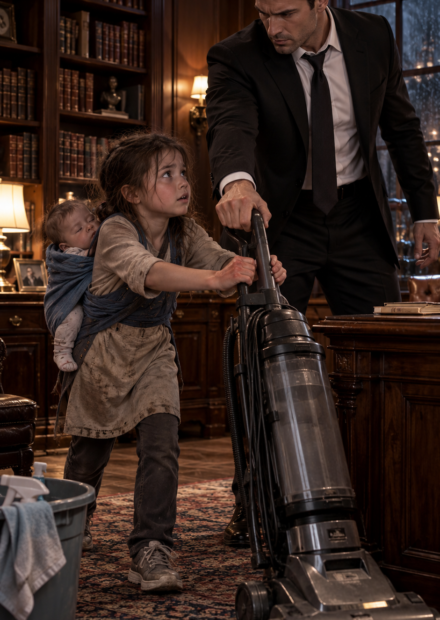
Chapter 1 – SIXTY DISHES OR GET OUT
“Listen to me very carefully.”
Julian’s fingers were still tangled in my hair when he said it.
He had grabbed me by the back of the head in the dining room and dragged me through the doorway into the kitchen because I had made the mistake of laughing when his mother announced what she expected for her sixtieth birthday.
Not a cake.
Not dinner.
Sixty dishes.
A “heritage jubilee feast,” Fiona called it.
Sixty separate dishes prepared by me before noon the next day.
I had thought she was joking.
That was why I laughed.
Julian did not.
He released my hair only after shoving me far enough into the kitchen that my hip hit the marble island.
Then he pointed a trembling finger inches from my face.
“Tomorrow is my mother’s sixtieth birthday. You will cook a heritage feast of sixty distinct dishes.”
My scalp burned where he had pulled it.
I said nothing.
His face was flushed.
“If you are missing a single one, pack your bags and get out of my house.”
My house.
Those two words almost made me laugh again.
For five years, the $3,500 mortgage payment had come out of my checking account.
Not sometimes.
Every month.
I also paid the property taxes, most of the utilities, the groceries, our insurance premiums, and so many of Fiona’s “temporary” expenses that I had stopped counting them individually.
Julian’s income came and went.
He called himself a strategic consultant.
Some months he earned well.
Other months he said clients were slow.
Whatever he earned, however, always seemed to be reserved for investments, networking, business dinners, and things he insisted would “position us better later.”
Later had lasted five years.
My money paid for now.
Still, Julian stood inside the kitchen I had paid to renovate and told me to leave his house.
Behind him, Fiona watched from the dining room.
She wore a cream silk robe trimmed with dark feathers and held a glass of champagne in one hand.
Her expression was not shocked.
That mattered.
She had watched her son grab my hair.
Watched him pull me across the room.
Watched me stumble.
And she looked pleased.
“Julian,” she said lightly, “don’t upset her too much. She has a lot of cooking to do.”
He smiled at her.
That smile hurt almost as much as his grip had.
I looked from him to Fiona.
“You cannot honestly expect one person to cook sixty dishes overnight.”
Fiona took a slow sip.
“My mother did fifty for my aunt’s jubilee.”
“Over several days, probably.”
“She didn’t complain.”
“I have a job.”
“So did she.”
“What was her job?”
Fiona’s mouth tightened.
“That isn’t the point.”
It never was.
Facts were rarely the point in Julian’s family.
The point was hierarchy.
Fiona wanted something.
Julian wanted Fiona pleased.
Therefore Sloan—the wife with the paycheck, the mortgage, the groceries, and apparently the servant’s apron—was expected to make reality bend.
I looked at Julian.
“You know this is impossible.”
“It isn’t impossible.”
“Name sixty dishes.”
His face changed.
He had not expected that.
Fiona immediately stepped in.
“I already made the menu.”
Of course she had.
She walked to the dining table and lifted a leather folder.
She had printed the list.
Printed it.
Pages.
There were roasts.
Stuffed vegetables.
Savory pastries.
Three soups.
Five salads.
Braised meats.
Rice dishes.
Fish.
Breads.
Dumplings.
Desserts.
Pickled vegetables that normally took days.
A layered cake that required chilling between steps.
Several recipes I had never made in my life.
I stared at the pages.
“You expect this by noon?”
“I expect you to respect my family.”
“This has nothing to do with respect.”
Fiona smiled.
“It has everything to do with respect.”
Julian took the folder from her and shoved it against my chest.
“Start.”
I looked at him.
He lowered his voice.
“You’ve been making Mom feel unwelcome for months.”
My mouth fell open.
“She has lived here for three years.”
“Exactly.”
“That is not what unwelcome means.”
“You know what I mean.”
No.
I knew what he wanted me to pretend he meant.
Fiona had originally moved into our guest room because the plumbing in her apartment building required major repairs.
That was supposed to last six weeks.
After six weeks, she said her unit smelled damp.
After three months, she said she was considering selling.
After six months, she stopped talking about leaving.
By the end of the first year, she referred to the guest room as “my suite.”
By the second year, she had taken over the second bedroom’s closet.
By the third, she had opinions about which contractor should redo “our terrace.”
My protests were always recast as hostility toward his mother.
If I asked why she charged salon appointments to my card, I was humiliating her.
If I suggested she contribute to groceries, I was obsessed with money.
If I objected when she invited guests over without warning me, I was antisocial.
If I wanted a weekend alone with my husband, I was trying to separate mother and son.
And Julian always found the same position.
Between us.
Except “between us” meant facing me.
I looked at the printed menu again.
“This is not happening.”
Julian’s jaw tightened.
“What did you say?”
“I said no.”
Fiona made a small sound of disbelief.
It might have been the first clean no I had given either of them in years.
The effect was immediate.
Julian stepped forward.
I stepped back.
His hand lifted.
Not to strike me.
He pointed toward the stove.
“Cook.”
“No.”
“Sloan.”
“No.”
“You’re embarrassing yourself.”
“I’m standing in my kitchen telling two adults that I am not cooking sixty dishes overnight.”
Fiona laughed.
“Your kitchen?”
I turned toward her.
“Yes.”
“Julian.”
She said his name as though I had insulted him.
He moved faster than I expected.
One second he was beside the island.
The next his fist had closed in the hair near the back of my neck.
Pain shot across my scalp.
“Julian!”
“Stop fighting me!”
He pulled.
I grabbed his wrist.
He dragged me two steps toward the stove.
“Let go!”
“Cook it or get out!”
My shoulder struck the cabinet.
Fiona did not move.
“Julian,” I said.
My voice sounded strange.
Too calm.
He released me abruptly.
For a second, I thought he had realized what he had done.
Then he walked past me.
The heavy oak kitchen door swung shut.
He stood on the other side.
“Think about your choices.”
The deadbolt slid.
Metal against metal.
Click.
I stared at the door.
It took several seconds for my brain to process the sound.
He had locked me in.
The kitchen had another door leading to a service hallway, but Julian knew the building manager had disabled it temporarily because the frame was being replaced.
The windows did not open.
Thirty-one floors above Chicago, I was effectively trapped.
“Julian!”
His voice came through the door.
“Start cooking.”
“Open the door.”
“Tomorrow morning.”
My chest tightened.
“You cannot lock me in here.”
“Then maybe you’ll stop acting like everything is negotiable.”
Fiona said something I could not hear.
They laughed.
Then their footsteps moved away.
I stood motionless.
The kitchen lights were off except for a small strip beneath the upper cabinets.
Cold winter darkness pressed against the windows.
The condo’s heating system always ran cooler in the kitchen because of the glass exterior wall.
I should have screamed.
I should have pounded the door.
I should have called building security immediately.
Instead I lowered myself onto the tile floor.
My back rested against the island.
My scalp throbbed.
My hip hurt.
The leather menu folder lay near my feet.
Sixty dishes.
For a moment, I thought about the absurdity.
Five years earlier, when I married Julian, I had thought his devotion to Fiona was sweet.
His father had died when Julian was twenty-three.
After that, Julian became the person Fiona called for everything.
Appointments.
Bills.
Repairs.
Loneliness.
I admired how loyal he was.
I had been raised by parents who believed family should show up.
Julian showed up.
So when he began asking me to show up too, I did.
The first Christmas after we married, Fiona stayed for eight days.
I cooked.
Hosted.
Paid.
The next year, she stayed twelve days.
Then came the plumbing problem.
Then the “temporary” move.
The pattern developed so gradually I could not identify the day our marriage changed.
There was no dramatic beginning.
Only concessions.
I paid the mortgage because my salary was more stable.
Julian said he would cover entertainment and investments.
I paid groceries because I was already ordering them.
I added Fiona to one of my cards because she needed “emergency access.”
I covered a luxury wellness retreat because Julian told me his mother had been depressed.
I bought her new bedroom furniture because she said the guest room made her feel like a visitor.
That should have warned me.
She was a visitor.
But by then, even thinking the word made me feel cruel.
Then there were the smaller things.
Julian correcting how I spoke to her.
Julian telling me not to wear certain clothes around her friends because Fiona was “traditional.”
Fiona criticizing how late I worked.
Fiona commenting on my weight.
Julian telling me she meant well.
Fiona ordering me to redo a dinner because the fish was dry.
Julian telling me she had high standards.
Every incident was survivable.
Together, they formed a life I barely recognized.
Still, I stayed.
Why?
That question would haunt me later.
The easiest answer would be fear.
It was not quite that.
I was afraid of Julian’s anger by then, yes.
But mostly I had become trained by repetition.
Every time I objected, the conflict lasted for days.
Every time I surrendered, peace returned by dinner.
Humans adapt to the system that gives the fastest relief.
Mine was surrender.
Until that night.
Sitting on the kitchen floor, something inside me finally stopped trying to repair the evening.
I had tears in my eyes.
They never fell.
I did not feel brave.
I felt empty.
There is a point where heartbreak burns through itself and leaves behind something colder.
Clarity, perhaps.
I reached into the pocket of my cardigan and took out my phone.
Battery: sixty-eight percent.
Signal: full.
Julian had not taken it.
He had been too certain I would obey to imagine I might use it against him.
I opened the voice memo application.
The recording was still running.
Twenty-three minutes and fourteen seconds.
I had started it almost instinctively when Fiona first presented the menu.
Not because I expected violence.
Because earlier that evening she had begun another speech about how I never respected “her culture,” and after years of conversations being denied, softened, or rewritten, I had started recording difficult discussions.
I played the last thirty seconds.
My own voice.
“Open the door.”
Julian:
“Tomorrow morning.”
My voice:
“You cannot lock me in here.”
Then his answer.
“Then maybe you’ll stop acting like everything is negotiable.”
Clear.
The earlier section was worse.
Cook it or get out.
The sound of my shoulder hitting the cabinet.
My cry when he grabbed my hair.
I stopped playback.
My hand did not shake.
I searched my contacts.
DARCY VALE.
My college roommate.
My oldest friend.
And one of the most feared divorce attorneys in Chicago.
Darcy had been telling me for nearly two years that my marriage was not merely “difficult.”
She had never ordered me to leave.
That was not her style.
Instead she asked questions.
Who owned what?
Who paid which bills?
Did Julian have access to my accounts?
Did Fiona?
Had he ever restrained me?
Blocked a door?
Taken my phone?
Threatened to put me out?
The questions irritated me.
Mostly because I knew why she was asking.
A year earlier, after Julian smashed a wineglass against the sink during an argument and then insisted he had only been “expressing frustration,” Darcy told me something.
“If the day comes when you want out, call me. Not after you warn him. Not after you negotiate. Me first.”
At the time, I told her she was being dramatic.
Now I pressed CALL.
She answered on the third ring.
“Sloan?”
“Darcy.”
My voice sounded eerily calm.
Something in it made her stop whatever she was doing.
“What happened?”
I looked at the locked door.
“Does that offer you mentioned a year ago still stand?”
Two seconds of silence.
Then Darcy’s voice dropped.
“You finally woke up.”
I closed my eyes.
“What happened?”
“Julian locked me in the kitchen.”
She went silent again.
“He what?”
I told her.
Not everything from five years.
Tonight.
The hair.
The sixty dishes.
The threat.
The lock.
Fiona listening.
Darcy swore.
Not loudly.
Deliberately.
“Are you physically injured?”
“My scalp hurts. My hip hit the island.”
“Do you need medical help right now?”
“I don’t think so.”
“Can you exit another way?”
“No.”
“Do you want me to call police or building security now?”
I looked at the door.
The easy answer was yes.
Maybe the correct answer.
But I thought of tomorrow.
The guests.
Fiona’s jubilee.
Julian expecting me bent over the stove when he woke.
I needed more than escape.
I needed an ending.
“Not yet.”
Darcy was quiet.
“Sloan, I am not going to help you stay physically trapped if you are unsafe.”
“I understand.”
“If he comes back angry, you call emergency services. No strategy is worth getting hurt.”
“I know.”
“What do you want to do?”
I looked at the sixty-dish menu.
“Leave.”
Her voice softened.
“For the night?”
“For good.”
Another silence.
Then Darcy became the woman I remembered from law school finals week, when she once organized four panicking students, two professors, and a broken printer without raising her voice.
“All right. Listen carefully. By tomorrow I can have the petition and emergency motions prepared. Based on what you’re telling me, we can seek temporary financial protections and an order keeping him away from you. I want the recording.”
“I have it.”
“All of it?”
“From before he grabbed me.”
“Back it up now.”
I emailed it to her.
Then another copy to myself.
Then cloud storage.
“Photograph your scalp and hip.”
I did.
“Photograph the locked door.”
I did.
“Record the fact that it is locked.”
I filmed myself trying the handle.
The deadbolt held.
Darcy’s voice came through the speaker.
“Good. Now tell me about access to money.”
I almost laughed.
“Which money?”
“Yours.”
“I have a separate debit card.”
“How much?”
“Enough.”
“Define enough.”
“Forty-six thousand.”
Darcy stopped.
“You have forty-six thousand dollars hidden?”
“Not hidden illegally.”
“I didn’t say illegally.”
“I started moving part of every bonus into an account in my name after you and I talked last year.”
For the first time that night, I heard satisfaction in her voice.
“Good.”
“I thought you hated secret accounts.”
“I hate clients draining joint assets and then asking me to fix it. Setting aside your own earnings transparently and legally is another matter, and we’ll document everything.”
I looked toward the pantry.
Behind a large tin of oats sat the debit card.
Julian never ate oats.
Fiona considered them “peasant breakfast.”
That had made the tin an excellent hiding place.
“Now,” Darcy said, “how do you get out?”
I glanced at the menu.
“Groceries.”
“What?”
“They expect sixty dishes. There isn’t enough food here.”
Darcy understood immediately.
“Tomorrow morning they’ll have to let you shop.”
“Yes.”
“Can you get your identification and necessary medication without alerting them?”
“My purse is in the pantry.”
“Of course it is.”
I almost smiled.
“Darcy?”
“Yes?”
“Where do I go?”
“My place.”
She lived in a penthouse ten minutes away.
“Straight here. Not the bank. Not work. Not anywhere else. We’ll handle the rest once you’re safe.”
I stared into the dark kitchen.
“By noon?”
“What?”
“Fiona’s party begins at noon.”
Darcy was silent.
Then:
“Sloan.”
“Yes?”
“Do not turn this into revenge.”
I looked at Fiona’s leather menu folder.
“That isn’t what I want.”
“What do you want?”
For the first time, I knew exactly.
“I want them to understand that I am done.”
Darcy’s voice softened.
“That we can do.”
After we hung up, I reached behind the oats and took out the debit card.
Forty-six thousand dollars.
Not a fortune.
Not enough to rebuild an entire life forever.
Enough to walk through one open door without asking permission.
I put it in my bra.
Then I opened the pantry and assessed the food.
We had maybe enough to produce ten dishes.
Fifteen if I stretched.
I began pulling ingredients onto the counter.
Not because I intended to cook sixty things.
Because I needed the kitchen to look as though I had tried.
I chopped onions.
Soaked beans.
Set flour on the island.
Put two stockpots on the stove.
At around midnight, I turned the lights off and sat in a chair.
I slept for perhaps an hour.
At six-thirty, the deadbolt turned.
I closed my eyes.
Julian entered.
He looked rested.
“Morning.”
I stared at him.
He glanced around.
“Why isn’t anything finished?”
“I need groceries.”
His expression hardened.
“What have you been doing all night?”
“Inventory.”
“That took all night?”
“Do you want sixty dishes or an argument?”
That surprised him.
I almost never spoke to him that way.
He walked closer.
I made myself stay still.
“What do you need?”
“A lot.”
“How long?”
“Two hours minimum.”
“No.”
“Then cancel the party.”
His eyes narrowed.
From behind him, Fiona appeared wearing a silk sleep mask pushed onto her forehead.
“What’s happening?”
“She says she needs groceries.”
Fiona looked at the kitchen.
“Obviously she needs groceries.”
Julian turned.
“Mom—”
“You can’t produce a jubilee feast from three onions and frozen salmon.”
She looked at me.
“Go.”
Julian still hesitated.
That was when I realized Fiona wanted the feast more than Julian wanted to control the door.
Useful.
“I need my coat.”
“I’ll get it,” Julian said.
“My wallet is in my purse.”
“I’ll bring the purse.”
I looked at him.
“Fine.”
He returned with both.
I put them on slowly.
My recorder was running again.
Julian watched me.
“Straight to the store.”
“I know.”
“No stopping anywhere.”
“I know.”
“Answer your phone.”
“Yes.”
Fiona walked toward the coffee machine.
“And Sloan?”
I turned.
Her smile was lazy.
“I want everything plated by eleven forty-five.”
I looked at her.
“Of course.”
She heard obedience.
I heard goodbye.
The elevator doors closed behind me.
For several seconds, I simply stood there.
Thirty-first floor.
Twenty-eight.
Twenty-five.
My body began trembling.
Not because I was afraid of what came next.
Because for the first time since the night before, there was no locked door between me and the outside world.
When the elevator reached the lobby, Julian called.
I stared at his name.
Then answered.
“What?”
“Did you leave?”
“Yes.”
“What store?”
“The usual one.”
“All right.”
He hung up.
I walked straight past the concierge.
Through the revolving door.
Into the February wind.
My car sat in the garage.
I got inside.
Locked the doors.
Then I started driving.
Not toward the grocery store.
Toward Darcy.
At 7:08 a.m., I stepped into her penthouse carrying nothing but my purse, Fiona’s ridiculous sixty-dish menu, my phone, and the clothes I had slept in.
Darcy opened the door wearing black trousers, a white blouse, and the expression of someone who had been preparing for war since before sunrise.
She looked at my hairline.
Then my hip.
Then me.
“You’re safe.”
That was all she said.
And that was when I finally cried.
Not long.
Maybe five minutes.
Darcy let me.
Then she put coffee in front of me, opened a legal pad, and said:
“Now we end this correctly.”
By noon, Fiona wanted sixty dishes.
I was going to give her something else.
Something with signatures.
Case numbers.
And consequences.
Her sixtieth birthday feast was going to be unforgettable.
Just not for the reason she expected.