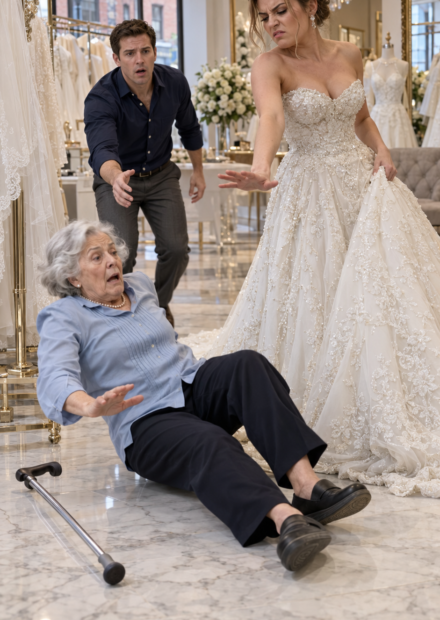
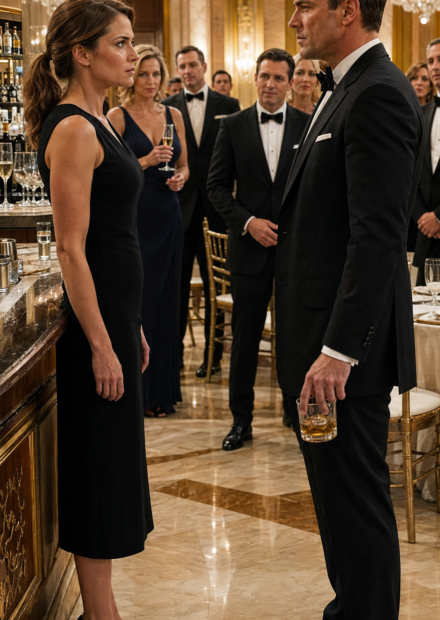
Chapter 3 – IF I HAD BEEN POOR
“About who I am.”
I repeated Vivian’s words slowly.
We were standing in a side corridor near the ballroom.
The party continued behind us.
Music.
Laughter.
Glasses being gathered.
To anyone passing, we probably looked like a bride having a private emotional moment with her mother-in-law.
Maybe we were.
Just not the sentimental kind.
Vivian folded her arms.
“You know what I meant.”
“I’m not sure I do.”
She exhaled.
“You own the hotel.”
“Yes.”
“You built a hospitality company.”
“With Arthur and a lot of people.”
“And Julian never told me.”
“That conversation is between you and Julian.”
Her face tightened.
“But you knew I didn’t know.”
“Not until tonight.”
“I don’t believe that.”
“Why?”
“Because you let me stand there and—”
She stopped.
“Say what?”
Her eyes filled with anger and shame.
“You know.”
“I do.”
“Then why didn’t you just tell me?”
“Tell you what?”
“That the dress…”
She looked down.
I followed her gaze.
“The dress what?”
“That you could afford something else.”
There it was.
I felt sadness then.
More than anger.
“Vivian.”
“What?”
“If I could not afford another dress, would what you said have been acceptable?”
Her expression changed.
I waited.
She looked away.
“That’s not what I mean.”
“It is exactly what you mean.”
“No.”
“Yes.”
I spoke gently.
“You are embarrassed because you mocked someone you discovered has money.”
“That’s not fair.”
“What would make it fair?”
She shook her head.
“I was stressed.”
“I believe you.”
“I have been managing this wedding for a year.”
“I know.”
“Everything went wrong today.”
“The flowers were late.”
She looked surprised.
“How do you know?”
“Mateo told me.”
“Of course he did.”
Her bitterness returned.
I ignored it.
“The flowers were late. One bridesmaid lost an earring. Your father argued about seating. Julian forgot the cuff links you gave him.”
She stared.
“He told you?”
“I found them in the suite.”
Her shoulders lowered slightly.
“I wanted everything perfect.”
“I know.”
“You keep saying that like it’s ridiculous.”
“No.”
I shook my head.
“I think wanting a beautiful wedding is understandable.”
“Then—”
“But perfection did not require insulting me.”
Silence.
“You were upset because I did not fit the image.”
She looked down.
“Yes.”
The honesty surprised me.
“Thank you.”
“That doesn’t mean I hate you.”
“I know.”
“I don’t.”
“I know.”
“I just…”
She stopped.
“What?”
“My mother notices everything.”
I thought of Diane.
“Yes.”
“She notices what people wear.”
“I noticed.”
“She notices whether people know the right things.”
“I noticed that too.”
Vivian laughed weakly.
“She has always been like that.”
“So you became like that?”
Her face tightened.
“That’s cheap.”
“No.”
I held her gaze.
“It is a question.”
She took a breath.
“Maybe.”
That answer was more honest than I expected.
“When I was twelve, my mother made me change before a school event because another girl had the same discount-store dress.”
I said nothing.
“I cried.”
“Did she apologize?”
“No.”
“Did you eventually think she was right?”
Vivian looked toward the ballroom doors.
“I eventually stopped buying discount-store dresses.”
There it was.
Pain turning itself into a rule.
I understood that better than she knew.
People repeat what hurt them when repeating it feels safer than challenging it.
“That explains something,” I said.
“It doesn’t excuse it.”
“No.”
She looked at me.
“You were supposed to argue.”
“Why?”
“So I could.”
I smiled faintly.
“I’m tired.”
She almost laughed.
Then her face changed again.
“I really am sorry about the dress.”
I studied her.
“Are you sorry because you learned I own the hotel?”
Her eyes filled.
“I don’t know.”
That answer made me respect her more than a polished apology would have.
“At least that is honest.”
She wiped carefully beneath one eye.
“I feel horrible.”
“Good.”
Her eyes widened.
I smiled slightly.
“Not forever.”
She gave a tiny laugh.
“Shame can be useful for about five minutes.”
“And after that?”
“After that, behavior matters.”
She nodded.
We stood quietly.
Then she asked, “Why didn’t Julian tell me?”
“I don’t know.”
“You must.”
“I have an idea.”
“What?”
“That he wanted you to believe everything he has came from him.”
Her face shifted.
“I never asked him to hide anything.”
“I believe you.”
“He talks about Arthur.”
“Yes.”
“He told me your husband built a company.”
“Arthur and I.”
She winced.
“There.”
“What?”
“He always says ‘Dad built.’”
That hurt.
Not because Arthur did not deserve enormous credit.
He did.
But I had spent decades beside him.
I handled books when we were small.
Negotiated contracts.
Managed hiring.
Ran operations during Arthur’s heart surgery.
Led two acquisitions.
After he died, I chaired the company for another seven years.
And my son had apparently turned our story into:
Dad built.
Mom had investments.
I smiled sadly.
“Now you and I have something to discuss with the same man.”
That almost made her laugh.
She looked at me more carefully.
“Did Julian ever feel like…”
“Like what?”
“Like he couldn’t compete with his father?”
The question surprised me.
“Yes.”
“When?”
“Most of his life.”
She nodded as if something had fallen into place.
“He never told me that.”
“He probably barely admitted it to himself.”
Arthur was difficult to follow.
Not because he demanded it.
Because he filled rooms.
He was funny.
Confident.
Good with strangers.
He could repair a boiler badly enough to make a professional furious and then somehow have the professional invite him to lunch.
Julian loved him desperately.
And spent years insisting he wanted nothing to do with hotels.
At twenty-two, he said, “I want one thing that doesn’t have our last name on the building.”
Arthur answered, “Excellent. Our name isn’t on most of the buildings.”
Julian did not laugh.
He moved to another state for graduate school.
Started consulting.
Built his own firm.
I had always seen that as healthy.
Maybe part of it was.
Maybe another part was a lifelong argument with a dead man.
“His company is successful,” Vivian said.
“Yes.”
“He built it.”
“Yes.”
“Then why would he hide you?”
“Because insecurity is rarely logical.”
She looked down.
The ballroom doors opened.
Diane appeared.
“There you are.”
Vivian stiffened.
Her mother looked at me.
Then at Vivian’s face.
“What happened?”
“Nothing.”
Diane glanced at me.
“Evelyn.”
“Diane.”
She smiled, but the warmth had vanished.
“That was quite a presentation.”
“It was.”
“You might have mentioned the hotel.”
“To whom?”
“To us.”
“Why?”
She blinked.
I genuinely wanted the answer.
“Because…”
She stopped.
“Because what?”
“It would have been relevant.”
“To the marriage?”
“To the wedding.”
“How?”
Diane looked irritated.
“You know perfectly well.”
“No.”
I shook my head.
“I knew your husband worked in commercial real estate.”
“Yes.”
“You did not provide me with your tax returns.”
“That’s absurd.”
“Exactly.”
Vivian whispered, “Mom.”
Diane ignored her.
“You allowed Richard to pay—”
“Your husband paid for things he offered to pay for.”
“He thought—”
“What?”
She stopped.
I saw it.
He thought they were the wealthier family.
There.
Not said.
Completely visible.
I looked at Vivian.
She had gone pale.
“Mom, stop.”
Diane turned.
“I’m trying to understand.”
“No. You’re making it worse.”
Diane looked wounded.
“I am your mother.”
“Yes.”
“And?”
Vivian took a breath.
“And I was cruel to Evelyn earlier because I was worried you would think her dress looked cheap.”
Diane stared at her daughter.
I did not move.
Vivian continued.
“And then we found out she owns the hotel, and now everybody is embarrassed for the wrong reason.”
Diane’s face changed.
“Vivian.”
“No.”
Her voice trembled.
“If she were poor, it still would have been cruel.”
I looked at her.
That was the first moment I believed something might change.
Not everything.
Something.
Diane looked toward me.
“I never told Vivian to insult you.”
“I did not say you did.”
Vivian closed her eyes.
“Please, Mom.”
Diane straightened.
“I’m going back inside.”
She left.
Vivian exhaled.
“Sorry.”
“For what?”
“My family.”
I smiled.
“You married into one too.”
She almost smiled back.
Then Julian appeared.
He stopped when he saw us together.
“Everything okay?”
Vivian and I looked at each other.
“No,” we said at the same time.
For the first time that evening, all three of us laughed.
It did not fix anything.
But it created enough space to finish the night.
The next morning, Julian called me at eight.
I was still in the hotel.
Not the Bellweather.
I owned hotel rooms for a living and still preferred sleeping at home, but the wedding ended after midnight, and Ruth had convinced me not to drive back tired.
“Are you awake?” Julian asked.
“I answered the phone.”
“Right.”
Silence.
“How is your wife?”
“She’s sleeping.”
“Good.”
“Can I see you?”
I looked at the clock.
“At nine?”
“Yes.”
“Lobby café.”
He arrived early.
No tuxedo.
No polished wedding version of himself.
Jeans.
Sweater.
Hair not quite combed.
My son.
He sat down.
For several seconds, he stared at the table.
Then he said, “Dad built the company.”
I felt the old wound reopen.
“You said that to Vivian.”
“Yes.”
“Why?”
“Because that was how I thought about it.”
“That is not true.”
“I know.”
“Do you?”
“Yes.”
He rubbed his face.
“I knew you worked there. Obviously.”
I almost laughed.
“Obviously.”
“I knew you did contracts.”
“Operations.”
“Yes.”
“Hired people.”
“Yes.”
“Ran it when your father had bypass surgery.”
“Yes.”
“Led the Harbor acquisition.”
“Yes.”
“Ran Whitmore Hospitality after he died.”
“Yes.”
I leaned back.
“What exactly did you think I did?”
His eyes filled with shame.
“I don’t know.”
That answer hurt.
Not malicious.
Worse in its way.
Careless.
I stared through the café window.
People passed outside carrying coffee.
A bellman pushed luggage.
Morning continued.
Julian said, “Dad was louder.”
I looked at him.
“What?”
“He was louder.”
Despite myself, I understood immediately.
Arthur told stories.
Arthur made speeches.
Arthur stood beside signs.
Arthur shook hands.
Arthur took Julian to construction sites and joked with contractors.
I stayed in offices.
Reviewed numbers.
Made calls.
Fixed systems.
If Arthur was the front door of our company, I was the foundation nobody looked at unless something cracked.
Julian had grown up seeing both of us.
But children often remember the visible parent.
“He was louder,” I agreed.
Julian swallowed.
“I think I turned that into him being more important.”
“He wasn’t.”
“I know.”
“Arthur knew.”
“He did?”
I laughed.
“Your father once told a banker, ‘I get the applause because Evelyn does the part that actually works.’”
Julian smiled through tears.
“That sounds like Dad.”
“Yes.”
“I’m sorry.”
I looked at him.
“For reducing you.”
That was the right phrase.
“I made you smaller because I wanted to feel bigger.”
My throat tightened.
He continued.
“I spent my whole life hearing people tell me how impressive Dad was.”
“He hated that.”
“I know.”
“He worried about you.”
“He shouldn’t have.”
“Parents rarely need permission.”
Julian laughed softly.
Then went serious.
“When I started my firm, I wanted no one to think it came from you.”
“It did come partly from us.”
His face tightened.
“I know.”
“You worked.”
“Yes.”
“You took risk.”
“Yes.”
“You built the clients.”
“Yes.”
“And I cosigned your loan.”
“Yes.”
“Both things can be true.”
He nodded.
“That’s what I couldn’t handle.”
“Why?”
“Because Vivian’s father liked that I was self-made.”
There it was.
I waited.
“He introduced me that way.”
“I see.”
“And every time he did, I…”
“What?”
“Let him.”
I felt sadness rather than anger now.
“Julian.”
“I know.”
“No.”
I reached across the table.
“Do not build a life around a compliment you have to lie by omission to keep.”
His eyes closed.
“I know.”
“Good.”
We sat quietly.
Then he said, “There’s something else.”
My stomach tightened.
“What?”
“Vivian thought Richard paid for most of the reception.”
“I guessed.”
“I told her you gave us the venue.”
“That is not most.”
“No.”
“But?”
“I didn’t tell her what the venue included.”
“Why?”
He looked miserable.
“Because she would have told her parents.”
“And then?”
“I don’t know.”
“Yes, you do.”
He looked at me.
“I didn’t want them to think I needed my mother to pay for my wedding.”
The sentence felt familiar.
Different family.
Same old human shame.
I nodded slowly.
“You did need your mother.”
His eyes dropped.
“Not because you were poor.”
“No.”
“Because I wanted to give you something.”
“Yes.”
“There is no shame in receiving love.”
He looked at me.
“There is when you’re afraid people will confuse love with dependence.”
“Then choose better people.”
He flinched.
“That includes Vivian?”
“I didn’t say that.”
“She mocked you.”
“Yes.”
“She was awful.”
“Yes.”
“You should hate her.”
“No.”
He stared.
“You don’t?”
“No.”
“Why?”
“Because one ugly moment is information.”
I took a sip of coffee.
“What she does with the information matters.”
He nodded.
“What about me?”
I looked at him.
“You had more than one moment.”
His face fell.
“Fair.”
“But the same rule applies.”
He sat back.
“What do I do?”
“That is not my question to answer.”
“Mom.”
“You are married.”
“Yes.”
“You have a wife who now knows you hid part of your life because you wanted her family’s approval.”
He winced.
“You have a mother who now knows you were willing to watch her be diminished rather than disturb that approval.”
His eyes filled.
“That is your work.”
He nodded slowly.
“And the business?”
“What about it?”
“Your shares.”
I stared at him.
Arthur and I had placed a minority stake in trust for Julian years earlier.
He knew.
It paid distributions.
Not enough to define his life.
Enough to matter.
“You’re worried I’ll take them.”
“I don’t know.”
“Can I?”
His eyes widened.
I almost smiled.
“Relax.”
He did not.
“I’m not changing anything today.”
“Okay.”
“But listen to me.”
He leaned forward.
“You do not get to be ashamed of where you came from and proud of the benefits at the same time.”
His face went red.
“I know.”
“Stop saying you know.”
He almost laughed.
“Sorry.”
I touched his hand.
“Figure out what kind of man you want to be when nobody is impressed.”
That was the conversation.
Not money.
Not the hotel.
Not the navy dress.
Character.
Three days after the wedding, Vivian called.
“Can I come see you?”
“At home?”
“If that’s okay.”
“It is.”
She arrived carrying a garment bag.
My first thought was that she had bought me a new dress.
If she had, I was prepared to send her home with it.
Instead, she unzipped the bag.
Inside was her wedding gown.
I stared.
“What are you doing?”
“I want to show you something.”
She turned the skirt.
Near the inside hem was a faint gray mark.
“See that?”
“Yes.”
“It happened when we took photographs outside.”
“All wedding dresses get dirty.”
“I know.”
She looked embarrassed.
“I cried for twenty minutes when I saw it.”
I waited.
“My photographer said it wouldn’t show.”
“All right.”
“I kept thinking the dress was ruined.”
I looked at her.
“And?”
“Then I thought about what you said.”
“Which part?”
“That marriage should become old.”
I smiled slightly.
“That was not specifically advice about dry cleaning.”
“I know.”
She laughed.
Then became serious.
“I think I have spent a lot of my life terrified of things looking wrong.”
She looked at the gown.
“Because if something looks wrong, people decide something about you.”
“Some people do.”
“My mother does.”
“Yes.”
“I do.”
“Yes.”
She looked at me.
“I don’t want to anymore.”
“That will take more than three days.”
“I know.”
“Good.”
She sat down.
“I also asked Julian about the company.”
I said nothing.
“He told me everything.”
“I doubt that.”
“He told me more.”
“That I believe.”
“He cried.”
“So did he with me.”
She smiled faintly.
“He said you’re probably going to think he’s emotionally unstable now.”
“He survived.”
Vivian grew quiet.
“I owe you a better apology.”
“All right.”
“I was cruel.”
I waited.
“I was cruel before I knew anything about your money.”
There it was.
“That matters.”
“Yes.”
“I treated you like your dress made you embarrassing.”
“Yes.”
“And Julian’s silence made me think I could.”
That was sharp.
True.
I nodded.
“He should have stopped me.”
“Yes.”
“But I should not have needed stopping.”
I felt something inside me loosen.
“Yes.”
She inhaled.
“I’m sorry.”
“Thank you.”
“I don’t expect you to forget.”
“I won’t.”
Her eyes flickered.
I continued.
“That is not punishment.”
“I know.”
“We remember so we know whether something changed.”
She nodded.
“I understand.”
I touched the navy dress folded over a chair nearby.
I had not put it away yet.
Vivian looked at it.
“Can I ask something?”
“Yes.”
“Why did Arthur really buy it?”
I smiled.
That question mattered more than any question about the hotel.
So I told her the whole story.
Savannah.
The contract.
The shop window.
Arthur telling me the color made me look like every smart decision he ever made.
Vivian laughed.
Then cried.
And for the first time since my son married her, she looked at the navy dress without seeing its age.