THEY THREW ME OUT—THEN BOARDED MY SHIP
Chapter 5 – WHAT A MOTHER DOES NOT OWE
The next nine days were the strangest of my life.
Daniel and Lillian remained aboard.
So did I.
We existed on the same ship and lived in different worlds.
Crown Meridian carried more than two thousand passengers.
Avoiding two people should have been easy.
It was not.
I saw Daniel at breakfast on the third morning.
He was alone near a window.
I was crossing the dining room with the hotel director when he looked up.
Our eyes met.
He did not wave.
Neither did I.
On the fifth day, I saw Lillian near the spa.
She turned away before I passed.
On the sixth, Daniel sent another meeting request.
This one contained only three words.
NOT ABOUT MONEY.
I accepted.
Maya asked whether I wanted her present.
I said no.
Then changed my mind.
“Yes.”
She nodded.
“Good.”
Daniel arrived carrying the preservation envelope.
He placed it on the table between us.
“I spoke to my lawyer.”
“I assumed.”
“I’m going to cooperate.”
I waited.
“The tablet is at home. I didn’t erase it.”
“Good.”
“I changed the Wi-Fi password after you left.”
Maya made a note.
Daniel looked at her.
“My attorney already knows.”
“Good.”
He turned back to me.
“I’m not asking you to change anything.”
That was new.
I sat quietly.
He swallowed.
“I wanted to tell you something about that night.”
I felt my shoulders tighten.
“What?”
“I knew Lillian had packed your suitcase.”
I had suspected that.
Hearing it still hurt.
“How long?”
“Before you came home.”
“How long, Daniel?”
“About an hour.”
“You let her.”
“Yes.”
“Why?”
He rubbed his hands together.
“Because we had been fighting.”
“About me?”
“About money.”
Of course.
He stared past me.
“My commission had fallen through. We had the cruise balance, the credit cards, the car payment.”
“The car I helped you buy.”
He nodded.
“I know.”
“Did Lillian know your commission had fallen through?”
“Yes.”
“Did I?”
“No.”
“Why not?”
“Because I was ashamed.”
I almost laughed at the cruelty of that word.
“You were too ashamed to tell me you were struggling, but not too ashamed to ask me for thirty-eight thousand dollars?”
“It doesn’t make sense now.”
“It didn’t make sense then.”
He nodded.
“We had a fight after you said no. She said you were controlling us.”
I stared at him.
“With my money.”
“I know.”
“She said as long as you lived there, everything was going to be about what you had done for us. The rent. The utilities. The car. She said we could never feel like adults.”
“I never brought those things up.”
“I know.”
“Until you accused me of living for free.”
“I know.”
The words had begun to sound like a confession all by themselves.
I know.
I know.
I know.
Knowledge had never been the problem.
Choice was.
Daniel wiped his face.
“She packed your things. I told her she was overreacting.”
“Then?”
“She said if I didn’t support her, our marriage was over.”
I looked at him.
“And you chose.”
“Yes.”
The answer hurt.
But I respected it.
It was the first fully honest thing he had said about that night.
“You were allowed to choose your marriage,” I said.
“I know.”
“But you were not required to abandon your decency to do it.”
His face twisted.
“I know.”
I looked toward Maya.
She sat motionless, giving us privacy without leaving us unprotected.
Daniel whispered, “When she hit you, I froze.”
“I know.”
“I keep seeing it.”
“So do I.”
“I should have stopped her.”
“Yes.”
“I should have told you to stay.”
“Yes.”
“I should have left with you if she wouldn’t let you stay.”
I did not answer that.
He looked at me.
“Why aren’t you saying yes?”
“Because your marriage is yours to manage. I did not need you to abandon your wife. I needed you to insist she could not assault your mother.”
He lowered his eyes.
“I didn’t.”
“No.”
“I’m sorry.”
This time, the apology did not contain an explanation.
So I believed he meant it.
That did not mean the damage disappeared.
Those are different things too.
He inhaled slowly.
“There’s something else.”
I waited.
“The transfer.”
Maya sat slightly straighter.
Daniel glanced at her.
“I know.”
He looked at me.
“I did it.”
Nothing in the room moved.
I had known.
The bank records had told me.
His words at the first meeting had told me.
But certainty from evidence and hearing your child confess are different wounds.
“I used the tablet.”
My mouth went dry.
“I knew one of your old device codes.”
“How?”
“You used Dad’s birthday for years.”
I closed my eyes.
Thomas.
Of course.
After he died, I had changed many passwords.
Not that one.
Daniel continued.
“I tried the bank app. It asked for verification. I couldn’t get in. Then I tried the browser.”
Maya raised one hand.
“Daniel, again, you have counsel.”
“I already gave my lawyer a written statement.”
She watched him.
“He told you to discuss this with us?”
“He told me not to. I told him I was going to anyway.”
Maya exhaled.
“Continue only if you understand that I cannot make this conversation privileged for you.”
“I understand.”
He turned back to me.
“The first reset didn’t work.”
“And the second?”
“I answered the security questions.”
“My mother’s maiden name.”
“Yes.”
“My first dog.”
“Yes.”
“My old address.”
“Yes.”
Each answer felt like watching him unlock a door inside me.
Not because the information was private.
Because it was intimate.
He had taken pieces of our shared family history and turned them into tools.
“Then what?”
“The bank let me submit a transfer request.”
“Thirty-eight thousand.”
“Yes.”
“Into your account.”
“Yes.”
“Why?”
He looked at me.
“Because I thought if I put it in my account first, you couldn’t cancel the cruise payment.”
I stared at him.
The room seemed very small.
He had not even intended to pay the cruise directly from my account.
He wanted control.
That was the part that finally reached me.
This had never been only about thirty-eight thousand dollars.
It was about removing my ability to say no.
I stood.
Daniel stood too.
“Mom.”
“Sit.”
He sat immediately.
I walked to the window.
Below us, waves broke white against the hull.
For years, I had believed betrayal arrived with hatred.
It does not.
Sometimes it arrives wearing entitlement.
Sometimes the person betraying you still loves you.
He simply loves what you provide more than he respects what belongs to you.
That is harder to understand.
Hatred gives you somewhere to put your anger.
Love makes the wound untidy.
I turned back.
“Did you think about what would happen when I saw the money missing?”
“Yes.”
“What did you imagine?”
“That I’d be furious.”
“And then?”
He looked down.
“That you’d forgive me.”
I nodded.
There it was.
The entire structure.
He had counted forgiveness as part of the financing.
I sat again.
“Daniel, look at me.”
He did.
“I may forgive you.”
His eyes filled.
“But you will never again make a financial decision for me.”
“I know.”
“You will never have access to my passwords.”
“I know.”
“You are no longer my emergency financial contact.”
He flinched.
“I understand.”
“And I am changing the estate documents naming you in positions of authority.”
His face crumpled.
Losing money would have hurt him less.
I knew that.
This was not about inheritance.
It was about trust.
“I’m still your son.”
“Yes.”
“You think I’d do something after you died?”
“I thought you would not do something while I was alive.”
He looked away.
I immediately regretted the sentence.
Not because it was false.
Because it was cruel.
I softened my voice.
“I am not punishing you with my estate.”
“Feels like it.”
“I am protecting myself with information I did not have before.”
Tears ran down his face.
“I ruined everything.”
“No.”
He looked at me.
“You damaged many things.”
I held his gaze.
“That is not the same as everything.”
He breathed unevenly.
“What’s left?”
It was the hardest question he had asked me.
I thought of his first day of kindergarten.
Thomas standing beside me, pretending not to cry.
Daniel running back from the classroom because he had forgotten to kiss us goodbye.
I thought of him bringing soup to my house during Thomas’s chemotherapy.
Sleeping in a chair at the hospital.
Calling me every morning for six months after the funeral.
There had been love.
Real love.
That made what happened worse.
It also meant I would not rewrite our entire history because of it.
“What’s left,” I said, “depends on what you do when nobody is rescuing you.”
He nodded slowly.
I looked at Maya.
“I’m done.”
Daniel stood.
At the door, he turned.
“Mom?”
“Yes?”
“I’m not going to ask you to withdraw anything.”
I waited.
“I just wanted you to know.”
Then he left.
Two minutes later, Maya released a breath.
“You okay?”
“No.”
“Good answer.”
I laughed despite myself.
She closed her notebook.
“You still want to finish the voyage?”
I looked out at the water.
“Yes.”
“Why?”
“Because I have work tomorrow.”
She smiled.
“So do I.”
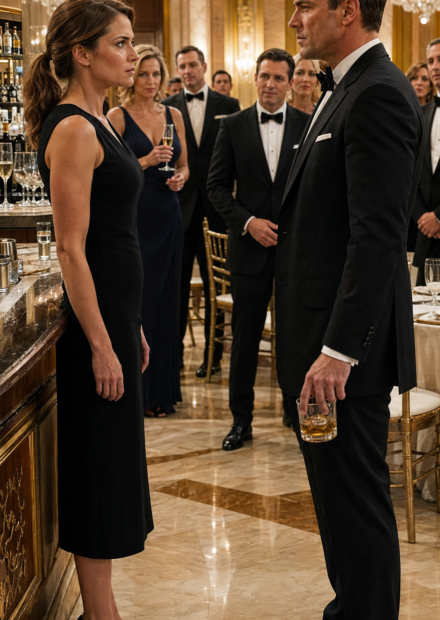
On the final evening, Meridian Crown hosted a reception in the central atrium.
It was not for me.
I made sure of that.
The event celebrated the ship’s crew, the updated passenger-assistance program, and the launch of several operational changes scheduled across the fleet.
Captain Alvarez asked me to say a few words.
I refused twice.
He asked a third time.
“You know,” he said, “for a woman who tells people to accept responsibility, you are remarkably creative at avoiding a microphone.”
So I spoke.
Five minutes.
No personal story.
No Daniel.
No Lillian.
I thanked the crew.
I thanked the medical teams.
I thanked the stewards, port staff, accessibility coordinators, engineers, security officers, and everyone else whose work passengers noticed mainly when it failed.
“Good operations,” I said, “often look invisible from the outside. That does not make the people doing the work invisible.”
The sentence surprised me as I said it.
For two years, I had been invisible in Daniel’s house in exactly that way.
The bills I paid disappeared into electricity.
The groceries disappeared into meals.
The ride to appointments disappeared once someone arrived.
Help, when repeated often enough, becomes infrastructure.
People stop seeing it.
Until it is gone.
Applause rose through the atrium.
I stepped away from the microphone.
Then I saw Daniel.
He stood near the back.
Lillian beside him.
Neither clapped at first.
Then Daniel did.
Once.
Twice.
Slowly.
Lillian stared ahead.
I looked away before the moment became something larger than it was.
I did not need his applause.
But part of me was glad he had finally seen the room I occupied when I was not making myself smaller for him.