Chapter 5 – THE FAMILY WE SHOULD HAVE KNOWN
Saturday morning was cold and bright.
I arrived at Marissa’s apartment carrying two coffees and nothing else.
That required more discipline than it should have.
I had spent Friday evening considering what a ten-month-old might need.
A stroller.
A better crib.
Winter clothes.
A college fund.
A larger apartment.
Then I heard Daniel’s imagined voice, assembled from every story I had been told.
Men with guilty consciences love putting their names on buildings.
So I brought coffee.
Marissa opened the door wearing jeans and an old green coat.
Owen was strapped into a stroller.
“You followed instructions,” she said.
“I’m capable of growth.”
“Let’s not become ambitious.”
We walked three blocks to a small park.
Owen stared at me most of the way.
“Does he always do that?”
“Only when deciding whether someone is suspicious.”
“What’s the verdict?”
“He hasn’t filed his report.”
We sat on a bench while he watched children on the playground.
For several minutes, neither of us spoke.
I was strangely nervous.
I had delivered speeches to thousands of people.
I had stood in front of state commissions.
I had negotiated contracts with people trying to humiliate me across a conference table.
None of that felt as dangerous as sitting beside my brother’s widow while my nephew examined a fallen leaf.
Finally I said, “My mother found a picture.”
Marissa turned.
“Of Daniel?”
“And my father.”
Her face changed.
“She’s sending it to you.”
“To me?”
“It belongs with Daniel’s things.”
“You don’t want it?”
“I made a copy.”
She nodded.
“That seems fair.”
“There’s writing on the back.”
I told her.
My sons.
I hope someday they forgive me.
Marissa stared at the playground.
After a while she said, “Would you?”
“Forgive him?”
“Yes.”
I thought about it.
“I don’t know.”
“That’s probably the right answer.”
“What would Daniel say?”
“I don’t know.”
“You knew him.”
“That doesn’t mean I get to put words in his mouth because he’s dead.”
There was no accusation in the sentence.
Only a boundary.
I respected it.
After a moment, she said, “He forgave people slowly.”
“That sounds healthier than the Whitmore method.”
“What’s the Whitmore method?”
“Pretend nothing happened until someone dies.”
She laughed.
Owen turned toward us at the sound.
Marissa lifted him from the stroller.
For several minutes, she held him.
Then she looked at me.
“Do you want to?”
My entire body went still.
“Hold him?”
“Yes.”
I stood awkwardly.
“I haven’t held many babies.”
“He’s durable.”
“That does not reassure me.”
She showed me where to place my hands.
Then she transferred Owen into my arms.
He weighed almost nothing.
And everything.
He stared at my face.
His fingers caught the edge of my coat.
I looked at his gray eyes.
My father’s eyes.
Daniel’s eyes.
Perhaps someday just Owen’s eyes.
“Hello,” I whispered.
He immediately tried to eat my collar.
Marissa laughed.
“That means he approves.”
“I’m honored.”
I looked down at him.
For days I had been thinking about what had been stolen from me.
A brother.
Years.
Truth.
But holding Owen, I understood something else.
If I spent the rest of my life mourning the relationship I never had with Daniel, I might miss the relationship still possible with his son.
That did not erase anything.
It simply gave grief somewhere to go.
Later that week, my compensation review arrived.
I read every page.
The findings embarrassed me.
We had paid according to market surveys rather than actual household costs.
We had assumed transportation was an employee problem.
We offered paid vacation but not enough paid sick days for workers caring for children.
One member of my staff was spending almost three hours a day commuting because she could not afford housing closer to the estate.
Another had delayed dental treatment because our plan did not cover enough.
None of them had complained.
I used to think that meant the system worked.
Now I knew silence could mean many things.
Sometimes it meant people simply understood that complaining was unlikely to help.
I approved new wage floors.
Transit support.
Expanded paid leave.
Emergency advances.
Health contributions.
I also requested a similar review at Whitmore Infrastructure.
That caused considerably more resistance.
Our chief financial officer entered my office carrying sixty pages of projections.
“Do you understand what this costs at scale?”
“Yes.”
“Then why are we doing it?”
“Because our entry-level employees can’t pay bills with the fact that their wages are technically competitive.”
He frowned.
“This is not how we normally set compensation.”
“Then perhaps that explains the problem.”
He stared at me.
“Did something happen?”
I thought of Marissa.
Her phone call was not mine to use as a management anecdote.
“Yes,” I said. “I finally looked at the numbers from the other side.”
It took months to change everything.
Some changes were smaller than I wanted.
Some were larger.
The point was not that I became a saint because I overheard one embarrassing phone call.
I did not.
I remained a wealthy man who had gone thirty-eight years without calculating what his own employees needed to live.
Good intentions do not retroactively create awareness.
But awareness creates responsibility.
Once you see something clearly, choosing not to act becomes a decision.
There was another problem to resolve.
Daniel.
Or rather, what my father should have done for him.
I met Leonard in my office two weeks later.
“I want an estimate.”
“Of what?”
“What Daniel would reasonably have received if my father had acknowledged him when he revised his estate.”
Leonard looked uncomfortable.
“That’s speculative.”
“I know.”
“He had no legal entitlement under the executed documents.”
“I know.”
“Depending on how William structured—”
“Leonard.”
He stopped.
“I’m not asking for a courtroom opinion. I want to know what my father discussed.”
Leonard opened his briefcase.
“I suspected you might.”
He removed an old memorandum.
“William considered creating a trust equivalent to a portion of his personal estate.”
“How large?”
Leonard told me.
It was substantial.
Not enough to alter control of the company.
More than enough to change a person’s life.
I stared at the figure.
“Did my mother know?”
“Yes.”
“Did Daniel?”
“He was told the rough amount.”
“And walked away.”
“Yes.”
I thought for a moment.
“I want to establish a trust for Owen.”
Leonard sighed.
“Adrian.”
“Before you give me a lecture, listen.”
“All right.”
“No confidentiality clause. No Whitmore name requirement. No control over where he goes to school. No requirement that Marissa remain in contact with us. No public announcement.”
Leonard’s expression changed.
“The trust belongs to Owen because he is Daniel’s son.”
“How much?”
“The amount Dad intended for Daniel, adjusted to current value.”
“That is a great deal of money.”
“I’m aware.”
“It would come from your personal holdings.”
“I’m aware.”
“Marissa may refuse.”
“I know.”
“Then what?”
“Then I respect it.”
Leonard leaned back.
For the first time in days, I saw him smile.
“Daniel would have made you work very hard.”
“I am beginning to suspect that.”
“Your father once told me you two would either become inseparable or kill each other.”
The sentence hit me.
“He said that?”
“After their second meeting.”
A strange laugh escaped me.
“That would have been useful information while Daniel was alive.”
“Yes.”
Leonard’s smile disappeared.
“Yes, it would.”
When I told Marissa about the trust, she reacted exactly as Leonard predicted.
“No.”
We were sitting at her kitchen table.
Owen was asleep.
“No?” I repeated.
“No.”
“You haven’t seen the paperwork.”
“I don’t need to.”
“There are no conditions.”
“There is always a condition.”
“Not in this one.”
She stood.
“This is what Daniel didn’t want.”
“No. Daniel didn’t want money in exchange for silence.”
“He didn’t want Whitmore money.”
“According to my father’s letter, that isn’t what he said.”
She turned sharply.
“Don’t use a dead man’s letter against me.”
I stopped.
“You’re right.”
She folded her arms.
“I’m not trying to fight you.”
“I know.”
“I just don’t understand why you need to do this.”
That question forced me to be honest.
“Because I inherited from my father.”
Her expression softened slightly.
“So?”
“So I inherited from a man who had two sons while his estate documents pretended he had one.”
She looked away.
“I can’t change the will he signed.”
“No.”
“I can change what I keep.”
Silence.
“I’m not offering you money because I think you can’t manage your life.”
She said nothing.
“I’m not offering Owen money because I need him to become a Whitmore.”
Still nothing.
“I’m doing it because when my father died, everything flowed toward me as though Daniel did not exist.”
My throat tightened.
“He existed.”
Marissa sat again.
“Yes.”
“The money doesn’t create that truth.”
“No.”
“It follows from it.”
She studied me.
“What if Owen grows up and wants nothing to do with your family?”
“Then the trust is still his.”
“What if he hates the company?”
“Then he will be displaying excellent judgment at sixteen.”
She almost smiled.
“What if he changes his last name?”
“His business.”
“What if he never calls you Uncle Adrian?”
That one hurt.
But I answered.
“Then I’ll still know who he is.”
Marissa’s eyes filled.
She looked toward the bedroom.
“I need an attorney who isn’t Leonard.”
“Agreed.”
She looked surprised.
“I’ll pay for independent counsel.”
“No.”
“Fine. The trust will pay the legal review cost whether you accept it or not.”
“That sounds like a trick.”
“It probably is.”
She shook her head.
“You’re very annoying.”
“I have inherited traits from both sides of the family.”
That made her laugh.
Three weeks later, after an attorney Marissa selected reviewed every page, she agreed.
Not because she accepted charity.
Because the documents made clear that Owen owed us nothing.
The money would not purchase visits.
It would not purchase photographs.
It would not purchase forgiveness.
It would not purchase the Whitmore name.
That distinction mattered.
My mother did not meet Owen for almost three months.
She asked several times.
Marissa said no.
Mother accepted it.
That was part of the consequence.
One afternoon in February, Marissa called me.
“I think I’m ready.”
“For what?”
“For Evelyn.”
I was quiet.
“Are you sure?”
“No.”
That was apparently becoming our family’s healthiest answer.
Mother came to Marissa’s apartment carrying nothing.
I had warned her.
She obeyed.
When Marissa opened the door, my mother began crying immediately.
Marissa did not.
For several seconds they simply looked at each other.
Then Mother said, “I’m sorry.”
Marissa’s face remained still.
“I know.”
“I have rehearsed things to say.”
“Don’t.”
Mother nodded.
“I won’t.”
Owen was on the floor with blocks.
Mother looked toward him.
She did not move closer.
“May I sit?”
Marissa pointed toward a chair.
Mother sat.
Nobody spoke.
Then Owen crawled toward her because babies have no respect for emotional pacing.
He grabbed the edge of her trouser leg and tried to stand.
Mother froze.
She looked at Marissa.
Not at me.
At Marissa.
“May I?”
Marissa swallowed.
Then nodded.
Mother lifted him carefully.
She did not call herself his grandmother.
She did not say he looked like William.
She did not claim anything.
She simply held him.
Owen touched her necklace.
Mother began crying again.
“I’m sorry,” she whispered.
I knew she was not talking to the baby.
Not entirely.
Marissa knew too.
After a while, she said, “Daniel would have been angry with you.”
Mother closed her eyes.
“I know.”
“He might never have forgiven you.”
“I know.”
“I haven’t.”
Mother opened her eyes.
“I understand.”
Marissa’s voice softened.
“But Owen doesn’t inherit our anger.”
Mother looked at her.
“No.”
“That doesn’t mean he inherits your version of the family either.”
“No.”
“If you know him, you know him on his terms.”
Mother nodded.
“Yes.”
It was not forgiveness.
It was better.
It was honest.
Spring came slowly that year.
By April, Owen was walking.
Badly.
Determinedly.
He fell every six steps and looked personally offended by gravity.
I saw him most Saturdays.
Sometimes Marissa brought him to my house.
The first time she did, she stood in the front hallway staring up at the staircase she had cleaned for months.
“What?” I asked.
“It’s different.”
“How?”
“I’m not wearing work shoes.”
I understood.
“Do you want to leave?”
“No.”
She looked around.
“I just need a minute.”
She still worked for me then.
That arrangement eventually became too complicated for both of us.
Not because I asked her to leave.
Because one afternoon she walked into my office and said, “I can’t tell whether you’re being polite to me because I’m your employee or because I’m Daniel’s widow.”
I admitted I didn’t know either.
A month later, she resigned.
She had already found another housekeeping position two days a week with a family nearby and planned to spend the remaining time taking bookkeeping classes at a community college.
I offered to pay.
She stared at me until I apologized.
The new household wage scale meant she had been able to save some money.
The trust was Owen’s, not hers.
She was proud of that distinction.
I was too.
On her final day working at my house, she stood in the kitchen where I had first overheard the phone call.
“Seven months ago, I thought you were kind of a robot,” she said.
“Only kind of?”
“A very expensive robot.”
“That seems fair.”
She smiled.
Then she handed me an envelope.
My chest tightened.
“I have developed an unhealthy relationship with envelopes.”
“This one won’t destroy your family.”
“That’s reassuring.”
Inside was a photograph.
Daniel.
The Fenway picture.
Not the original.
A copy.
On the back, Marissa had written:
He was here.
Don’t let anyone reduce him to a secret.
I stared at the words.
“I won’t.”
“I know.”
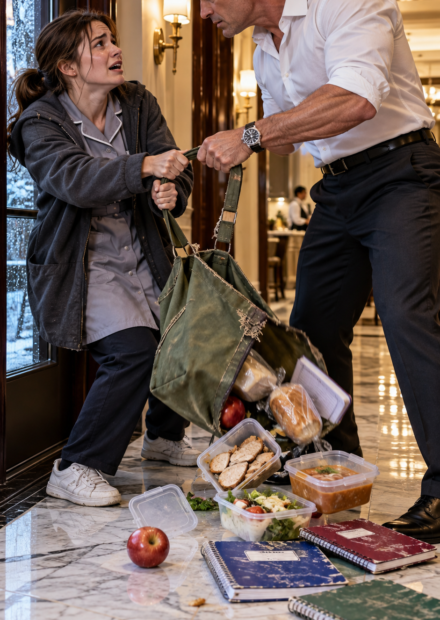
She picked up her lunch bag.
The same canvas bag she had carried on that rainy Tuesday.
At the doorway, she stopped.
“Adrian?”
“Yes?”
“Daniel would have liked you.”
I couldn’t speak for a moment.
“You don’t know that.”
“No.”
She smiled.
“But I knew him.”
Then she left.
A year after I overheard the request for twenty-eight dollars, I found myself standing in the same kitchen before sunrise.
Owen was in a high chair throwing pieces of banana onto the floor.
Marissa had come over because we were taking him to a Red Sox afternoon game.
My mother was meeting us there.
Slowly.
Carefully.
That was how our family functioned now.
No dramatic reunion.
No instant forgiveness.
No pretending old wounds disappeared because people apologized.
We simply stopped lying.
Sometimes that was enough to begin.
I poured coffee.
Marissa walked in.
“Did you give him banana?”
“Yes.”
“He’s not eating it.”
“I noticed.”
Owen threw another piece.
It landed on my shirt.
Marissa laughed.
“He likes you.”
“I’ve been told this is how he expresses approval.”
“It is.”
I removed the banana.
My eyes moved toward the photograph on the refrigerator.
Daniel at Fenway.
Gray eyes.
Crooked smile.
A brother I never knew.
Beside it was the photograph my mother had found.
My father and Daniel standing outside Leonard’s office four years earlier.
They were not touching.
Both looked uncomfortable.
But the resemblance was unmistakable.
On the back, in my father’s handwriting:
My sons.
I hope someday they forgive me.
I had not forgiven him completely.
Maybe I never would.
But I no longer needed forgiveness to be simple.
My father had been cowardly.
He had also regretted his cowardice.
He had loved me.
He had failed Daniel.
All those things could be true at once.
Money had not fixed any of it.
The trust did not give Daniel his father back.
The wage increases did not erase the fact that I had spent years benefiting from work I had never examined closely enough.
My mother’s apology did not restore the time she stole.
And knowing Owen did not replace knowing my brother.
Some losses cannot be balanced.
There is no column you can enter them into.
No calculation that makes the bottom line come out even.
That was perhaps the most important thing Daniel taught me without ever meeting me.
All my life, I had believed almost any ordinary problem became easier if you had enough money.
Then a woman in my kitchen asked her mother for twenty-eight dollars.
I thought the shocking part was that twenty-eight dollars could matter so much.
I was wrong.
The shocking part was how many things money could never purchase.
Courage.
Time.
A father willing to say, This is my son.
A mother willing to admit, I was afraid.
A brother knocking on the door before it was too late.
A widow’s trust.
A child’s future affection.
The truth.
Owen dropped his spoon.
I picked it up.
He immediately dropped it again.
Marissa watched me.
“You know he’s doing that because you keep giving it back.”
“I understand the principle.”
“Apparently not.”
I picked up the spoon a third time.
Owen laughed.
And for one strange, painful, beautiful second, I heard another laugh inside it.
A laugh I had never actually heard.
My brother’s.
Perhaps imagination is another form of grief.
Perhaps it is mercy.
I didn’t know.
What I did know was this:
Daniel Keane had been here.
He had lived.
He had loved.
He had been angry.
He had refused to let wealthy people decide what his dignity cost.
He had become a husband.
He had become a father, even if he died before holding his child.
And he had been my brother whether my family admitted it or not.
I could not change the years in which that truth had been hidden.
But I could refuse to hide it for another day.
Owen held both arms toward me.
I lifted him from the chair.
He pressed one sticky hand against my cheek.
“Unca,” he said.
I froze.
Marissa froze too.
“What did he say?”
She smiled slowly.
“I think he said uncle.”
My throat closed.
Owen slapped my face affectionately.
“Unca.”
I laughed.
Then, unexpectedly, I cried.
Not the restrained tears my family had always considered dignified.
I stood in the kitchen crying while a toddler tried to pull my ear.
Marissa did not rescue me from the embarrassment.
She simply smiled.
Outside, morning light spread across the lawn.
My phone vibrated on the counter.
A financial report.
Millions of dollars waiting to be discussed.
For once, I ignored it.
I held my nephew instead.
And I thought of the twenty-eight dollars I had never been meant to hear about.
The twenty-eight dollars that led me to a bus route I had never noticed.
To an apartment building I had never entered.
To my family’s attorney waiting outside a widow’s door.
To an old cream-colored envelope.
To my father’s confession.
To my brother’s name.
To the truth.
Some numbers measure wealth.
Some measure distance.
And once in a while, one small number tells you exactly how far you have been living from the people you should have seen all along.
For me, that number was twenty-eight.
I never forgot it.
THE END./.