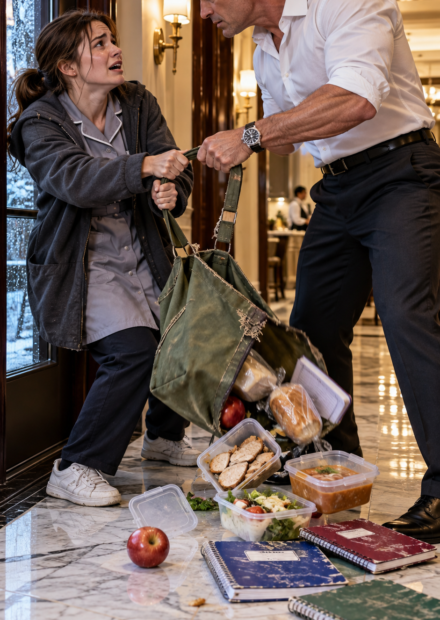
I PAID RENT FOR YEARS. THEN MOM MOVED IN HER GOLDEN CHILD FOR FREE—AND ASKED ME FOR MORE.
Chapter 2 – WHEN THE GOLDEN CHILD CAME HOME
The house changed within twenty-four hours.
That sounds dramatic.
It wasn’t.
Before Ryan moved in, our home had been quiet.
Not beautiful.
Not luxurious.
Just predictable.
Dad watched television in the den.
Mom listened to podcasts while cooking.
I had my bedroom upstairs at the end of the hall.
There was usually enough hot water.
The refrigerator contained food for more than six hours at a time.
And if I parked in the driveway at night, I could reasonably expect my car to still have an exit route the next morning.
Ryan destroyed all of those conditions almost immediately.
His family took over the two remaining upstairs bedrooms.
The kids were seven and four.
I didn’t blame them for being children.
They were loud because children are loud.
They left toys everywhere because adults were supposed to teach them not to.
They ran through the hallway, jumped off furniture, screamed over tablets, argued about snacks, and treated my bedroom door as a challenge rather than a boundary.
The problem wasn’t them.
The problem was that nobody corrected anything.
Especially not Ryan.
Saturday morning, less than twelve hours after they arrived, I woke to someone pounding on my door.
I sat up.
“What?”
The knob rattled.
“Aunt Emily!”
It was Ryan’s oldest.
“What?”
“Do you have markers?”
“No.”
“Mom says you do.”
I closed my eyes.
I did have markers.
Expensive art markers I used occasionally for lettering and journaling.
I had absolutely no intention of handing them to a seven-year-old who had once drawn a purple dinosaur across my parents’ hallway.
“Tell your mom they’re work supplies.”
“They’re not.”
I stared at the door.
“Apparently they are now.”
He wandered away.
Five minutes later, Kelsey knocked.
Unlike Ryan, I had never actively disliked Kelsey.
I didn’t know her well enough.
She and Ryan had married quickly after she got pregnant with their oldest, and most of our interactions had happened at holidays, birthdays, or chaotic family dinners.
She was pleasant when things were going her way.
When they weren’t, she had perfected the same exhausted helplessness Ryan used.
Nothing was ever directly her fault.
Life simply happened to her.
“Hey,” she said when I opened the door. “Sorry about Noah. He’s bored.”
“I figured.”
“Do you actually have markers?”
“Yes.”
Her face brightened.
“They’re expensive.”
Her face changed.
“Oh.”
“And permanent.”
“Right. Never mind.”
She looked past me into my room.
“You have the small bedroom?”
“Yes.”
“Wow.”
I waited.
“We thought this one might be bigger.”
I almost asked what she planned to do with that information.
Instead, I said, “It isn’t.”
Then I shut the door.
By Sunday, every shared space looked occupied.
Their bags were in the hallway.
Their shoes were by both doors.
Toys filled the living room.
Three half-empty juice cups appeared on end tables.
Kelsey moved half the refrigerator around to make room for their food, except “their food” seemed to include most of mine.
I went grocery shopping Sunday afternoon.
I bought chicken breasts, yogurt, berries, eggs, salad ingredients, lunch meat, cheese, and a few frozen meals for work nights.
Monday evening, I came home planning to make chicken and found the package gone.
I opened the freezer.
Nothing.
I checked the trash.
There was the plastic tray.
I walked into the living room.
Ryan was stretched across the couch watching television.
“Did you cook my chicken?”
He barely looked away from the screen.
“Kelsey made tacos.”
“With the chicken I bought?”
“I guess.”
“You guess?”
He frowned at me.
“What’s your problem?”
“I bought that for my dinners this week.”
“There’s food in the fridge.”
“There isn’t chicken.”
“Oh my God, Emily, I’ll buy you chicken.”
“Great.”
He stared at me.
I stared back.
Neither of us moved.
Finally, he rolled his eyes.
“Tomorrow.”
The chicken never appeared.
Two days later, my yogurt disappeared.
Then the lunch meat.
Then the cereal I kept specifically because nobody else liked it.
Apparently Ryan’s kids had suddenly developed a passion for bran flakes.
I started writing my name on certain items.
That lasted less than a week.
My mother saw the labels and cornered me while I was unloading the dishwasher.
“You’re labeling food now?”
“Yes.”
“That feels hostile.”
“It feels like permanent marker.”
“You know what I mean.”
“I’m buying food for work lunches and coming home to find it gone.”
“They have children.”
“I am aware.”
“You could just buy a little extra.”
“I already buy groceries for the house.”
She lowered her voice.
“Why are you keeping score?”
That sentence stayed with me.
Why are you keeping score?
People only say that when the score is terrible for them.
But I didn’t answer.
I put away the clean glasses and went upstairs.
Parking became another fight.
Ryan’s truck was huge, because of course it was.
He parked directly behind me the first Monday morning.
I came downstairs at seven-fifteen, coffee in hand, already late because somebody had used all the hot water.
His keys were not on the hook.
I walked upstairs and knocked.
No answer.
I knocked harder.
“Ryan.”
Nothing.
“Ryan!”
Eventually, he opened the door wearing sweatpants and an expression like I had interrupted surgery.
“What?”
“You’re blocking me in.”
He rubbed his face.
“Can’t you go around?”
“No.”
He looked toward the window as if the driveway might have widened overnight.
“Give me a minute.”
“I have to leave now.”
“You always leave too early anyway.”
I just stared at him.
Finally, he found his keys and moved the truck.
I arrived at work four minutes late.
The next morning, his truck was behind me again.
By Friday, I had started parking on the street.
When my mother noticed, she asked why.
I told her.
She frowned.
“You could just coordinate.”
“Or Ryan could stop parking behind the person who leaves for work first.”
“He’s not doing it on purpose.”
I hadn’t said he was.
That was another thing I learned in those weeks.
Mom defended Ryan before anyone accused him.
Somewhere inside her, she already knew.
The chores got worse.
Kelsey cooked, but rarely cleaned afterward.
Ryan seemed to believe dirty plates evaporated if left near the sink long enough.
Their children left wrappers in couch cushions.
Laundry occupied the machines for entire days.
One evening, I came home after a ten-hour shift to find cereal crushed into the living room carpet.
Mom was at the kitchen table.
“Could you vacuum before you go upstairs?”
I looked at her.
“Why?”
She looked confused.
“Because it’s a mess.”
“I didn’t make the mess.”
“Oh, Emily.”
“No. Seriously.”
She sighed.
“I’ve been running around all day.”
“So have I.”
“You’re already standing there.”
That sentence almost made me laugh.
I was already standing there.
Apparently proximity was responsibility.
Ryan was six feet away playing a game on his phone.
I pointed toward him.
“So is he.”
Ryan looked up.
“Don’t bring me into this.”
I stared at him.
“You live here.”
“Yeah?”
“And your kids spilled the cereal.”
“They’re kids.”
“Exactly. Which means their parent should clean it.”
Mom slammed her palm lightly against the table.
“Enough.”
Everybody went quiet.
She looked at me.
Not Ryan.
Me.
“Why are you making everything so difficult?”
Something shifted inside me.
Not enough to act yet.
But enough that I remember the feeling.
It was the first crack.
“I’m making things difficult?”
“You know Ryan is looking for work.”
I looked toward him.
He had returned to his phone.
“What does that have to do with cereal?”
“He has enough stress.”
I laughed once.
It escaped before I could stop it.
Mom’s eyes narrowed.
“What’s funny?”
“Nothing.”
“No, tell me.”
I looked at Ryan.
Then at her.
Then at the cereal.
“Nothing.”
I went upstairs.
That became my survival strategy.
Leave the room.
Close the door.
Say nothing.
I worked more overtime whenever it was available.
At first, I told myself I wanted the money.
That was partly true.
Mostly, I didn’t want to be home.
The house had become a place where every resource I had was treated as communal except my paycheck, which was somehow communal in a more official way.
My time belonged to chores.
My food belonged to everyone.
My parking spot belonged to Ryan.
My quiet belonged to the kids.
My bathroom shelf belonged to Kelsey’s products when theirs overflowed.
Even my phone charger disappeared one afternoon and resurfaced in Ryan’s room.
When I asked for it back, he said, “You weren’t using it.”
I began to feel ridiculous for being angry.
That was the most dangerous part.
Not the mess.
Not the money.
Not even the favoritism.
It was the constant suggestion that my expectations were unreasonable.
That wanting to eat food I purchased was selfish.
That wanting access to my own car was inflexible.
That asking adults to clean up after themselves was hostile.
That having boundaries made me the problem.
Meanwhile, Ryan’s “job search” became a family legend nobody was allowed to question.
He talked constantly about leads.
“I’ve got something promising.”
“I’m waiting to hear back.”
“My buddy knows a guy.”
“The market is weird right now.”
“I might get into sales management.”
“I’m thinking about starting something myself.”
Weeks passed.
No interviews that I could see.
No early mornings.
No work clothes.
No paychecks.
He woke around ten or eleven.
Sometimes noon.
Played on his phone.
Went to the gym.
Drove somewhere for coffee.
Came back.
Complained about employers who expected too much experience for too little salary.
One Thursday night, I walked into the kitchen and found him showing Dad a new fishing reel on his phone.
“Look at this.”
Dad examined it.
“How much?”
“Only one-seventy.”
I stopped beside the refrigerator.
Ryan glanced at me.
“What?”
“Nothing.”
He smirked.
“You have that face.”
“What face?”
“Your judgment face.”
I opened the fridge.
“Do unemployed people need one-hundred-and-seventy-dollar fishing reels?”
Dad looked down.
Ryan laughed.
“I didn’t say I was buying it.”
“Good.”
“Not everything is your business, Emily.”
I turned.
“You’re living in a house partially funded by my paycheck.”
The room went still.
Ryan’s expression changed.
There it was.
The offense.
Not shame.
Offense.
“Excuse me?”
“You heard me.”
My father quietly left the kitchen.
Ryan stepped closer.
“Nobody asked you to support me.”
“You don’t pay rent.”
“So?”
“So utilities went up. Groceries went up. You use everything here.”
“And?”
“And somebody is paying for that.”
He folded his arms.
“Mom and Dad.”
I laughed.
He didn’t know.
Or maybe he did and didn’t care.
Either possibility made me angry.
“Sure.”
“What’s that supposed to mean?”
“Nothing.”
“God, you always do this.”
“Do what?”
“Act like you’re better than everyone because you have some office job.”
I stared at him.
“My job has nothing to do with this.”
“Yes, it does. You think because you sit behind a desk all day you have everything figured out.”
I almost told him what I actually did.
That some days I spent ten hours coordinating orders between hospitals, suppliers, warehouse teams, and delivery companies.
That I had worked for every raise.
That I stayed late.
That I covered shifts.
That I hadn’t missed a day in eleven months.
But I stopped.
Defending myself to Ryan was like arguing with smoke.
“You’re right,” I said.
He blinked.
I closed the fridge.
“Have a good night.”
The next afternoon, my mother sent me a text.
WE NEED TO TALK TONIGHT.
All capital letters.
No explanation.
I stared at it from my desk.
A cold feeling settled in my stomach.
For three years, those words had usually meant money.
The furnace.
Property taxes.
A car repair.
An insurance bill.
Something.
I wondered what had broken.
I didn’t know yet that the thing my mother wanted to repair was Ryan’s life.
And she planned to send me the bill.