MY DAUGHTER-IN-LAW GAVE MY SEAT TO HER MOTHER AT MY SEVENTIETH BIRTHDAY PARTY
Chapter 3 – MONDAY MORNING
At seven-fifteen Monday morning, I made coffee.
At seven-twenty, Julian knocked on my back door.
Our meeting had been scheduled for ten.
I stared through the kitchen window at him.
He looked exhausted.
No suit today.
Jeans.
Gray sweatshirt.
Dark circles beneath his eyes.
For a moment, maternal instinct rose inside me.
Feed him.
Comfort him.
Tell him everything will be fine.
Then I remembered my seventieth birthday chair.
Not because I wanted revenge.
Because I needed memory to protect me from habit.
I opened the door.
“You’re early.”
“I know.”
“Vanessa?”
“At the cottage.”
“Leo?”
“School.”
I stepped aside.
Julian entered.
He looked around the kitchen.
Nothing had changed since his childhood except the appliances.
Same oak table.
Same blue ceramic fruit bowl.
Same small dent in the pantry door from the time he drove a toy fire engine into it at age seven.
His eyes landed on his father’s empty chair.
I noticed.
He sat across from me.
I poured him coffee.
Some habits could remain.
We were quiet.
Finally, he said, “Vanessa thinks you hate her.”
“I don’t.”
“She doesn’t believe that.”
“That is not my responsibility.”
He stared into his cup.
“She’s embarrassed.”
“So am I.”
“I know.”
“Does she?”
He didn’t answer.
I took a sip of coffee.
Outside, yellow leaves fell across the patio.
“Why did you come early?”
He inhaled.
“Because if Vanessa is here, nothing will get said.”
That was more honest than I expected.
“What needs to be said?”
He rubbed both hands over his face.
“I screwed up.”
I waited.
Not rescued.
Not reassured.
Waited.
“I’ve been screwing up for a long time.”
Something in my chest tightened.
He looked toward the window.
“When I lost the job, I really did think I’d find another one fast.”
“I know.”
“I had interviews.”
“I remember.”
“The first few months, I was terrified.”
His voice dropped.
“I didn’t tell you how scared I was.”
“Why?”
“Dad.”
I frowned.
He looked at me.
“I knew what he would’ve thought.”
That surprised me.
“Your father adored you.”
“That’s not what I mean.”
He swallowed.
“He always knew what he was doing.”
I almost laughed.
“Julian, your father once drove forty miles in the wrong direction because he refused to admit he had missed an exit.”
My son smiled faintly.
Then the smile disappeared.
“He worked his whole life.”
“Yes.”
“He never got fired.”
“Actually, he did.”
Julian stared at me.
“What?”
“Before you were born. He was twenty-eight.”
“Dad?”
“Yes.”
“From what?”
“A machine supply company.”
“Why didn’t I know that?”
“Because adults sometimes forget to tell their children the stories where they were frightened.”
I looked at my coffee.
“Arthur came home with a cardboard box, sat on the bedroom floor, and told me he had ruined our lives.”
Julian looked stunned.
“We had twelve hundred dollars in savings.”
“What did he do?”
“Panicked for two weeks. Painted the garage for no reason. Applied everywhere. Took a temporary job delivering appliances. Then found something better.”
Julian stared down.
“Dad delivered refrigerators?”
“Badly.”
That earned another faint smile.
“He dropped a washing machine?”
“Down three steps.”
“No.”
“Yes.”
For several seconds, my son laughed.
Not much.
But enough for me to hear the man buried under three years of shame.
Then he stopped.
“I wish he’d told me.”
“So do I.”
He nodded.
“After I lost my job, every interview I didn’t get made it worse. Then you started helping.”
“I offered.”
“I know.”
“At first.”
He winced.
That one word carried truth.
“At first,” he repeated.
I said nothing.
“Then it got easy.”
There it was.
He looked directly at me.
“Too easy.”
I folded my hands.
“You stopped applying?”
“Not completely.”
“Julian.”
“For a while.”
“How long?”
He looked away.
“Eight months.”
I felt disappointment move through me.
Not shock.
The part of me that had refused to know finally knew.
“Why?”
“I was tired of hearing no.”
“And Vanessa?”
“She knew.”
“Did she encourage you to stop?”
He hesitated.
“Not exactly.”
That meant the answer was complicated.
“Explain.”
“She said there was no point taking something that paid way less than my old position.”
I closed my eyes briefly.
Arthur would have hated that sentence.
Not Vanessa.
The sentence.
He believed work was not beneath a person merely because it was temporary.
“So you waited for the right job.”
“Yes.”
“While I paid for you to wait.”
His face reddened.
“Yes.”
That answer mattered.
No excuse.
No defense.
Just yes.
I looked at him for a long moment.
“What happened with the brunch?”
He exhaled.
“Vanessa’s parents’ anniversary is Wednesday. Patricia kept talking about how we were all together already.”
“Patricia asked you to pay for a brunch?”
“No.”
“Did she know I was paying?”
His hesitation gave me the answer.
“I don’t think she asked how we were paying.”
“That isn’t what I asked.”
“Yes.”
Patricia had known.
Of course she had.
Maybe not every detail.
But enough.
“And the orchids?”
“Vanessa thought the room looked plain.”
“The room she wasn’t paying for?”
He winced.
“Yes.”
“The photography?”
“She wanted more family pictures.”
“With Patricia in my chair.”
He closed his eyes.
“Yes.”
We sat in silence.
Finally, I asked the question I had avoided for years.
“How much money do you have?”
He looked startled.
“Mom—”
“How much?”
He rubbed his thumb along the edge of the coffee mug.
“About forty-seven hundred.”
I stared.
“Total?”
“In checking and savings, yes.”
“What happened to the money I transferred every month?”
“Bills.”
“Your utilities came from me.”
“I know.”
“Your housing was free.”
“I know.”
“Groceries were largely mine.”
“I know.”
“So which bills?”
His face changed.
I saw shame again.
“Cards.”
“Credit cards?”
“Yes.”
“How much?”
He hesitated.
“Julian.”
“Just under thirty-two thousand.”
The number sat between us.
I did not shout.
That seemed to frighten him more.
“What were you buying?”
“Nothing huge.”
“That is not reassuring.”
He shook his head.
“Meals. Clothes. Trips.”
“Trips?”
“Weekend things. Vanessa’s friends. Leo’s activities. Stuff for the cottage.”
“Thirty-two thousand dollars of stuff?”
“It builds.”
“Yes.”
I felt suddenly tired.
“It does.”
He looked miserable.
“She hates feeling poor.”
I stared at him.
“You were not poor.”
“I know.”
“No, Julian. Poor people do not live free in a private stone cottage while someone else sends them twenty-five hundred dollars every month.”
“I know.”
“You were financially unstable.”
“Yes.”
“There is a difference.”
He nodded.
I leaned back.
“And Vanessa believed appearing comfortable was more important than becoming stable.”
He stared at the table.
“She grew up differently.”
“So did half the world.”
“Her parents always cared about appearances.”
“I noticed.”
“She felt like she had to prove we were doing okay.”
“To whom?”
He laughed without humor.
“Everyone.”
There was the pressure.
Not justification.
But pressure.
I could understand a motive without accepting the behavior it produced.
That was another lesson it had taken me seventy years to learn.
“She was ashamed that we needed help,” he said.
“So she solved that by pretending the help was hers?”
He flinched.
“She never said the money was hers.”
“Julian, she spent half my birthday introducing herself as the person who had ‘put all this together.’”
He had no answer.
I got up.
I went to the small desk beside the kitchen window and picked up a folder I had prepared Sunday afternoon.
Not because I wanted to punish them.
Because vague boundaries had ruined us.
I put it in front of him.
He opened it.
Inside was a one-page list.
No more monthly cash transfers.
No access to my credit cards.
Julian and Vanessa would assume responsibility for guest-cottage utilities beginning December 1.
They would have three rent-free months to stabilize.
Beginning February 1, they would either pay a modest rent or move.
The cottage would remain available to Leo regardless of adult disagreements.
I would continue contributing directly to specific costs for Leo when I chose, but I would not hand his parents unrestricted money.
Julian read it twice.
Then he looked at me.
“This is formal.”
“It needs to be.”
“Do you want us gone?”
I took a breath.
“I want my son back.”
His eyes filled.
I continued before emotion could undo me.
“And I want my home back.”
He nodded slowly.
“I didn’t realize you felt like we’d taken it.”
“You didn’t take the house.”
I looked toward the guest cottage through the trees.
“You took the assumption that I had a right to say no inside it.”
He looked at me.
“When Vanessa redecorated the cottage, she asked if she could paint.”
“I remember.”
“She didn’t ask before replacing the patio furniture.”
He nodded.
“She didn’t ask before hosting twenty people in my garden last Fourth of July.”
His expression changed.
“I thought she told you.”
“She told me that morning.”
“Oh.”
“She did not ask.”
“I didn’t know.”
“No.”
I tapped the folder.
“That is part of the problem. You became so committed to avoiding discomfort that you stopped noticing who was absorbing it for you.”
He looked at the page again.
Then he said, “I have an interview Thursday.”
I felt something inside me move.
“For what?”
“Regional distribution manager.”
“Where?”
He told me.
It was a company about forty minutes away.
I recognized the name.
“Is it comparable to your old role?”
“Close.”
“How long have you been applying?”
“About six weeks.”
I stared.
“You didn’t tell me.”
“I didn’t want to get your hopes up.”
I understood that.
Maybe he was trying.
Maybe the party had not created every realization.
Maybe it had simply ripped away the last excuse.
“What happens if you don’t get it?”
His answer came slowly.
“I take something else.”
I looked at him.
He nodded to himself.
“I should’ve done that a long time ago.”
“Yes.”
“I know.”
We sat quietly.
Then he asked, “Are you going to forgive Vanessa?”
Not will she apologize.
Will you forgive her.
I almost corrected him.
Instead, I asked, “Has she asked me to?”
He looked down.
“No.”
“Then forgiveness is not today’s problem.”
The back door opened.
Vanessa stood there.
I had not heard her approach.
She wore leggings, a long cream sweater, and no makeup.
Her face looked harder without its usual polish.
“How long have you been sitting here?”
Julian stood.
“Vanessa—”
She looked at the folder.
“What is that?”
I answered.
“A plan.”
She walked in.
Without asking.
That alone told me how deeply habits had formed.
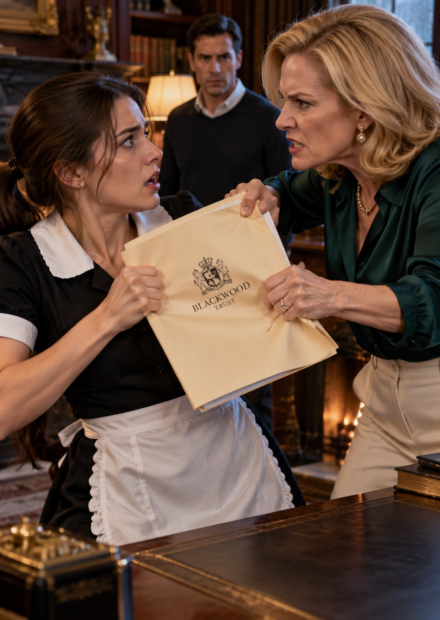
She picked up the page.
Her eyes moved down it.
“No.”
Julian sighed.
“Vanessa.”
“No.”
She looked at me.
“You don’t get to make financial decisions for our family.”
The absurdity was so perfect that for a moment no one spoke.
Then I said, “I am making financial decisions for my money.”
Her mouth tightened.
“You know we can’t absorb all this at once.”
“You have six weeks before utilities.”
“You canceled the monthly money immediately.”
“Yes.”
“We have bills.”
“Yes.”
“Leo has expenses.”
“Yes.”
“You’re punishing him too.”
That angered me.
Not loudly.
Deeply.
“Do not use my grandson as a receipt.”
Her face changed.
“That’s not what I’m doing.”
“It is exactly what you’re doing.”
“I’m telling you reality.”
“No. Reality is that you spent three thousand five hundred dollars on upgrades you did not have money to buy.”
“Most of that was for your party.”
“Then why didn’t you ask me?”
“Because I knew you’d say no.”
The room went silent.
There it was.
The truth.
Perfect.
Simple.
Vanessa realized what she had admitted.
I nodded.
“Thank you.”
Her eyebrows drew together.
“For what?”
“For finally saying it correctly.”
I stepped closer.
“You knew I would say no.”
She said nothing.
“So you avoided asking.”
“It was supposed to be a surprise.”
“No.”
I shook my head.
“A surprise is something you give another person.”
I pointed toward myself.
“You tried to give me a bill.”
Julian sat down.
Vanessa glared at him.
“Are you going to let her talk to me like this?”
He looked up.
I watched him.
Here it was again.
The chair.
Different room.
Same choice.
His face tightened.
Then he said quietly, “She’s right.”
Vanessa stared.
“What?”
“The charges.”
He swallowed.
“We shouldn’t have done it.”
Her face emptied.
“You told me she wouldn’t care.”
“I know.”
“You said she’d cover it.”
“I was wrong.”
“You were fine with it until she embarrassed us.”
He flinched.
“She didn’t embarrass us.”
Vanessa laughed.
“Are you serious?”
“We embarrassed ourselves.”
I looked at my son.
For the first time since my birthday, I saw him stand up.
Not physically.
Something more difficult.
Vanessa saw it too.
Her eyes filled with furious tears.
“So now you’re choosing her.”
Julian’s voice grew tired.
“No. I’m choosing to stop pretending everything is Mom’s fault because she finally said no.”
Vanessa shoved the page onto the table.
“This is unbelievable.”
She turned toward me.
“You’ve hated me since the day I married him.”
“No.”
“Yes, you have.”
“No.”
“You’ve always judged me.”
“I have disagreed with you.”
“Same thing.”
“No, Vanessa.”
I kept my voice level.
“They are not the same thing.”
Her eyes were wet now.
“You think I’m some spoiled parasite.”
I could have said yes.
Part of me wanted to.
But anger does not require cruelty.
“I think you’ve become accustomed to spending money you don’t earn.”
She recoiled.
“That’s cruel.”
“It is factual.”
“I work.”
“Yes.”
“Just because I don’t have some boring corporate job—”
“I did not insult your work.”
“You’re insulting me.”
“I’m telling you the arrangement is over.”
She folded her arms tightly.
“Why?”
That question surprised me.
“Why what?”
“Why now?”
I stared.
“You told me to leave my seat at my own birthday dinner.”
“You’re blowing that out of proportion.”
“No.”
“You could sit anywhere.”
“So could Patricia.”
Her mouth tightened.
“She’s my mother.”
“And I am Julian’s.”
She stopped.
The sentence landed between all three of us.
I continued.
“The difference is that when you wanted something for your mother, you expected me to disappear.”
Her face shifted.
For the first time, some of her anger cracked.
I saw something else.
Recognition.
Not remorse yet.
But recognition.
I walked to the sink.
“Do you know what Leo said to me that night?”
Neither answered.
“He said, ‘Grandma’s sitting here.’”
My throat tightened.
“The nine-year-old understood what neither adult at that table was willing to say.”
Julian looked shattered.
Vanessa looked away.
I continued.
“I do not want him growing up believing love means the quietest person must always surrender to the loudest.”
The kitchen was silent.
“Because one day,” I said, “he will be the quiet person.”
That was the first moment Vanessa had nothing to say.
She picked up the page again.
This time she read it more slowly.
When she reached the bottom, she asked, “You’ll still help with Leo?”
“Directly. When I choose.”
“You don’t trust us.”
“I don’t trust our current arrangement.”
“That’s the same thing.”
“It isn’t.”
She stared at me.
Then she put the paper down.
“What about the event bill?”
“That is yours.”
“We don’t have three thousand dollars.”
“Then arrange payments.”
She laughed bitterly.
“So you’re really going to make us pay.”
“No.”
I looked directly at her.
“You ordered something. The inn is going to make you pay.”
She grabbed her sweater tighter around herself.
Then she walked out.
The back door slammed.
Julian remained seated.
We listened to her footsteps cross the patio.
After a while, he whispered, “That went better than I expected.”
I stared at him.
Then, against my will, I laughed.
He laughed too.
It lasted only a few seconds.
But it mattered.
Before he left, he folded the page and put it into his pocket.
At the door, he turned.
“Mom?”
“Yes?”
“I’m going to the interview Thursday.”
“Good.”
“And if I don’t get it, I have another application at a warehouse operations company.”
“Good.”
“And I’m sorry.”
I waited.
He continued.
“Not just for the seat.”
My eyes burned.
“For all of it.”
That apology was heavier.
Not enough to repair three years.
But heavy enough to carry somewhere.
I nodded.
“Then show me.”
He understood.
When he left, I poured out the cold coffee.
My phone rang.
Patricia.
I considered not answering.
Then I did.
“Hello?”
“Margaret.”
Her voice was stiff.
“We need to clear the air.”
I looked toward the guest cottage.
“All right.”
“I had no idea you were going to behave that way in front of everyone.”
I closed my eyes.
Of course.
Not I’m sorry.
Not thank you for paying for dinner.
Not I should never have taken your chair.
My behavior.
“I see.”
“My sister was there.”
“Yes.”
“And Raymond is furious with me.”
“That sounds like something you should discuss with Raymond.”
“He says I shouldn’t have taken your seat.”
“He’s correct.”
There was a pause.
“I was told that was where Vanessa wanted me.”
“And?”
“She was hosting.”
“No, Patricia.”
I looked around my kitchen.
“I was.”
Silence.
Then she said, “Vanessa planned it.”
“I contracted it. I chose the menu. I chose the venue. I sent the guest list. I paid eighty-two hundred dollars.”
Another pause.
“I didn’t know the amount.”
“You didn’t need the amount.”
“Well, Vanessa made it sound like—”
She stopped.
I waited.
“Like what?”
“Like she and Julian were contributing.”
There it was.
A smaller lie nested inside the larger one.
I felt strangely unsurprised.
“How much did she say they were contributing?”
“She didn’t give a number.”
“But she let you believe they were hosting.”
“Yes.”
I sat down.
Something inside me became clearer.
Vanessa had not merely spent my money.
She had used it to construct an image.
For her mother.
For friends.
For herself.
Perhaps even for Julian.
An image of competence.
Generosity.
Success.
And I had become the invisible machinery behind it.
“Patricia,” I said.
“Yes?”
“Did you know tomorrow’s brunch was being charged to me?”
Silence.
Too long.
“Vanessa said everything was being handled through the same event package.”
“That was not my question.”
Another silence.
“I assumed you knew.”
There it was.
The family motto.
I assumed.
Julian assumed I wouldn’t mind.
Patricia assumed I knew.
Vanessa assumed I would pay.
Everybody assumed Margaret would absorb the cost.
“I didn’t.”
“I realize that now.”
“Good.”
She cleared her throat.
“I suppose I should apologize.”
I almost laughed.
Suppose.
“You either want to or you don’t.”
Her voice hardened.
“You don’t make anything easy.”
I looked at Arthur’s empty chair.
“No,” I said.
“Apparently I used to.”
Then I ended the call.
For the next four days, nothing dramatic happened.
And that was exactly what made them important.
I did not transfer money.
The world continued turning.
I did not unlock Vanessa’s credit card.
No buildings collapsed.
I did not pay the banquet addendum.
The inn did not send police.
Julian attended his interview.
On Friday afternoon, he called.
“I got a second interview.”
My heart lifted.
“That’s wonderful.”
“It’s Tuesday.”
“Good.”
He hesitated.
“I’m trying not to get ahead of myself.”
“That sounds sensible.”
“Dad would probably tell me to take the warehouse job anyway.”
I smiled.
“Your father would tell you to stop asking dead people to make decisions for you.”
Julian laughed.
Then his voice softened.
“Yeah.”
We hung up.
Ten minutes later, I received a message from Vanessa.
Could we talk? Just you and me.
I stared at it for a long time.
My first instinct was suspicion.
My second was exhaustion.
Then I remembered what I had told Leo.
Loving somebody means telling the truth.
Sometimes it also means listening to whether they have found any.
I replied.
Tomorrow. Ten o’clock. My kitchen.
Her answer arrived immediately.
Okay.
That night, I slept badly.
Because I understood something I had not wanted to understand before.
Stopping the money was easy compared with what came next.
Money was only the structure holding our unhealthy family arrangement in place.
Now that I had removed it, we were going to find out whether anything stronger existed underneath.