Chapter 5 – THE DAY I WALKED OUT WITH MY DAUGHTER
Sophie came home after thirty-four days in the NICU.
Thirty-four days.
Eight hundred and sixteen hours.
I knew because I had counted.
On the morning they discharged her, I arrived before sunrise.
My father came with me.
Marcus arrived ten minutes later carrying a car seat he had researched with the concentration of a man preparing a spacecraft for launch.
He had taken the parenting classes.
All of them.
Infant CPR.
Premature-baby care.
Safe sleep.
Feeding support.
He had also started therapy.
He told me that once.
I did not ask what they discussed.
Some work belonged to him.
The NICU nurse smiled when she saw us.
“Today’s the day.”
I immediately cried.
Dad handed me a handkerchief.
“You knew I would.”
“I’ve known you thirty-four years.”
“You brought an actual handkerchief.”
“I’m civilized.”
Marcus almost laughed.
The three of us stood around Sophie’s crib.
For one strange, suspended moment, we looked like a family.
Maybe we still were.
Just not the family I had imagined.
Families change shape.
That does not always mean they stop being families.
Sophie wore a white knitted outfit my mother had bought years before she died.
She had purchased it after my miscarriage.
I had been furious.
“Why would you buy baby clothes now?” I had demanded.
Mom had folded the tiny sweater and put it in a cedar box.
“Because hope doesn’t become foolish just because you’ve been hurt.”
She died eight months before I became pregnant with Sophie.
I had found the sweater while cleaning her closet.
Now my daughter wore it home.
I pressed my nose to Sophie’s head.
She smelled like milk and hospital soap.
“Ready?” the nurse asked.
“No.”
She laughed.
“Good answer.”
Marcus fastened Sophie into the car seat.
Then checked the straps.
Then checked them again.
Then asked the nurse to check.
She adjusted one clip half an inch.
Marcus looked horrified that he had almost done it wrong.
For the first time in months, I saw the man I had married.
Not the liar.
Not the CEO.
Just Marcus.
Human.
Trying.
That hurt too.
Outside, security held reporters behind barricades.
I had hoped the story would disappear by then.
It had not.
The public loved a scandal involving wealthy people because money made pain feel fictional.
Billionaire husband.
Billionaire father.
Pregnant mistress.
Hospital assault.
Premature baby.
Divorce.
People discussed us like characters in a television series.
I wanted to scream that Sophie had stopped breathing for eleven seconds on her fourth night.
That I remembered the number because I had been staring at the monitor.
I wanted to tell them I had spent nights pumping milk while crying into a hospital blanket.
That Marcus had sat alone in the NICU hallway after I asked him not to come near me.
That my father, who could buy buildings without blinking, had once stood helpless beside an incubator and whispered, “Come on, little one,” because money could not make his granddaughter’s lungs mature faster.
But none of that belonged to strangers.
At the hospital entrance, Dad touched my arm.
“There’s another exit.”
I looked at the cameras.
Then down at Sophie.
“No.”
“Sarah.”
“I’ve been hiding since this started.”
“Protecting your privacy is not hiding.”
“I know.”
I took a breath.
“But I want to walk out the front.”
Marcus studied me.
“Do you want me beside you?”
That was a good question.
Months earlier, he would have assumed.
Now he asked.
I looked at him.
“Yes.”
Not because we were reconciled.
We weren’t.
The divorce agreement had been drafted.
Our attorneys were finalizing financial and custody terms.
I wanted Marcus beside me because he was Sophie’s father.
Nothing more.
Dad walked on my other side.
The hospital doors opened.
Noise exploded.
“Sarah!”
“Mrs. Thornton!”
“How is the baby?”
“Marcus, are you still together?”
“Is the divorce final?”
“Do you forgive Vanessa?”
“Is Vanessa’s baby Marcus’s?”
That last question stopped me.
Not physically.
Inside.
The question had followed us for weeks.
Vanessa had been telling the truth about being pregnant.
Whether Marcus was the father remained unconfirmed at the time.
I had eventually made a decision.
I did not need to know.
If the child was his, Marcus would be responsible for that child.
If the child was not his, that was between Vanessa, the biological father, and their families.
Either way, Sophie’s life would not be built around speculation.
A reporter shouted again.
“Mrs. Thornton, is your husband’s mistress carrying his child?”
I turned.
Dad whispered, “Sarah.”
I knew he meant I did not have to answer.
For once, I wanted to.
I kept my voice calm.
“That child’s parentage is not my story to discuss.”
The reporters went quiet enough for me to continue.
“My daughter is healthy enough to come home today. That is what matters to me.”
Someone asked, “Are you still married?”
Marcus looked at me.
I answered.
“The legal process is private.”
“Do you blame Mr. Thornton for what happened?”
This time I looked at Marcus.
He did not look away.
“I blame adults for the choices they make.”
I turned toward the car.
That became the only statement I ever gave the press.
Months passed.
The divorce became final the following spring.
Marcus and I divided property without a war.
He did not contest the structure Laura proposed.
I kept the house, although I did not move back for almost six months.
When I finally did, I replaced our bedroom furniture.
Not because the bed had betrayed me.
Beds are innocent.
But I needed the room to become mine.
I turned Marcus’s old dressing room into a reading room.
The first book I put on the shelf was the children’s story my mother used to read to me.
Sophie slept in the nursery Marcus and I had painted together.
At first, I thought I would have to repaint it.
Then one night, I stood in the doorway looking at the stars we had painted across the ceiling.
Marcus had balanced on a ladder while I sat on the floor directing him.
“More to the left,” I had said.
“You have said that fourteen times.”
“Because you keep putting them too far right.”
“Stars don’t have assigned positions.”
“My stars do.”
He had laughed.
I expected the memory to ruin the room.
It didn’t.
Not everything from a broken marriage becomes contaminated.
Some memories are still yours.
Some joy was real even if other things were lies.
I left the stars.
Marcus became a reliable father.
That surprised some people.
It should not have.
Bad husbands can love their children.
Good fathers can make terrible choices.
Human beings resist simple categories.
He saw Sophie according to our schedule.
He learned how she liked her bottles.
He learned that she would only sleep if someone hummed slightly off-key.
He learned which stuffed animal she wanted in the car and which one belonged exclusively in her crib.
He stopped asking me to reconsider the divorce after the third month.
One evening, when Sophie was almost a year old, he stood at my front door after dropping her off.
“Sarah.”
I looked up.
“What?”
“I owe you something.”
My stomach tightened.
“What?”
“An apology that isn’t asking for anything.”
I said nothing.
He took a breath.
“When I first apologized, I wanted you to forgive me so I wouldn’t lose my life.”
His eyes dropped.
“Then I wanted you to forgive me so I wouldn’t have to believe I was the kind of man who could do what I did.”
I listened.
“Now I understand neither of those things was your responsibility.”
Something inside me loosened.
Not healed.
Loosened.
“I’m sorry I lied to you. I’m sorry I lied about you to justify myself. I’m sorry I saw warning signs with Vanessa and chose protecting myself over telling you the truth.”
He swallowed.
“And I’m sorry Sophie paid for my cowardice.”
I looked at him for a long time.
“Thank you.”
He nodded.
“I don’t expect anything else.”
“Good.”
A sad smile appeared.
“You’ve gotten meaner.”
“No.”
I smiled too.
“I’ve gotten clearer.”
He laughed softly.
Then left.
I watched him walk to his car without wanting him to turn around.
That was when I knew I had finally moved on.
Vanessa did not disappear.
People sometimes expect villains to vanish once justice arrives.
They don’t.
They continue existing.
They wake up.
They make choices.
They live with what they did.
Through attorneys, I learned she completed the counseling required by the court.
She had her baby.
I deliberately avoided asking who the father was.
Marcus eventually told Laura that he had taken a paternity test because legal responsibility required an answer.
Laura asked whether I wanted the result.
I thought about it.
Then shook my head.
“No.”
She looked surprised.
“You don’t want to know?”
“It won’t change anything I need to do.”
And it didn’t.
A year earlier, I would have believed knowing was power.
Now I understood some information only creates another room inside your mind that you have to keep cleaning forever.
Marcus would handle his responsibilities.
Vanessa would handle hers.
I would handle mine.
The only time Vanessa communicated directly with me after the case ended was through a letter sent to Laura’s office.
Laura called first.
“You don’t have to read it.”
“Is it threatening?”
“No.”
“Then send it.”
The envelope arrived unopened.
I left it on my desk for three days.
Then one night, after Sophie fell asleep, I opened it.
Vanessa’s handwriting was surprisingly small.
Sarah,
I know I don’t deserve an answer.
I don’t expect forgiveness.
For a long time, I told myself that Marcus had destroyed my life. Then I told myself you had. It was easier than admitting I had participated in destroying it myself.
When he ended things, I became obsessed with proving that he had chosen wrong.
I watched you because I wanted to find something ugly about your life.
I wanted you to be cruel.
Arrogant.
Cold.
Anything that would make what I had done feel justified.
The more I watched, the angrier I became because you looked normal.
You bought coffee.
You rubbed your stomach when you walked.
You laughed with a nurse outside your doctor’s office.
You weren’t the woman I had invented.
And I hated you for that.
The day at the hospital, I wanted to hurt you emotionally.
When you didn’t react the way I expected, I lost control.
That sentence stayed with me.
I lost control.
People use it as if control is something dropped by accident.
A glass.
A set of keys.
But control is often surrendered through a hundred smaller decisions first.
Following.
Waiting.
Hating.
Justifying.
Approaching.
Slapping.
Grabbing.
Pushing.
Vanessa continued.
I will never forget seeing the blood.
I know saying I didn’t mean for that to happen doesn’t matter because I created the situation where it could happen.
I am sorry for what I did to you.
I am especially sorry for what I did to Sophie.
I hope she never knows my name.
Vanessa
I folded the letter.
Then unfolded it.
Then folded it again.
I did not cry.
I did not feel triumph.
I did not feel peace.
What I felt was quieter.
An ending.
Not forgiveness.
Not friendship.
Not absolution.
An ending.
I put the letter in the same locked box where I kept legal documents from the case.
Years later, if Sophie ever asked what happened, I would decide what she needed to know.
Not what the internet said.
Not what the newspapers said.
The truth.
But that night, she was still small.
I walked upstairs.
Her bedroom door stood open.
The stars on the ceiling glowed faintly.
Sophie was asleep on her back, one hand beside her face.
Her hair had grown into soft brown curls.
She no longer looked fragile.
She looked determined.
I bent over the crib.
“Hi, baby.”
Her eyes remained closed.
I touched two fingers to her chest.
Rise.
Fall.
Rise.
Fall.
Even after all that time, sometimes I still needed to feel it.
Behind me, Dad whispered, “You’re going to wake her.”
I turned.
He stood in the doorway wearing slippers and carrying two mugs of tea.
My father, Adrian Vale.
Billionaire.
Terrifier of bankers.
Buyer of buildings.
Professional destroyer of weak negotiation positions.
Wearing ridiculous plaid slippers.
I smiled.
“You walk like a burglar.”
“I own this hallway.”
“You don’t own my house.”
“I helped negotiate it.”
“That’s not ownership.”
“Debatable.”
I followed him downstairs.
We sat in the kitchen.
For several minutes, neither of us spoke.
Then Dad looked at me.
“Do you ever regret it?”
“The divorce?”
“Any of it.”
I thought about Marcus.
Vanessa.
The hospital.
The blood.
Sophie’s incubator.
The photographs inside the leather briefcase.
The version of myself who had once believed maintaining appearances was the same thing as maintaining a marriage.
“I regret what happened,” I said.
“But?”
“But I don’t regret finding out who people were.”
Dad nodded.
“You included me in that.”
I looked at him.
He stared into his tea.
“I should have told you when I suspected Marcus.”
“Yes.”
“I thought I was protecting you.”
“I know.”
“I was wrong.”
“Yes.”
He glanced up.
“You enjoy saying that.”
“A little.”
His mouth twitched.
I reached across the table.
“You came when I needed you.”
“I would always come.”
“I know.”
That was the difference.
Marcus had loved me and still betrayed me.
My father had tried to protect me and still made mistakes.
Love did not make people perfect.
The difference was whether they told the truth when perfection failed.
Dad turned his hand beneath mine and squeezed.
“Your mother would be proud of you.”
The words hit the place in me that still felt eleven years old whenever I missed her.
“She’d be furious about the hospital.”
“She would have attempted murder.”
“Dad.”
“Your mother was not as gentle as everyone remembers.”
I laughed.
He smiled.
Then his expression became thoughtful.
“You know what bothered me most about Vanessa?”
“The part where she nearly killed me?”
“Besides that.”
“What?”
“She thought power meant being untouchable.”
I knew what he meant.
Vanessa had believed Marcus’s position would protect her.
Then perhaps her pregnancy.
Then money.
Then lawyers.
Then ambiguity.
She had thought powerful people escaped consequences because someone eventually made the truth negotiable.
My father leaned back.
“Real power is not avoiding consequences.”
“What is it?”
“Being able to survive them without becoming someone worse.”
I looked toward the stairs.
Toward Sophie.
I thought about the woman I had been before the hospital.
She had believed survival meant preserving.
The marriage.
The reputation.
The picture.
The version of Marcus she loved.
The version of herself who never made scenes.
I wished I could tell her she was allowed to lose things.
A marriage.
An illusion.
A future she had planned.
Losing them would not kill her.
Losing herself might.
My father left around midnight.
I checked on Sophie again.
Then I went to my bedroom and stood at the window overlooking the dark garden.
A year and a half earlier, I had stood at another window waiting for Marcus to come home.
I had watched headlights pass.
Checked the clock.
Made excuses.
Board meeting.
Traffic.
Investor dinner.
Emergency.
Now the house was quiet because no one was missing.
I was alone.
But I was not waiting.
There is a difference.
My phone buzzed.
A message from Marcus.
Sophie left her yellow rabbit in my car. I’ll bring it tomorrow morning before breakfast.
I smiled.
Then typed:
She’ll survive one night. Don’t wake us at dawn.
A moment later:
8:30?
I replied:
9.
His answer:
Deal.
Simple.
Clear.
No secrets.
No promises pretending to be more than they were.
I placed the phone on the nightstand.
Then I turned off the lamp.
Before sleeping, I thought of the hospital corridor one last time.
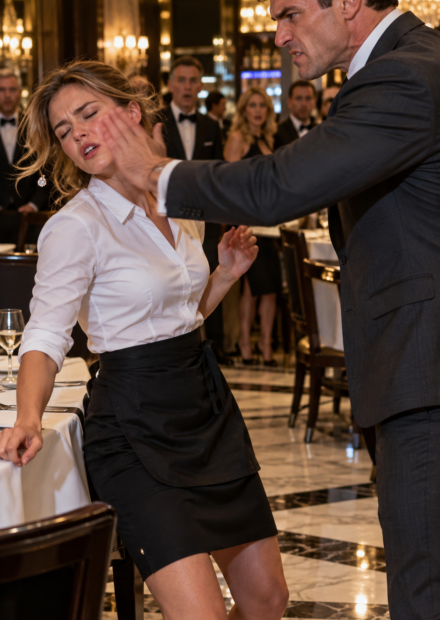
The slap.
The white lights.
The floor rushing upward.
My hands around my stomach.
Blood spreading beneath me.
For months, that memory had ended at the moment I fell.
That night, for the first time, I let it continue.
I remembered the nurses running toward me.
Dr. Hammond telling me to stay awake.
My father arriving.
Sophie crying after they delivered her—something I later learned she had done for exactly four seconds before needing help breathing.
I remembered waking up.
I remembered asking for the truth.
I remembered refusing Vanessa’s settlement.
I remembered walking through courthouse doors.
I remembered bringing my daughter home through the front entrance while cameras flashed.
The story did not end when Vanessa pushed me down.
That had only been the moment everything false began collapsing.
She thought I was weak because I was pregnant.
She thought I was pathetic because my husband had cheated.
She thought being Marcus Thornton’s wife meant I would protect the marriage at any cost.
She thought my father’s wealth meant this would become a private scandal solved with money.
She thought her own pregnancy would make everyone afraid to hold her accountable.
She thought one violent moment could decide which of us won.
She was wrong about all of it.
My father brought the evidence.
The hospital cameras preserved the truth.
Marcus eventually admitted his betrayal.
The courts imposed consequences.
But none of those things saved me.
I saved myself the day I stopped confusing silence with dignity.
The day I stopped asking whether Marcus would choose me.
The day I understood that I was allowed to choose myself.
And the daughter I had once begged to survive beneath blinding operating-room lights grew into a little girl who laughed so loudly that sometimes she woke herself up.
Every time I heard it, I remembered the first sound I had listened for after the fall.
Beep-beep-beep.
Her heartbeat.
Still there.
Still fighting.
So was I.
And that, in the end, was the only victory I needed.
THE END./.