Chapter 5 – WHAT WAS LEFT WHEN THE MONEY WAS GONE
My father did not lose everything overnight.
That would have been simpler.
More dramatic.
Maybe even more satisfying.
Real consequences came slowly.
First came the corrected records.
Then the repayment agreement.
Then the bank restrictions.
Then the humiliating process of separating legitimate business spending from years of family convenience.
The company kept operating.
Barely, at first.
Dad was forced to cut expenses.
Real expenses.
Not payroll.
Not worker wages.
Not the people he had used to make me feel guilty.
The luxuries went first.
Company-paid club memberships.
Personal travel reimbursements.
Household costs.
Vehicle arrangements that should never have been treated as business necessities.
My mother hated every second of it.
I know because she told me.
Repeatedly.
For the first month after the meeting, she sent long messages.
Some angry.
Some pleading.
Some almost tender.
They all carried the same hidden request.
Return to your role.
One evening, she called from an unfamiliar number.
I answered before realizing who it was.
“Emily.”
My body tightened immediately.
“Mom.”
“Please don’t hang up.”
I almost did.
Then I sat on my couch.
My couch.
In my apartment.
A place nobody could throw me out of.
“What do you want?”
She inhaled.
“Your father says we may have to sell the house.”
I closed my eyes.
There it was.
The sentence everyone expected to break me.
The mansion.
The symbol of success.
The marble staircase.
The landscaping.
The rooms I had helped maintain.
“You should do whatever makes financial sense.”
She was silent.
“That’s all you have to say?”
“What do you want me to say?”
“That you care.”
“I do care.”
“You don’t sound like it.”
I looked around my apartment.
It was quiet.
Simple.
Nothing in it required anyone else to go into debt to impress a guest.
“I care that you’re scared,” I said. “I care that Dad is under pressure. I care that you’re my mother.”
Her breath caught.
“But I’m not paying to prevent the sale.”
Her voice hardened instantly.
“There it is.”
“What?”
“The punishment.”
“No.”
“You could fix this.”
I almost smiled.
That sentence had owned me for years.
You could fix this.
Maybe I could.
That didn’t mean I should.
“You and Dad own a house you may no longer be able to afford.”
“Because of what you did.”
“No, Mom. Because of what it costs.”
“If you hadn’t frozen—”
“I stopped paying.”
“Exactly.”
I let the silence sit between us.
Eventually, she understood what she had just admitted.
Her voice became quieter.
“We’re your parents.”
“I know.”
“We gave you everything growing up.”
“You raised me.”
“We sacrificed.”
“I believe you.”
“Then how can you watch us lose our home?”
My chest hurt.
Because beneath the manipulation, there was real fear.
My mother loved that house.
Maybe too much.
It represented everything she believed our family was.
Successful.
Respected.
Enviable.
Selling it would feel like public failure.
Years earlier, I would have paid anything to save her from that humiliation.
Now I understood humiliation was survivable.
Deception was what had nearly destroyed me.
“Mom,” I said, “I would have helped you if you had asked honestly.”
She said nothing.
“If you had called and said, ‘Emily, we can’t afford this house anymore. Can you help us figure out what to do?’ I would have listened.”
“You would have judged us.”
“Maybe.”
She gasped.
I continued.
“But I would have known the truth.”
Silence.
“That’s what you never gave me. The truth.”
Her voice cracked.
“We thought you would say no.”
The words were so quiet I almost missed them.
I stared at the wall.
“What?”
“We thought if you knew everything, you would stop helping.”
I closed my eyes.
There it was.
The confession beneath every ledger.
Every half-truth.
Every disguised expense.
Every “emergency.”
They had hidden the truth because they believed my consent depended on ignorance.
“That should have told you something,” I whispered.
She began crying.
My mother almost never cried.
Not with me.
For a moment, instinct took over.
I wanted to comfort her.
Promise I would fix the house.
Tell her everything would be okay.
Then I remembered the staircase.
The smile.
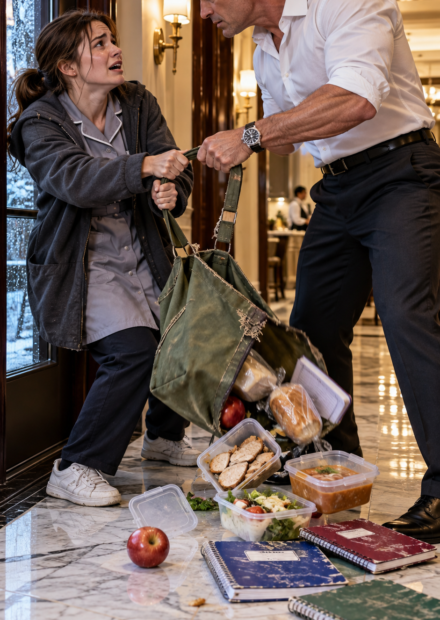
The handbag.
The silence when Dad threw me out.
I stayed where I was.
“I’m sorry you’re hurting,” I said.
It was true.
“But I’m not going back.”
She hung up.
Three months later, the mansion was listed for sale.
My mother called it forced.
The financial records suggested it was overdue.
Dad could keep the company only if the family lifestyle stopped draining it.
The house carried a large mortgage.
The vehicles were expensive.
The recurring personal costs were worse than even I had realized.
Selling the mansion was not bankruptcy.
It was reality.
My father hated reality more than he had ever hated me.
For a while, he refused to speak to me.
That was fine.
Silence, I discovered, was much less painful when I was no longer paying for the privilege of avoiding it.
Madison surprised me.
Not immediately.
The first few weeks, she blamed everyone.
Dad.
Mom.
Me.
The bank.
Rachel.
Even Christopher, briefly, because he told her forty-eight thousand dollars for engagement jewelry was insane.
But slowly, something changed.
Maybe losing the family cards did what no lecture ever could.
It forced her to see prices.
She had some savings.
Less than I expected.
She also had no idea how much her life cost.
Rent.
Insurance.
Travel.
Dining.
Clothes.
Subscriptions.
Everything had flowed around her without friction for so long that she had never learned where the money came from.
One afternoon, she texted me.
Do you know how much health insurance costs?
I stared at the message for a full minute.
Then I laughed so hard I cried.
I replied:
Yes.
She answered:
This is criminal.
I wrote:
It is not.
A minute later:
Are you sure?
That was the beginning.
Not forgiveness.
Not reconciliation.
Something smaller.
Reality.
Madison found work.
Not glamorous work.
A position coordinating events for a hospitality company.
Mom called it beneath her.
Madison took it anyway.
The first time she received a paycheck, she sent me a screenshot with the amount covered.
I made money today that Dad didn’t give me.
I didn’t know what to say.
So I wrote:
How does it feel?
She replied:
Smaller than I hoped.
Then:
Better than I expected.
We met for coffee a month later.
She paid.
She made a ridiculous performance of placing her card on the table.
“Don’t faint.”
“I’m trying not to.”
“It’s my card.”
“Very impressive.”
“And I’m paying the entire bill.”
“Heroic.”
She smiled.
Then the smile faded.
“I’m sorry.”
I looked at her.
This apology was different from the text.
No tears.
No excuses.
No Mom said.
No Dad told me.
Just the words.
“I’m sorry I asked you for the card that night.”
I swallowed.
“You didn’t know I was leaving for good.”
“That makes it worse.”
“Why?”
“Because I thought Dad could throw you out and we’d still keep using your money.”
I looked down at my coffee.
She continued.
“I didn’t think of you like a person.”
That hurt.
She saw it.
“I mean—I did. Obviously. You’re my sister. But when it came to money, you became… I don’t know. A system.”
I looked at her.
“A system.”
“Mom would say, ‘Emily takes care of that.’ Dad would say, ‘Your sister has it covered.’ And eventually I stopped thinking there was a person attached.”
I nodded slowly.
“That’s how I felt.”
Her eyes filled.
“I’m sorry.”
I believed her.
Believing an apology is not the same as erasing what happened.
But it is a beginning.
“What about the jewelry?” I asked.
She groaned.
“Christopher nearly died when he found out.”
“He didn’t know?”
“He thought Mom and I were looking at things.”
I laughed.
“So the engagement gift was going to be from me without me knowing?”
“Apparently.”
“Romantic.”
She covered her face.
“I hate myself.”
“Don’t.”
She lowered her hands.
“Really?”
“Learn from it. That’s more useful.”
She stared at me.
“You sound like Rachel.”
“That’s horrifying.”
We both laughed.
Madison eventually bought a much smaller necklace.
With her own money.
She sent me a picture.
I told her it was beautiful.
She wrote back:
It is. Also I checked the price four times before buying it.
Progress.
My relationship with my parents was harder.
Dad signed the settlement documents because his lawyer convinced him the alternative would be worse.
He acknowledged the disputed financial treatment.
The unauthorized representation involving my signature was corrected.
My name was removed from every company record in which it did not belong.
A repayment schedule was established for the amounts we could clearly substantiate.
I did not recover everything.
I knew I wouldn’t.
Some spending I had genuinely authorized.
Some arrangements were too informal.
Some money had been given without conditions I could prove.
That hurt.
But I stopped measuring victory by what came back.
The most important thing I recovered was control over what went out.
No more cards.
No more emergency wires.
No more “temporary” help without documents.
No more financial entanglement with Bennett Construction.
Dad called once after the final settlement was executed.
I almost didn’t answer.
Then I did.
“Hello?”
Long silence.
“Emily.”
“Dad.”
He sounded older.
Not weak.
My father would probably never allow himself to sound weak.
But smaller somehow.
“The house sold.”
“I heard.”
He must have expected more.
Sympathy.
Regret.
Maybe triumph.
I gave him none.
“We’re moving next week.”
“Okay.”
Another pause.
“Your mother is having a difficult time.”
“I’m sure she is.”
“You could call her.”
“I will when I’m ready.”
He exhaled sharply.
“You always have to control everything now.”
I almost laughed.
“No, Dad. Just me.”
Silence.
“What?”
“I’m controlling my decisions. My accounts. My name. My time.”
“That isn’t how family works.”
“Maybe not in ours.”
He became quiet.
Then he said, “I never thought you’d actually let the house go.”
There was such naked confusion in the sentence that my anger faded for a moment.
“You thought I would save it.”
“Yes.”
At least he was honest.
“Why?”
“Because you always do.”
I looked out my apartment window.
The city lights stretched across the horizon.
“Not anymore.”
His breathing changed.
Then came the sentence I had known would eventually arrive.
“You destroyed this family.”
Once, those words would have crushed me.
That night, they didn’t.
“No, Dad.”
“You turned your sister against us. Your mother barely sleeps. We lost the house. The company has been humiliated.”
“You lost expenses you couldn’t afford.”
“We were doing fine until you—”
“Until I stopped paying.”
He went silent.
I continued.
“If everything falls apart the moment one person stops funding it, then that person didn’t destroy it.”
“You think you’re so clever.”
“No.”
I swallowed.
“I think I was afraid for a very long time.”
“Afraid of what?”
“That if I stopped helping, you wouldn’t love me.”
The silence on the other end was absolute.
I had never said it before.
Not to Rachel.
Not to Madison.
Not even clearly to myself.
My father’s voice was lower when he answered.
“That’s ridiculous.”
“Maybe.”
“We’re your family.”
“I know.”
“I loved you before you made money.”
My eyes burned.
There it was.
The sentence I had wanted.
And yet it wasn’t enough.
Because love can be real and still become distorted.
People can love you and still use you.
They can believe their need justifies your sacrifice.
They can hurt you while insisting the relationship makes the hurt permissible.
“I believe you,” I said.
He sounded surprised.
“You do?”
“Yes.”
I took a breath.
“But somewhere along the way, you started loving what I could fix more than you respected what it cost me.”
He didn’t answer.
For once, I didn’t fill the silence.
Finally, he said, “I did what I had to do.”
“No.”
I looked at the cracked photograph on my bookshelf.
“You did what you were afraid not to do.”
“What’s the difference?”
“Consent.”
He made a frustrated sound.
I continued.
“If you had shown me the books seven years ago, I might still have helped.”
“You would have judged me.”
“Probably.”
“You would have said no to some of it.”
“Yes.”
“That’s exactly my point.”
“No, Dad.”
I closed my eyes.
“That’s mine.”
He hung up.
We didn’t speak for four months.
During that time, Bennett Construction survived.
That surprised a lot of people.
Maybe Dad most of all.
Without the mansion draining cash, without luxury expenses being disguised as business needs, without assuming my money would arrive whenever things became tight, the company had to become what Dad always claimed it was.
A real business.
Martin heard through the settlement reporting that expenses stabilized.
A few unprofitable projects were dropped.
Dad sold one of the luxury vehicles.
My mother moved with him into a townhouse.
Not a tiny one.
Not poverty.
Just smaller.
Real.
I passed their old mansion once after the new owners moved in.
I hadn’t planned to.
Traffic diverted me through the neighborhood.
The landscaping had changed.
The new family had put children’s bicycles near the garage.
The formal front windows were open.
For years, I had believed that house represented my family.
Seeing strangers live there cured me of that illusion.
It was just a house.
The marble had never loved me.
The chandelier had never needed me.
The staircase had never rejected me.
People had.
And people could change.
Or not.
Either way, I no longer needed the building to prove anything.
My mother and I finally met six months after the audit began.
Her idea.
Public place.
No Dad.
No Madison.
She arrived carrying a plain leather purse.
Not the twelve-thousand-dollar handbag.
I noticed.
She noticed me noticing.
“I sold it.”
I blinked.
“The Laurent & Vale bag?”
“Yes.”
“Why?”
She gave me a strange look.
“Because every time I carried it, I thought about that spreadsheet.”
I didn’t know what to say.
We ordered tea.
For several minutes, neither of us spoke.
Then she placed her hands on the table.
“I was wrong.”
No qualification.
No but.
I waited.
She continued.
“I kept telling myself your father was protecting the company.”
Her eyes lowered.
“And I told myself you could afford everything.”
I said nothing.
“And once I believed those two things, almost anything became justifiable.”
“That’s what scared me.”
She nodded.
“I know.”
“Do you?”
Her eyes filled.
“I do now.”
I looked away.
She continued.
“I hated you for freezing the accounts.”
“I know.”
“I thought you were punishing us.”
“I know.”
“It took me longer than it should have to understand that you were simply no longer protecting us from the truth.”
I looked back at her.
That sentence sounded like something Rachel might have said.
Maybe Mom had finally listened to someone besides Dad.
“I’m not asking you to forget,” she said.
“Good.”
A sad smile crossed her face.
“I assumed you’d say that.”
“I can’t pretend it didn’t happen.”
“I know.”
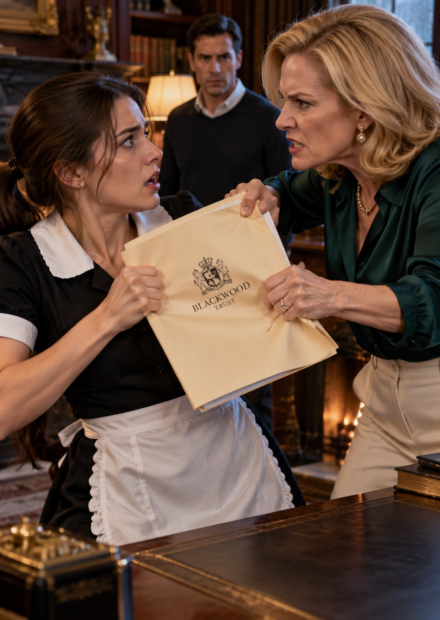
“You used my signature.”
Her eyes closed.
“I know.”
“You told Madison I agreed to things I didn’t know about.”
“Yes.”
“You let Dad throw me out.”
That one hurt her.
I saw it.
Her eyes opened.
“Yes.”
“Why?”
She started to answer.
Then stopped.
Tried again.
Finally she said, “Because I thought if I supported him completely, he would calm down.”
I stared at her.
“I thought if you got scared enough, you would transfer the money. Then everything could go back to normal.”
There it was.
Madison had told the truth.
I nodded.
“Normal was killing me.”
My mother cried then.
Quietly.
I did not rush around the table.
I did not take responsibility for making the moment easier.
But after a while, I placed my hand over hers.
Not because she deserved instant forgiveness.
Because I wanted to.
That difference mattered.
“I loved you,” she whispered.
“I know.”
“I still do.”
“I know.”
“Do you love me?”
My throat tightened.
“Yes.”
Relief flooded her face.
Then I added, “But you don’t get my trust back just because I love you.”
She winced.
“I understand.”
For the first time, I believed she might.
Trust came back slowly.
In teaspoons.
A lunch.
A phone call.
A birthday card with no request attached.
A holiday where nobody discussed money.
Dad took longer.
Much longer.
Maybe pride ages more slowly than people.
But almost a year after the night he threw my suitcase down the stairs, I received an envelope.
Handwritten.
No lawyer.
No company letterhead.
Inside was a short note.
Emily,
I have spent most of my life believing providing for a family meant never allowing anyone to see weakness.
When the company struggled, I treated your success as a solution instead of your life as your own.
I told myself you would understand because you always helped.
That was not the same as asking.
I know that now.
I do not expect this letter to fix what I did.
Dad
I read it three times.
No apology, technically.
Not the words I would have chosen.
But my father had never admitted weakness in his life.
That letter was probably the closest thing he knew how to write.
I placed it beside the cracked family photograph.
Then I called him.
Our relationship did not magically heal.
Real life doesn’t work like that.
He still became defensive.
I still became angry.
Mom still tried to smooth over conversations too quickly.
Madison still occasionally looked at me like she expected me to pick up a bill before catching herself.
But something fundamental changed.
They asked.
That sounds small.
It wasn’t.
Mom once called because her car needed an expensive repair.
She explained the problem.
Then she said, “I’m not asking you to pay. I just wanted your opinion on whether the estimate sounds reasonable.”
I nearly cried.
Madison wanted to take a vacation and asked whether I knew a good budgeting app.
Dad needed advice on a contract and asked whether I had time to look at it.
Not money.
Time.
And when I said I was busy, he said, “Understood.”
No guilt.
No explosion.
No accusation.
Just understood.
I wish I could tell you I never struggled with guilt again.
I did.
Sometimes I looked at my bank account and thought about how easily I could solve someone’s problem.
Then I remembered the audit.
Helping is not the same as surrendering.
Generosity without boundaries eventually becomes permission for people to stop seeing the cost.
The forty-eight-thousand-dollar jewelry charge never went through.
That one declined transaction became the thread that unraveled seven years of lies.
My bank’s fraud review exposed suspicious linked spending.
My own questions exposed the company reimbursements.
Rachel’s legal demands exposed the records.
Martin’s forensic tracing exposed the pattern.
And my family’s reactions exposed the truth that mattered most.
My father believed my money was part of his business plan.
My mother believed my success made consent optional.
Madison had been taught that my generosity was a permanent family resource.
And I had believed saying no would cost me my family.
We were all wrong.
Saying no did cost me something.
It cost me the version of the family built on fear, guilt, and money.
It cost me the mansion.
The holiday photos.
The illusion that keeping everyone happy meant keeping everyone close.
But what remained afterward was smaller and harder and more honest.
A sister learning to stand on her own.
A mother learning that love without respect becomes control.
A father learning that help cannot be entered into a ledger before it is offered.
And me.
Finally learning that I did not have to purchase my place at the table.
One year after the night I was disowned, Madison invited me to dinner.
Christopher had officially proposed.
They were planning a small engagement party.
When the check arrived, Madison reached for it.
I raised an eyebrow.
She grinned.
“Relax. I can afford dinner.”
“I wasn’t going to stop you.”
She slid her card into the folder.
Then she hesitated.
“You know what’s funny?”
“What?”
“If Mom had just asked you about the jewelry that day, none of this might have happened.”
I thought about that.
“Maybe.”
“Do you think you would have paid for it?”
“Forty-eight thousand dollars?”
She smiled.
“Yeah.”
“Absolutely not.”
She laughed.
“I knew you were going to say that.”
“I might have bought you something reasonable.”
“What’s reasonable?”
“Less than a used car.”
She groaned.
Christopher laughed.
For a moment, I looked around the table.
No mansion.
No private dining room.
No expensive performance of success.
Just dinner.
My sister.
Her fiancé.
A bill she intended to pay herself.
It felt richer than anything we had owned before.
As we left the restaurant, Madison touched my arm.
“Emily?”
“Yes?”
“I’m glad you didn’t give me the card.”
I looked at her.
She smiled a little.
“I hate how everything happened. But if you had handed it over that night…”
She paused.
“We’d probably still think nothing was wrong.”
I looked through the restaurant windows at our reflections.
Maybe she was right.
Maybe that was the strangest part.
My father believed refusing the money would destroy the family.
Instead, refusing the money was the first thing that gave us a chance to become one.
Not the family we pretended to be.
Not the family displayed in photographs beneath chandeliers.
Something less impressive.
Something more difficult.
Something real.
I drove home afterward.
At a red light, my phone buzzed.
A bank alert appeared.
For one brief second, my body reacted the way it had the year before.
Heart racing.
Stomach tightening.
Fear.
Then I read it.
Purchase notification.
Forty-three dollars.
My own card.
My own purchase.
My own account.
I laughed.
The light turned green.
I drove on.
And for the first time in longer than I could remember, there was no one waiting for me to rescue them.
No emergency transfer.
No family spending card.
No hidden reimbursement.
No demand disguised as love.
Just my life.
My money.
My name.
And the quiet certainty that none of those things made me selfish.
They simply made them mine.
THE END.