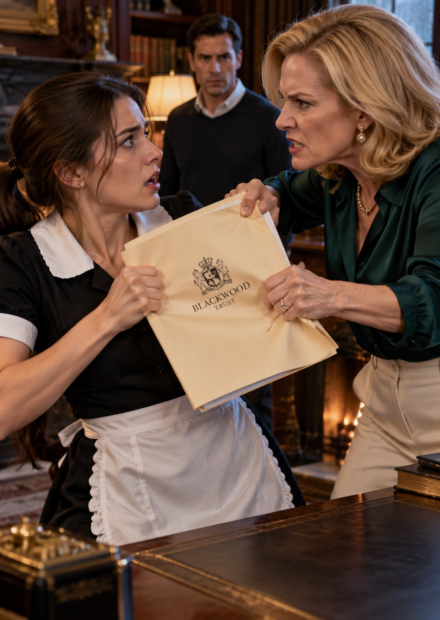
Chapter 6 – THE TABLE WE BUILT
Six months later, people still told the story wrong.
That was the funny part.
Depending on who told it, I had either been a heroic waitress who sacrificed her job to save a starving man or a reckless employee rescued by a lovestruck billionaire.
Sometimes Ethan had supposedly stood on table twelve and fired Grant in front of the entire restaurant.
That never happened.
Sometimes Walter was secretly Ethan’s long-lost relative.
Definitely never happened.
One online version claimed Walter had once saved Ethan from drowning as a child.
Walter found that one hilarious.
“I don’t even swim,” he told me.
Sometimes the truth is less dramatic than gossip.
And better.
The truth was that I made one plate of food because a hungry man asked.
Grant fired me because he was afraid of losing control.
Ethan happened to see it.
Then he asked questions.
Then he used the kind of power only somebody like Ethan possessed.
But money did not solve everything after that.
People did.
Mrs. Harper stayed nine weeks instead of six.
Then she retired again with a dramatic announcement that she was “too old to explain invoices to men under forty.”
Rosa became kitchen manager.
James became general manager permanently.
Grant completed all thirty transition days.
On his final afternoon, he came to find me.
I was replacing menu inserts at table six.
He stood beside me in a blue shirt without a tie.
“Today’s it.”
“I know.”
“Feels strange.”
“I bet.”
He looked around.
Lunch crowd.
Coffee.
Silverware.
The smell of pot roast.
The ordinary life of a restaurant continuing without asking anyone’s permission.
“I got an offer,” he said.
“Really?”
“Hotel restaurant near O’Hare. Operations manager.”
“That sounds good.”
“Better pay.”
“Then definitely good.”
He smiled faintly.
“Mr. Calloway gave me a reference.”
“He said he would.”
“I expected one sentence.”
“What did he write?”
“Four paragraphs.”
“That sounds like Ethan.”
Grant nodded.
Then he reached into his pocket.
For one frightening second, I thought he was going to hand me another apology letter.
Instead he gave me a receipt.
I looked at it.
Community meal.
Paid.
“What is this?”
“Lunch for whoever needs it next.”
I stared at him.
“I know the restaurant budgets for them,” he said.
“I know.”
“I wanted to buy one.”
My throat tightened.
“Grant.”
“Don’t make it dramatic.”
“I wasn’t going to.”
“You were.”
“I was.”
He looked toward the window.
“The thing you said that day bothered me.”
“I said several things.”
“That I should have fed him myself.”
I waited.
He put his hands in his pockets.
“You were right.”
That was all.
No long speech.
No miraculous transformation.
Just one paid meal.
One man leaving a little different than he arrived.
Sometimes that is enough.
Walter got housing in August.
A small subsidized studio near a bus line.
The outreach organization Ethan funded helped expand its case management hours, but Walter did the difficult parts himself.
Appointments.
Paperwork.
Waiting lists.
Medical visits.
Proving his identity repeatedly to institutions that seemed incapable of believing one person could exist without a permanent address.
He visited Harper’s every Wednesday.
After getting his first housing voucher confirmed, he came in wearing a secondhand brown jacket.
“I bought this,” he announced.
I looked at it.
“Very handsome.”
“Seven dollars.”
“High roller.”
“Don’t tell Calloway. He’ll buy the thrift store.”
From table twelve, Ethan called, “I heard that.”
Walter smiled.
Table twelve became Ethan’s unofficial office whenever he was in the neighborhood.
Nobody treated him like a billionaire anymore.
Rosa yelled at him if he left dishes near his laptop.
James made him wait if customers needed attention first.
My mother called him “sweetheart,” which horrified him the first three times and delighted him afterward.
Nolan remained unbearable.
And me?
I changed too.
I learned to speak in meetings without apologizing before I opened my mouth.
I learned that management was less about knowing every answer than knowing which problems people were afraid to tell you about.
I learned to read profit-and-loss statements.
Badly at first.
Then less badly.
I learned how much a restaurant spent on napkins.
The answer was horrifying.
I learned generosity needed structure if you wanted it to survive.
Our community meal program cost real money.
Ethan had been right about that.
So we treated it like every other priority.
We budgeted.
We tracked.
We adjusted.
We partnered with local nonprofits.
Customers eventually learned they could add five dollars to a check to support community meals if they wanted.
We didn’t pressure them.
We didn’t photograph recipients.
We didn’t put names on walls.
Some months the program ran under budget.
Some months it ran over.
Nobody was fired because of mashed potatoes.
My mother stabilized.
Her medication worked.
I was able to contribute more consistently to our household expenses.
When my first full salary deposit arrived, I took her to dinner.
Not Harper’s.
She refused to let me work during her celebratory meal.
We went somewhere with cloth napkins.
Mom examined the menu prices and nearly made us leave.
“I can afford it,” I told her.
“I know. That’s why I’m trying to protect you from foolish decisions.”
“You raised me.”
“That doesn’t mean I approve of everything you do.”
I laughed.
She reached across the table and squeezed my hand.
“Your father would be proud.”
That sentence still broke something open inside me.
I looked down.
“I keep thinking about the day he went to that church.”
“I know.”
“He was so ashamed.”
“I know.”
“What if somebody had made him feel welcome?”
Mom smiled sadly.
“Maybe someone did eventually.”
I thought about Walter walking through Harper’s door instead of tapping on the glass.
Maybe that was why the moment mattered so much.
Not because I had saved him.
I hadn’t.
One plate does not save a life.
A person can be fed at noon and still be cold at midnight.
Housing, healthcare, work, addiction, disability, grief, loneliness—human lives do not get repaired by sentimental gestures.
But dignity matters even when it doesn’t solve everything.
Especially then.
Ethan and I took our time.
That surprised everybody except us.
For the first two months, we had breakfast.
Dinner.
Walks.
Phone calls late at night.
He met my mother outside the restaurant.
I met some of his employees who were terrified of him until they saw me tell him he was wrong about something.
He took me to one formal charity dinner.
I hated every minute of the first hour.
Everyone knew him.
People looked at me, then looked again, trying to identify which category I belonged to.
Assistant?
Girlfriend?
Employee?
Mistake?
In the restroom, I stared at myself in the mirror and almost left.
I wore a borrowed dress from Rosa’s sister and earrings my father had given my mother years earlier.
I suddenly felt like I was pretending to be someone else.
When I returned to the ballroom, Ethan knew immediately.
“What’s wrong?”
“Nothing.”
“Terrible lie.”
“I learned from you.”
“I don’t lie well.”
“You don’t have to. You have lawyers.”
He smiled, but I didn’t.
He leaned closer.
“Do you want to leave?”
“Would that embarrass you?”
“Yes.”
I stared at him.
Then he added, “But I would survive.”
I laughed.
He offered his hand.
“We can go.”
I looked around.
People in gowns.
Champagne.
Crystal lights.
Millions of dollars floating through the room in watches and diamonds.
Then I looked at Ethan.
The man who had listened when I said no.
The man who had let me pay for one plate.
The man who could solve problems with money but was learning not to treat people like problems.
“No,” I said.
“We stay.”
“Why?”
“Because I don’t want to spend my life running out of rooms just because somebody richer than me is standing inside.”
Something proud moved across his face.
“Okay.”
So we stayed.
An hour later, I was arguing with a venture capitalist about restaurant tipping practices.
Ethan looked delighted.
Our first kiss happened three days after that.
Not in a limousine.
Not on a rooftop.
Not in one of Ethan’s expensive apartments overlooking the city.
It happened behind Harper’s Table beside the recycling bins.
Very romantic.
I had worked late helping James change the winter schedule.
Ethan waited because we were supposed to have dinner.
When I finally came outside, snow had started falling.
Light flakes.
Chicago had gone quiet in that strange way cities sometimes do under first snow.
He stood beneath the alley light with his hands in his coat pockets.
“You waited.”
“We had plans.”
“I was two hours late.”
“I noticed.”
“You could have left.”
“Yes.”
“But you didn’t.”
“No.”
We looked at each other.
Six months earlier, I would have filled the silence.
Apologized.
Made a joke.
Asked whether he was cold.
That night I let the silence exist.
Ethan stepped closer.
“Marissa.”
“Yes?”
“I would like to kiss you.”
I smiled.
“That is much better than your breakfast invitation.”
“I practiced.”
“Clearly.”
“Is that a yes?”
I stepped closer.
“Yes.”
He kissed me gently.
No fireworks.
No cinematic orchestra.
Just warmth in cold air.
His hand against my cheek.
My fingers in the front of his coat.
Snow settling in his dark hair.
And the strangest feeling that I had not been rescued into somebody else’s life.
I had walked into this moment on my own feet.
That mattered.
When we finally separated, I said, “You know this doesn’t mean you get free pie.”
He stared at me.
“I own the restaurant.”
“Exactly. Pay for your pie.”
He laughed.
I loved that laugh.
I wasn’t ready to tell him I loved it.
Not yet.
But I knew.
A year after the day I was fired, Harper’s Table held an anniversary dinner.
Not for Ethan’s purchase.
I refused to let him call it that.
We called it Community Night.
Local customers.
Staff.
Families.
The church outreach team.
Mr. and Mrs. Harper.
Even Grant came.
He brought his wife.
Walter arrived early wearing the brown seven-dollar jacket he remained absurdly proud of.
Mom sat near the front.
Nolan somehow ended up behind the counter pouring coffee even though nobody had asked him.
At six, James tapped a spoon against a glass.
I immediately glared at him.
“What are you doing?”
“Speech.”
“No.”
“Yes.”
“I don’t make speeches.”
“You do tonight.”
He handed me the microphone.
I looked at the room.
People turned toward me.
I hated microphones.
Ethan knew that.
He sat at table twelve smiling far too much.
I pointed at him.
“This is his fault.”
People laughed.
Ethan lifted both hands.
I took a breath.
“A year ago, I lost my job in this room.”
The laughter faded.
“I thought it was because I gave away a plate of food.”
I looked at Walter.
He gave me a tiny nod.
“For a while, that’s how I told the story too.”
I glanced at Grant.
He met my eyes.
“But I don’t think that anymore.”
The room remained still.
“I think I lost my job because this place had become afraid.”
I felt Ethan watching me.
“Afraid of closing. Afraid of losing money. Afraid of breaking rules. Afraid of making exceptions. Afraid one small act of generosity would become ten, then a hundred, until there was nothing left.”
Grant lowered his eyes.
“I understand fear better now than I did then.”
I looked around at my coworkers.
“Restaurants run on tiny margins. Kindness does not pay electric bills. Good intentions do not cover payroll. We learned that too.”
A few people smiled.
“But the answer wasn’t choosing between compassion and survival.”
I paused.
“The answer was building both into the plan.”
Rosa nodded.
“We changed food purchasing.”
I held up one finger.
“We changed wages.”
Another.
“We changed training.”
Another.
“We reduced waste.”
Another.
“We created community meals.”
Walter raised his water glass.
“And something strange happened.”
I smiled.
“The restaurant didn’t collapse because we became kinder.”
I looked at Ethan.
“It got stronger.”
Applause started.
I raised my hand.
“I’m not finished.”
Everyone laughed.
“Most importantly, I learned something about help.”
My voice softened.
“I used to think there were two kinds of people. People who needed rescuing and people who did the rescuing.”
I looked at my mother.
“That was pride talking.”
Her eyes filled.
“All of us need help.”
My eyes moved to Walter.
“Sometimes it’s a plate of food.”
To Grant.
“Sometimes it’s a second chance to leave differently than you started.”
To Mrs. Harper.
“Sometimes it’s somebody asking you to come back when you thought your work was finished.”
To Rosa and James.
“Sometimes it’s somebody trusting you with more responsibility.”
Then Ethan.
“And sometimes…”
I smiled.
“Sometimes it’s an irritating billionaire sitting at table twelve asking too many questions.”
Everyone laughed.
Ethan shook his head.
I continued.
“The important thing isn’t whether we ever need help.”
I looked around the room.
“It’s whether help leaves us smaller or gives us enough ground to stand on again.”
My throat tightened.
“I don’t want Harper’s Table to rescue people.”
The room became quiet again.
“I want it to be a place where nobody has to feel ashamed for being hungry.”
Walter wiped one eye.
I had to look away before I cried too.
“That’s all.”
The room erupted.
I handed the microphone back to James.
Then I walked toward table twelve.
Ethan stood.
“That was good.”
“I hated every second.”
“I know.”
“You looked entertained.”
“I was proud.”
I stopped in front of him.
“You’re always proud.”
“You keep giving me reasons.”
I smiled.
Then I noticed a folded document on the table.
“Oh no.”
“What?”
“You have paperwork.”
“Not business paperwork.”
“Those are the most dangerous words you’ve ever said.”
He handed it to me.
It was a deed.
I stared at the first page.
Then at him.
“What is this?”
“Read.”
“I am reading.”
The ownership structure of Harper’s Table had been changed.
Ethan’s holding company no longer owned one hundred percent.
A percentage had been transferred into an employee participation trust.
Not huge.
Not enough to make anybody rich overnight.
But real.
Permanent.
Annual profit participation tied to restaurant performance.
I looked up.
“When did you do this?”
“We finalized it last week.”
“Why didn’t you tell me?”
“You hate surprises, but I occasionally enjoy them.”
“You’re giving staff ownership?”
“A piece.”
My hands trembled slightly.
“Why?”
“Because they helped rebuild the value.”
I stared at the page.
“This includes me.”
“Yes.”
“I can’t accept special—”
“It includes every qualifying employee.”
I stopped.
Of course it did.
He knew me.
A year ago, I would have assumed I didn’t deserve it.
Six months ago, I would have argued because I feared accepting anything from him.
Now I looked at the document differently.
Not rescue.
Participation.
Something we built together.
“Thank you,” I said.
He smiled.
“You’re welcome.”
“I’m still checking this with an independent attorney.”
His smile widened.
“I would be disappointed if you didn’t.”
Walter approached our table.
“Are you two going to stare at each other all night?”
“Yes,” Ethan said.
“No,” I said simultaneously.
Walter sat in the empty chair.
He looked around the dining room.
“You know something?”
“What?” I asked.
He touched the edge of the table.
“The first day I came here, I didn’t come inside.”
I remembered.
“You tapped on the glass.”
“Didn’t think I belonged in the room.”
My chest tightened.
He looked toward the front door.
“Funny thing.”
“What?”
“Nobody stops me now.”
Ethan leaned back.
“That’s because you keep stealing my table.”
Walter scoffed.
“Your name isn’t on it.”
“It should be.”
I looked at the brass number fixed to the table edge.
12.
An idea occurred to me.
The next morning, before opening, I took a screwdriver from the maintenance cabinet.
James caught me kneeling beside table twelve.
“What are you doing?”
“Improving corporate governance.”
“What?”
“Nothing.”
I removed the little number.
Then I brought it to the kitchen.
Rosa stared at me.
“You broke something?”
“I’m fixing something.”
On my lunch break, I walked to the engraving shop two blocks away.
Three days later, I screwed a small brass plaque beneath the number.
Ethan noticed it first.
Of course he did.
He arrived at eleven-forty, put down his laptop, and froze.
“What is this?”
I pretended not to hear.
He read the plaque aloud.
“TABLE TWELVE — NO ONE EATS ALONE.”
Customers nearby turned.
I kept polishing glasses.
“Marissa.”
“Yes?”
“Did you do this?”
“No.”
He stared.
“Terrible lie.”
“I’ve improved.”
“You have not.”
He smiled.
Then his expression softened.
His fingers brushed the plaque.
Table twelve.
The table where he first watched me work.
The table where Nolan teased him for staring.
The table where he watched Walter ask for food.
The table where he watched Grant fire me.
The table where, the next morning, he told me he had bought the restaurant.
The table where I signed the document that changed my job.
The table where Walter first sat after the restaurant reopened.
A piece of wood.
Four chairs.
Nothing magical.
And somehow, the center of everything.
That evening, after closing, I sat there alone.
The lights were low.
Chairs rested upside down on nearby tables.
The kitchen had finally gone quiet.
I traced my finger across the brass plaque.
NO ONE EATS ALONE.
The front bell rang.
I looked up.
Ethan walked in.
“We’re closed.”
“I know the owner.”
“He sounds arrogant.”
“He’s terrible.”
I smiled.
He sat across from me.
For a moment, neither of us spoke.
Then he placed a small paper bag on the table.
“What is that?”
“Dinner.”
“You brought food into a restaurant?”
“You didn’t eat.”
“How do you know?”
“Rosa told me.”
“Traitor.”
He opened the bag.
Two sandwiches.
Nothing fancy.
He handed me one.
I took it.
“You know,” I said, “the first time you sat here, I thought you were strange.”
“You were correct.”
“I thought Nolan was nicer.”
“That is offensive.”
“He smiled more.”
“He lacks discipline.”
“I thought you looked lonely.”
That silenced him.
He looked down at the table.
“I probably was.”
“And now?”
His eyes met mine.
“No.”
My heart softened.
I unwrapped the sandwich.
“You know something else?”
“What?”
“The day you bought this place, I thought you had rescued me.”
His expression changed.
“I worried you would.”
“I was angry about it.”
“I remember.”
“But you didn’t.”
He waited.
“You opened a door.”
I smiled slightly.
“I still had to walk through it.”
“Yes.”
“And I made you keep the gingham tablecloths.”
“My greatest sacrifice.”
“And Walter got his meal program.”
“Our meal program.”
“Rosa got her kitchen.”
“She terrifies suppliers now.”
“Grant got another chance.”
“He sends James emails about inventory.”
“I know. James complains.”
“My mother got her medication.”
“You bought that.”
“I did.”
Pride warmed the words.
Not because I had done it without anyone.
I hadn’t.
Ethan had given me work.
Mr. Patel had been patient.
Mom had endured.
People had helped.
I had helped too.
That was the lesson.
Strength was not refusing every hand offered to you.
Strength was knowing the difference between a hand that wanted to own you and one that simply wanted to help you stand.
Ethan reached across the table.
I placed my hand in his.
Outside, Chicago moved past the windows.
Buses.
Headlights.
People heading home.
Somewhere in the city, someone was probably sitting where Walter had been a year earlier.
Hungry.
Ashamed.
Afraid to ask twice.
I knew one restaurant could not fix that.
One billionaire couldn’t.
One waitress couldn’t.
One plate couldn’t.
But one plate could still matter.
That was enough reason to serve it.
Ethan squeezed my hand.
“What are you thinking about?”
“My father.”
He nodded.
“He would’ve liked you.”
“You think?”
“No.”
Ethan frowned.
I smiled.
“He would’ve made you work for it.”
Ethan laughed.
“Fair.”
I looked around Harper’s Table one last time.
The place that had fired me.
The place that had taken me back.
The place a billionaire bought because one ugly afternoon made him ask better questions.
The place where a frightened manager learned control wasn’t leadership.
The place where a homeless man stopped tapping on the glass and started walking through the front door.
The place where I learned kindness wasn’t weakness.
And accepting help wasn’t either.
I lifted half my sandwich.
“To table twelve.”
Ethan lifted his.
“To the waitress who wouldn’t follow a bad rule.”
I shook my head.
“No.”
“To what, then?”
I looked at the brass plaque.
Then at him.
“To making better rules.”
His smile came slowly.
“To making better rules.”
We tapped sandwiches like champagne glasses.
And for once, there was enough at the table for everyone.
THE END./.