SHE SLAPPED ME AT THE WEDDING I PAID FOR. TEN MINUTES LATER, I CANCELED EVERYTHING STILL IN MY NAME.
Chapter 1 – THE SLAP THAT SILENCED TWO HUNDRED AND FIFTY PEOPLE
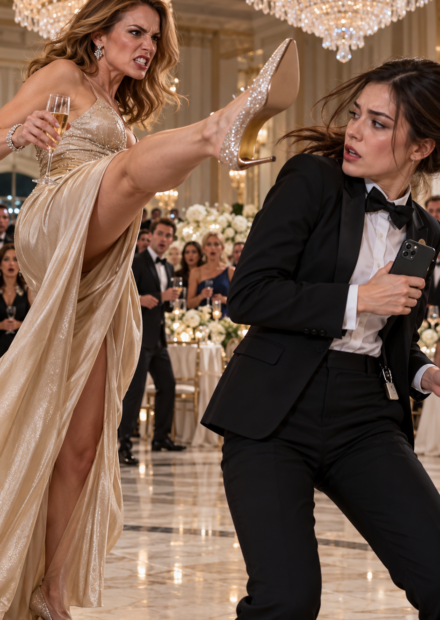
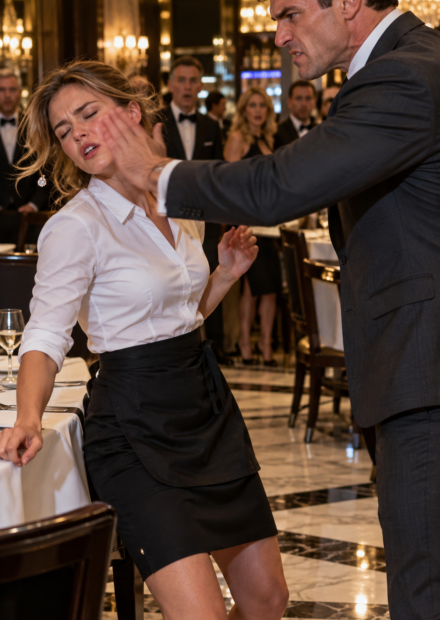
The slap silenced two hundred and fifty wedding guests.
One second, the ballroom was full of music, crystal glasses, laughter, and the soft clatter of silverware against porcelain.
The next, there was nothing.
No violin.
No conversation.
No nervous laughter.
Only the ringing in my left ear and the heat spreading across my cheek.
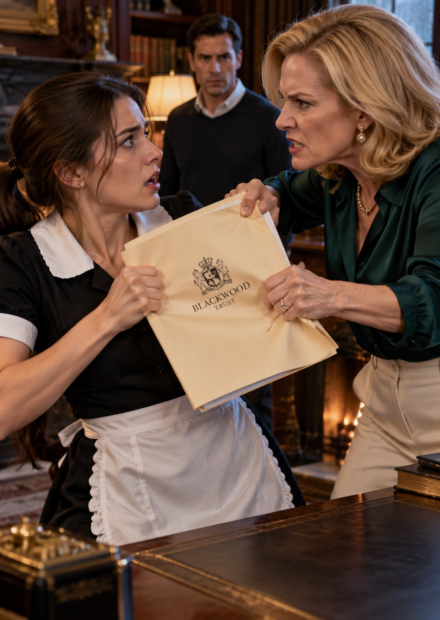
Tatiana stood less than a meter away from me with her hand still raised.
For one absurd second, I noticed her manicure.
Pale pink.
Tiny pearls near the cuticles.
I remembered paying for that too.
Or maybe I had paid for the bridal package that included it. By then, there were so many invoices that I could no longer remember which humiliation belonged to which receipt.
My name is Margarita Benítez.
I was sixty-one years old when my son’s bride slapped me in the middle of the wedding reception I had nearly emptied my life savings to provide.
Above us hung thousands of warm white lights woven through imported flowers.
I had paid for those lights.
Behind Tatiana stood a wall covered in white roses and orchids flown in because the local flowers she had originally approved suddenly looked, in her words, “too ordinary.”
I had paid for those too.
On the tables sat gold-rimmed chargers nobody would take home, menus printed on thick handmade paper, candles imported from France, and small boxes filled with candied almonds wrapped in silk ribbon.
All mine.
Not because I wanted any of it.
Because every time I tried to say no, my son found me afterward.
“Please, Mom,” Daniel would say quietly.
He always said it quietly.
As though soft words made expensive demands gentler.
“It’s only one day.”
Or:
“She’s under so much pressure.”
Or:
“Her family has certain expectations.”
Or:
“I promise this is the last change.”
It was never the last change.
And now, under lights I had paid for, in a private residence I had paid to rent, surrounded by strangers who were drinking from a bar I had paid for, the woman marrying my only son had hit me because I refused to buy one more bottle of champagne.
Tatiana lowered her hand slowly.
She seemed almost surprised that she had actually done it.
Her mother, Elena, inhaled sharply.
Her father, Arturo, said nothing.
Daniel stood near the edge of the dance floor.
My son.
My only child.
Pale.
Motionless.
Watching.
That was the part that hurt.
Not the slap.
The silence.
“Mom…” Daniel finally said.
He took half a step toward us.
Tatiana turned her head.
That was all it took.
He stopped.
The red mark on my cheek burned hotter.
A champagne flute had fallen during the argument. I heard someone from the catering staff quietly collecting the broken glass.
The sound was delicate.
Almost respectful.
Tatiana looked at me again.
Her face had changed.
A minute earlier she had been furious. Now she seemed offended by my presence.
“You should leave,” she said.
A murmur moved through the nearest tables.
I stared at her.
“What?”
“You’re ruining the atmosphere.”
I actually laughed.
It came out once, dry and small.
The atmosphere.
That was what concerned her.
Not that she had struck the mother of the man she had married less than two hours earlier.
Not that two hundred and fifty people had witnessed it.
Not that I had spent months arranging, approving, financing, negotiating, and sacrificing to make this evening possible.
The atmosphere.
Behind her, Arturo shifted his weight but still said nothing.
He had been the reason the argument started.
He wanted a specific bottle of champagne opened for a toast.
Not merely champagne.
Imported reserve champagne from a vineyard his friends apparently recognized.
Almost forty thousand pesos for one bottle.
Weeks earlier, I had seen it on the updated beverage order and removed it.
The open bar package was already extravagant.
Premium tequila.
Whiskey.
Wine.
Sparkling wine.
Cocktails.
Everything anyone could reasonably want.
When Tatiana discovered the reserve bottle was not being served, she came looking for me.
Her parents followed.
“Tell them to put it on your card,” she said.
I thought I had misheard her.
“No.”
Her expression tightened.
“It’s my wedding.”
“I know.”
“My father requested that bottle.”
“Then your father can buy it.”
Arturo crossed his arms.
That was all.
No protest.
No offer.
Nothing.
Tatiana stared at me as though I had insulted her family.
“You’ve been against this wedding from the beginning.”
That wasn’t true.
And she knew it.
“I questioned the expenses.”
“You questioned everything.”
“I paid for everything.”
That was when I looked toward Daniel.
I don’t know why.
Maybe some part of me still expected him to come stand beside me.
He knew the truth.
He had seen the bank transfers.
He knew I had canceled my trip.
He knew I had sold land.
He knew exactly what this wedding had cost me.
Instead, he stayed where he was.
Tatiana stepped closer.
“You are a bitter old woman with money.”
For a moment, I couldn’t speak.
Not because the insult shocked me.
Because of the final two words.
With money.
She still thought I had money.
She had no idea.
Or perhaps she had never wanted to know.
“I agreed to help you,” I said. “Then you kept asking until you almost left me with nothing.”
“Stop making everything about you.”
“I gave enough.”
“You’re embarrassing me.”
“The answer is no, Tatiana.”
“You’re ruining my wedding!”
“No. I’m refusing to buy a forty-thousand-peso bottle of champagne.”
Then she hit me.
Now, standing there afterward, I looked at Daniel again.
His lips moved.
“Please,” he said.
I didn’t know which one of us he was speaking to.
That realization broke something in me.
Not loudly.
There was no cinematic crack inside my chest.
No thunder.
No sudden courage.
Just a quiet understanding.
For months I had been protecting him from conflict.
I had been absorbing demands so he wouldn’t have to argue with his fiancée.
I had been telling myself that peace was a gift a mother could give her son.
But this wasn’t peace.
It was surrender.
And Daniel had gotten used to watching me surrender.
I picked up my purse from the chair beside me.
Tatiana exhaled as if relieved.
“Good.”
That one word nearly made me turn around.
Instead, I walked away.
People moved aside.
Nobody stopped me.
Several women avoided my eyes.
A man I vaguely recognized from Arturo’s business circle stared into his drink.
One of Daniel’s childhood friends looked furious, but Daniel caught his arm before he could move.
That image stayed with me.
My son could stop someone else from intervening.
He just couldn’t stop his wife from hitting his mother.
I walked into the nearest bathroom, locked the door, and leaned both hands against the marble counter.
For several seconds, I couldn’t look in the mirror.
Then I did.
Five red fingerprints were beginning to appear on my cheek.
I touched them carefully.
My hand shook.
“You idiot,” I whispered.
I wasn’t talking about Tatiana.
I was talking to myself.
Because suddenly I could see the entire year with humiliating clarity.
Every concession.
Every excuse.
Every time I had told myself the next payment would be the last.
Every time Daniel had kissed my forehead and said, “Thank you, Mom. You have no idea what this means to me.”
I did know.
That was the problem.
I knew what it meant to him.
I had never asked what it was beginning to mean about me.
I opened my purse and took out my phone.
There were already messages.
Daniel.
Tatiana.
A number I didn’t recognize.
I ignored all of them.
Instead, I opened the folder where I kept the wedding contracts.
The venue.
The bar service.
The band.
The luxury transportation.
The catering balance.
The bridal suite.
The breakfast service scheduled for the following morning.
All in my name.
Some were fully paid.
Some had outstanding balances.
Some included cancellation clauses that allowed remaining services to be stopped if the contracted client requested it before completion.
I had signed them because Tatiana and Daniel were young and the vendors wanted one person financially responsible.
At the time, I had thought that was practical.
Now it felt like the only sensible decision I had made in months.
I called the event manager.
He answered on the third ring.
“Mrs. Benítez?”
“Yes.”
“Is everything all right?”
He had obviously heard something.
Maybe everyone had.
“No,” I said. “It isn’t.”
There was a pause.
“What can I do for you?”
I looked at my reflection.
My cheek was red.
My eyes were not.
I expected tears.
There weren’t any.
Not yet.
“I want to apply the cancellation clause to every service still pending under my account.”
Silence.
“Mrs. Benítez, just so I understand correctly, you want us to stop the remaining services tonight?”
“Yes.”
“The beverage package?”
“Yes.”
“The band’s extended set?”
“Yes.”
“The late-night food service?”
“Yes.”
“The transportation?”
“Yes.”
“The suite and tomorrow’s breakfast?”
“Yes.”
Another pause.
“Are you sure?”
I closed my eyes.
I saw a hillside at sunset.
The land my husband had inherited from his father.
The land his grandfather had worked.
The land Daniel used to run across as a boy while his father shouted after him to stay away from the irrigation channels.
I had sold part of it six weeks earlier.
For orchids.
Lights.
Imported liquor.
A bigger venue.
A wedding my son claimed would make his new wife happy.
Then I saw Tatiana’s raised hand.
I saw Daniel standing still.
“Yes,” I said.
My voice no longer trembled.
“I’m sure.”
The manager cleared his throat.
“Because the reception has already begun, some charges are nonrefundable.”
“I understand.”
“Any service already delivered remains billed.”
“I understand.”
“The transportation company may charge a cancellation fee.”
“I understand.”
“The bridal suite—”
“Cancel it.”
“Mrs. Benítez—”
“Please.”
He stopped.
Then his voice changed.
Not warmer exactly.
More respectful.
“All right.”
“Thank you.”
“I’ll need your authorization in writing.”
“I’ll send it immediately.”
I did.
Then I signed the digital form he sent me.
My thumb hovered over the confirmation button.
For years, I had imagined courage as something dramatic.
A person shouting.
Walking out.
Slamming a door.
Standing in front of a crowd.
But courage, I discovered that night, could look like a sixty-one-year-old woman in a bathroom pressing CONFIRM while her cheek still carried the shape of another woman’s hand.
I pressed it.
The confirmation arrived seconds later.
At first, nothing happened.
The music continued outside.
Someone must have restarted the playlist.
I washed my hands although they weren’t dirty.
I put cold water on a paper towel and held it to my cheek.
Then, faintly, through the bathroom door, I heard confusion.
A voice.
Another voice.
Then silence.
The music stopped.
Not gradually.
Completely.
I lowered the towel.
A few seconds later, someone knocked.
“Mrs. Benítez?”
It was the event manager.
I unlocked the door.
He stood there holding a leather folder.
Behind him, two bartenders were removing bottles from the illuminated bar.
Members of the band were unplugging cables.
Outside the main entrance, I saw one of the transportation coordinators speaking into a phone.
The manager held out the folder.
“These are copies of your contracts and the cancellation confirmations.”
I took them.
“Thank you.”
He nodded.
Then he looked toward the ballroom.
“You should know they’re asking what’s happening.”
“I imagine they are.”
“Would you like me to explain?”
“No.”
I looked past him.
Across the room, Tatiana had just noticed the staff clearing the bar.
For the first time that entire day, the confidence disappeared from her face.
Her eyes moved from the bartenders to the silent stage.
Then to the manager.
Then to me.
She knew.
I could see the exact moment she understood.
Her mouth opened.
And for the first time since I had met her, Tatiana had absolutely nothing to say.