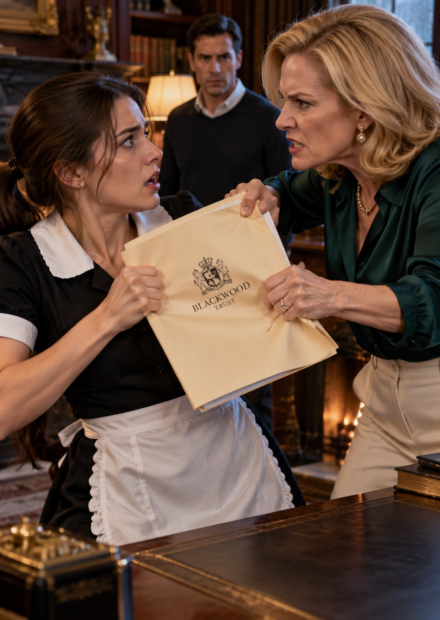
SHE SLAPPED ME AT THE WEDDING I PAID FOR. TEN MINUTES LATER, I CANCELED EVERYTHING STILL IN MY NAME.
Chapter 5 – THE MOST EXPENSIVE LESSON I EVER BOUGHT
The wedding became a story before the weekend ended.
Not publicly.
Not in newspapers.
Nothing so ridiculous.
But families have their own news systems.
Friends call friends.
Cousins text cousins.
Someone saw something.
Someone heard something else.
By Sunday afternoon, at least three different versions existed.
In one, I had canceled the entire wedding because Tatiana insulted my dress.
In another, Tatiana had attacked me after discovering I secretly hated her family.
In the most creative version, Arturo and I had been fighting over money for months.
I stopped listening.
The truth was ugly enough.
I didn’t need improved versions.
Daniel called Sunday evening.
“I talked to Tatiana.”
I sat on my terrace.
“All right.”
“She still thinks you overreacted.”
I looked at the garden.
“Then she still doesn’t understand.”
“I know.”
There was silence.
“Her mother wants to come apologize.”
“Her mother didn’t hit me.”
“I said that.”
“And Tatiana?”
“She says she’ll talk to you if you admit canceling everything was cruel.”
I laughed.
Daniel did not.
“I told her no.”
That got my attention.
“You did?”
“Yes.”
I waited.
He continued.
“I told her she can’t make an apology conditional on you apologizing first.”
Something in my chest loosened.
Not completely.
But a little.
“How did she respond?”
“Badly.”
“I imagine.”
“She said you finally got what you wanted.”
“What exactly does she think I wanted?”
“Us fighting.”
I was tired suddenly.
“Daniel, I don’t want to discuss every accusation she makes about me.”
“You’re right.”
“This is between you and her now.”
“I know.”
Another pause.
Then:
“I’m staying with Javier for a few days.”
Javier was one of his oldest friends.
The same man I had seen starting toward me after the slap.
“What happened to the apartment?”
“Tatiana is there.”
I closed my eyes.
The marriage had lasted less than twenty-four hours before they slept under different roofs.
I did not feel satisfaction.
That surprised me.
Maybe it shouldn’t have.
Justice is not always enjoyable.
Sometimes it is simply necessary.
“I’m sorry,” I said.
“Are you?”
“Of course.”
“Even after what she did?”
“Daniel, I wanted you to be happily married. I did not spend all that money because I wanted your marriage to fail.”
His voice broke.
“I know.”
“Do you?”
“Now I do.”
I looked toward the western horizon.
“I hope you make the right decision.”
“What is the right decision?”
“I don’t know.”
He laughed weakly.
“You’re really going to make me figure things out now, aren’t you?”
“Yes.”
“Terrifying.”
“For both of us.”
That earned a small laugh.
It was the first time in days we sounded like ourselves.
The following week, I met with the event manager to close the accounts.
Some money was gone permanently.
Of course it was.
The flowers had been delivered.
The estate had been used.
Dinner had been served.
Staff had worked.
The wedding had happened.
Canceling the remaining services did not magically restore my savings.
It did, however, stop several final charges.
The transportation cancellation cost me a fee but saved the remaining balance.
The unused breakfast service was partly refundable.
The suite cancellation recovered little, but something.
The additional bar hours disappeared entirely.
The band charged for the time performed but not the canceled extension.
The late-night food service had not yet been prepared and was largely refunded.
When everything was calculated, the amount I recovered was nowhere near what I had lost.
But looking at the final total, I felt something I had not expected.
Relief.
Not because the number was large.
Because the spending had stopped.
There would be no next request.
No revised invoice.
No upgrade.
No emergency transfer.
No:
Please, Mom.
It’s just one day.
The day was over.
And I had survived it.
A week after the wedding, Elena came to my house alone.
I almost didn’t open the door.
Then I saw her holding nothing.
No flowers.
No gift.
I respected that.
She stood awkwardly on the porch.
“May I speak to you?”
I let her in.
We sat in the living room.
For a while, she stared at her hands.
Then she said, “I am ashamed.”
I didn’t rescue her from the silence.
She continued.
“I should have stopped Tatiana.”
“Yes.”
“I didn’t think she would hit you.”
“Neither did I.”
“But after she did… I should have said something immediately.”
I looked at her.
“Yes.”
Tears filled her eyes.
“I was worried about the guests.”
“So was everyone.”
“I was worried about what people would say.”
“People always say something.”
“I know.”
She wiped her eyes.
“I failed her.”
That surprised me.
“Tatiana?”
Elena nodded.
“People think saying no to a child is unkind.”
I almost laughed.
She saw the expression and gave a sad smile.
“I suppose you understand.”
“Better than I did two weeks ago.”
She inhaled.
“When she was young, her father gave her everything because he worked all the time. I gave her everything because I felt guilty that he worked all the time.”
“That doesn’t excuse what happened.”
“I know.”
Good.
That mattered.
“Is she sorry?”
Elena looked away.
“Not yet.”
I nodded.
That was the most honest answer anyone in her family had given me.
“Then don’t apologize for her.”
“I’m apologizing for me.”
I studied her.
“Thank you.”
We sat quietly.
Before leaving, she asked about my cheek.
The bruise was fading.
“It’s fine.”
She hesitated.
“Daniel is a good man.”
“Yes.”
“My daughter loves him.”
“I believe she probably does.”
Elena looked surprised.
“You do?”
“Love does not automatically make people behave well.”
She nodded slowly.
“No.”
“They have to decide what happens next.”
“Yes.”
She left.
I never became her friend.
But after that day, I stopped thinking of Tatiana’s parents as a single silent wall behind their daughter.
Arturo had enabled entitlement with money he did not always want to spend.
Elena had enabled it with avoidance.
Daniel had enabled it with surrender.
And I had enabled it with sacrifice.
Tatiana was responsible for the slap.
But the road toward that slap had been paved by all of us refusing to say difficult things early enough.
Three weeks passed.
Then Daniel came over on a Saturday morning.
He looked better.
Still tired.
But clearer.
He brought a folder.
My stomach tightened.
“What is that?”
“Don’t panic.”
“Never say that before handing your mother paperwork.”
He smiled.
Then he placed the folder on the table.
Inside were documents from his bank.
“I can’t pay you back all at once.”
I looked up.
“No.”
“Mom.”
“No.”
“Listen.”
“I didn’t give you a loan.”
“I know.”
“Then don’t turn it into one.”
“I’m not.”
He sat across from me.
“I made choices.”
“So did I.”
“I asked you to keep paying.”
“Yes.”
“I can’t undo that.”
“No.”
“But I can take responsibility for part of it.”
I closed the folder.
“Daniel—”
“I sold my car.”
I stared at him.
“You what?”
“I don’t need that car.”
“You love that car.”
“I loved Dad’s land more.”
That stopped me.
His eyes filled.
“I didn’t think about what I was asking you to sell.”
I looked away.
“I did. I thought about it every day.”
“I’m sorry.”
“I know.”
He pushed the folder toward me.
“This won’t replace the land.”
“No.”
“It won’t replace your savings.”
“No.”
“It won’t fix everything.”
“No.”
“But please take it.”
I stared at the papers.
For months, I had given him everything because I believed love meant removing consequences.
Now he was trying to accept one.
I took the folder.
“Thank you.”
He exhaled.
Then I asked the question I had avoided.
“What about Tatiana?”
His face changed.
“We’re separated.”
I said nothing.
“She’s still angry.”
“At me?”
“At everyone.”
“Are you going to divorce?”
He looked toward the window.
“I don’t know.”
I waited.
“I’m not rushing anymore,” he said. “That’s part of what I learned.”
I smiled faintly.
“Good.”
“She wants to go to counseling.”
That surprised me.
“Do you?”
“Maybe.”
“Then go.”
He looked at me.
“You’re not angry?”
“Of course I’m angry.”
“I mean about me trying.”
I thought about that.
“No.”
“Why?”
“Because your marriage is not mine to punish.”
His eyes filled.
“But if she comes back into my life,” I continued, “there will be boundaries.”
He nodded immediately.
“Yes.”
“She will never speak to me the way she did before.”
“Agreed.”
“She will never ask me for money.”
“Agreed.”
“She will not enter this house until she gives me a genuine apology.”
He hesitated only a second.
“Agreed.”
“And if she ever raises a hand to me again, there will be no discussion.”
“There won’t be.”
I looked at him.
“Good.”
He smiled sadly.
“You’ve changed.”
“No.”
I thought about it.
“Maybe I’ve returned.”
“To what?”
“To myself.”
Months later, Tatiana apologized.
Not quickly.
Not elegantly.
Not perfectly.
She did not arrive transformed into a different person.
Life does not work that way.
People do not become saints because they finally experience consequences.
She came to my house with Daniel.
She looked nervous.
I had never seen her nervous around me before.
For several seconds, we stood in the entrance.
Then she said, “I’m sorry I hit you.”
I waited.
She swallowed.
“I was angry because you told me no, and I had gotten used to believing that if I pushed enough, you would eventually say yes.”
Daniel looked at her.
She continued.
“I blamed you for ruining the reception because that was easier than admitting I had ruined it first.”
That was the sentence that mattered.
Not because it erased what happened.
It didn’t.
But it was true.
“I was disrespectful to you for a long time before that night,” she said. “And I let myself believe your generosity was something I was entitled to.”
My chest tightened.
Tatiana’s eyes filled with tears.
“I don’t expect you to trust me.”
“Good.”
She almost smiled.
“I deserved that.”
“Yes.”
Daniel shifted slightly.
I ignored him.
This was between Tatiana and me.
“I accept your apology,” I said.
Her face changed with relief.
Then I continued.
“But things will not return to what they were.”
“I understand.”
“No requests for money.”
“Yes.”
“No insults.”
“Yes.”
“And you will never raise your hand to me again.”
“I won’t.”
“If you do, you will not be part of my life.”
Tatiana nodded.
“I understand.”
That was enough.
Forgiveness, I learned, does not always feel warm.
Sometimes it feels like a locked door being opened exactly six inches.
Enough for conversation.
Not enough for someone to walk back in carrying the same behavior.
Daniel and Tatiana remained separated for several months.
They went to counseling.
I stayed out of it.
When Daniel tried to tell me details, I stopped him.
“Talk to your counselor.”
“You used to want to know everything.”
“I’ve learned.”
He laughed.
Eventually they decided to stay married.
Some people in our family thought I should have objected.
I didn’t.
I had finally learned the difference between loving my son and managing his life.
His marriage was his responsibility.
My boundaries were mine.
We spoke less often for a while.
Then, strangely, our relationship became better.
More honest.
Daniel stopped calling me only when he needed help.
I stopped automatically offering it.
He came over because he wanted coffee.
We talked about work.
Books.
Politics.
His father.
Ordinary things.
The relationship began to feel like one between two adults instead of a mother constantly standing with her hands out, ready to catch a grown man before he fell.
As for the land, I could not buy back what I sold.
That hurt.
It still does.
Some losses remain losses even after we learn from them.
One afternoon, Daniel and I drove to the remaining parcel.
We walked to the old stone wall.
The fruit trees were thinner than I remembered, but some still stood.
Daniel touched one of the trunks.
“Dad would hate what I did.”
I shook my head.
“Your father would hate what both of us did.”
He looked at me.
“Both?”
“I signed the sale.”
“Because of me.”
“Because I chose to.”
He opened his mouth to argue.
I raised a hand.
“Responsibility works both ways.”
He sat beside me on the wall.
We watched the sun lower over the fields.
After a while, he asked, “Are you ever going to take that trip?”
I smiled.
“Which trip?”
“Spain. Portugal.”
I had not looked at the guidebook since before the wedding.
That evening, when I got home, I found it.
The cover was dusty.
I opened it.
Inside, I found a page Roberto had once marked years earlier when we were dreaming about traveling together.
Lisbon.
I sat at the kitchen table for a long time.
Then I opened my laptop.
I did not book a luxurious three-month journey.
I couldn’t afford that anymore.
Not yet.
But I booked two weeks.
A smaller trip.
A hotel in Lisbon.
A train to Porto.
A few days in Madrid before flying home.
When Daniel learned, he offered to contribute.
I said no.
He laughed.
“Had to try.”
“This one is mine.”
“Good.”
The morning I left, he drove me to the airport.
We stood near the entrance with my suitcase between us.
“Call me when you land.”
“I will.”
“Send pictures.”
“Maybe.”
He hugged me.
Then he looked at my face.
The bruise was long gone.
But I knew he remembered.
So did I.
“Mom?”
“Yes?”
“I’m glad you canceled everything.”
I laughed.
“That’s convenient to say now.”
“I mean it.”
“I know.”
He stepped back.
“I think that was the first time anyone stopped protecting me from the consequences of my own choices.”
I looked at him.
“No.”
“What?”
“It was the first time I stopped.”
He smiled.
“Fair.”
I entered the airport.
While I waited to board, I thought about the wedding.
About two hundred and fifty guests going silent.
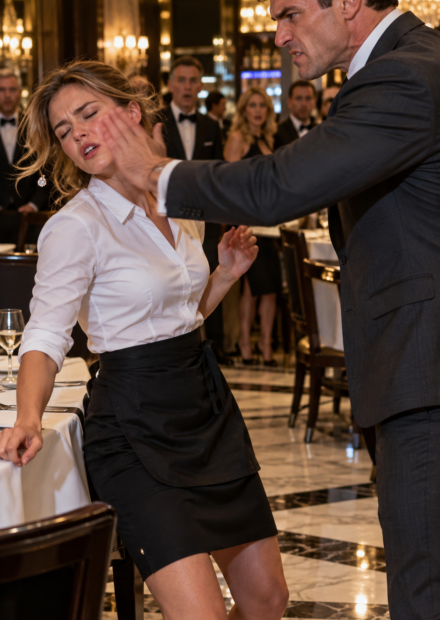
About Tatiana’s raised hand.
About my son’s frozen face.
About the bartender packing bottles into crates.
About the band shutting down.
About the event manager carrying those contracts toward the bride.
For a long time, I had been ashamed when I remembered that night.
Ashamed of being slapped.
Ashamed of the public scene.
Ashamed that I had spent so much.
Ashamed that I had allowed things to go that far.
Eventually, the shame changed.
The slap was Tatiana’s choice.
Daniel’s silence was Daniel’s choice.
The spending had been my choice.
And canceling the rest had also been my choice.
That was the one that saved me.
Not financially.
The money was mostly gone.
Not socially.
People talked for months.
Not even emotionally, at least not immediately.
It saved something more important.
It saved the part of me that still knew I was allowed to say enough.
I had spent almost a year believing love was measured by how much I was willing to give.
Money.
Time.
Land.
Peace.
Pride.
But love without boundaries does not become greater love.
Sometimes it becomes permission.
Permission to ask for more.
Permission to expect more.
Permission to treat generosity as obligation.
And eventually, permission to believe the giver will tolerate anything.
Tatiana believed that.
Daniel believed it too, in a quieter way.
So did I.
Until I didn’t.
People sometimes ask what I would do differently if I could return to the beginning of the wedding planning.
They expect me to say I would refuse to pay for the private estate.
Or keep the guest list at eighty.
Or refuse the orchids.
Or save the land.
All of those things are true.
But the real answer is simpler.
I would have said no the first time I meant no.
Not angrily.
Not dramatically.
Just clearly.
No.
Because the costliest word in my life was not yes.
It was the yes I gave after I already wanted to say no.
By the time Tatiana slapped me, I had spent more than nine hundred thousand pesos trying to keep everyone happy.
I had canceled a dream.
Sold part of my husband’s family land.
Ignored my own fear.
Excused my son’s avoidance.
And allowed another woman’s expectations to become my financial responsibility.
Ten minutes after the slap, I stopped.
The music ended.
The bar closed.
The drivers went home.
The suite was canceled.
The next morning’s breakfast disappeared from the schedule.
And under the ordinary ceiling lights of that suddenly quiet ballroom, everyone finally saw something that had been hidden beneath orchids, champagne, silk ribbons, and expensive promises.
None of it belonged to Tatiana simply because she wanted it.
None of it belonged to Daniel simply because he was my son.
And my love did not belong to anyone at the price of my dignity.
I lost a great deal before I learned that.
But I learned it.
And when my flight was called months later, I picked up my suitcase and walked toward the gate carrying less money than I once had, fewer illusions than I once had, and more peace than I had felt in years.
The most expensive thing I ever bought was not the wedding.
It was the lesson.
And in the end, it was the only thing worth what I paid.
THE END.