Chapter 4 – THE ROOM THAT LOOKED AWAY
There were eighteen people in the conference room.
I counted because I needed something to do besides panic.
Eighteen people.
Twelve around the long table.
Three legal advisers against the wall.
Vincent near the windows.
Isabella beside him.
Victoria at the opposite end of the room.
And me.
The waitress.
Except I wasn’t wearing my uniform this time.
Victoria noticed.
Her eyes moved over my borrowed blazer.
Then she smiled faintly.
“Ms. Carter.”
“Ms. Langford.”
She looked perfectly composed.
No anger.
No fear.
No evidence that she had spent the previous twenty-four hours trying to make me rewrite reality.
Maybe that was her greatest talent.
She could make ugliness look elegant.
One of the board members began speaking.
He explained that the purpose of the meeting was to establish what had occurred at the benefit and determine whether Victoria would continue participating in foundation events.
Victoria’s attorney interrupted immediately.
“This is an absurd overreaction to a misunderstanding involving an inexperienced staff member.”
My jaw tightened.
Inexperienced.
Not dishonest.
Not wrong.
Inexperienced.
A softer word designed to mean the same thing.
Vincent said nothing.
That surprised me.
I had expected him to control the room.
Instead, he remained beside his mother.
Watching.
Waiting.
Victoria spoke.
“I deeply regret that Isabella was frightened.”
Isabella’s expression did not change.
Victoria continued.
“There was a spill. She became upset. I attempted to stabilize the wheelchair because I believed it might move backward.”
I nearly laughed.
She looked at me.
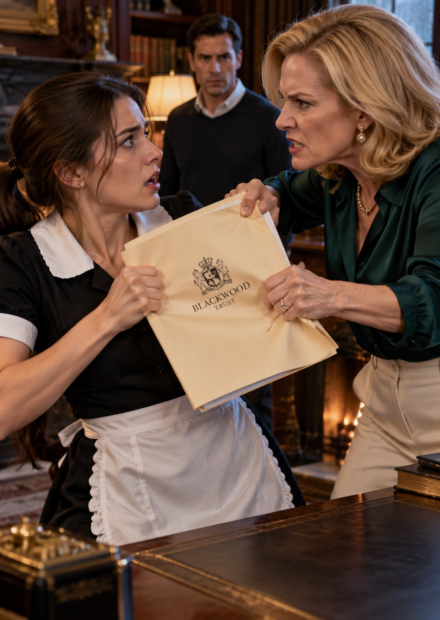
“Ms. Carter approached aggressively.”
Aggressively.
“I raised my hand in surprise.”
“You raised it toward her face,” I said.
Her attorney looked at me.
“You will have an opportunity to speak.”
“I just did.”
Someone coughed to hide a laugh.
Victoria’s smile tightened.
She continued.
“Ms. Carter seized my wrist. I was shocked.”
“Were you injured?” one board member asked.
“I had bruising.”
I looked at her wrist.
There was no bruise visible now.
“That is beside the point,” Victoria said. “The issue is whether staff members at foundation events are permitted to physically attack guests based on assumptions.”
My chest burned.
Assumptions.
I glanced at Isabella.
She was watching me.
Not Victoria.
Me.
I understood.
This was why she wanted me here.
Not because Vincent couldn’t defend her.
Not because Isabella couldn’t speak for herself.
Because Victoria’s version depended on reducing me to someone who had misunderstood what richer, smarter people were doing.
If I stayed quiet now, she would make my silence part of her proof.
A woman near the center of the table turned toward me.
“Ms. Carter, please tell us what you saw.”
I took a breath.
“The wheelchair bumped a table.”
My voice sounded too small.
I cleared my throat.
“A glass spilled. Ms. Langford became angry.”
“I became concerned.”
I looked at Victoria.
“You told her she needed someone watching her.”
“I was worried about her safety.”
“You grabbed her wheelchair after she told you not to.”
“To steady it.”
“She told you to leave her alone.”
Victoria’s eyes narrowed.
I continued.
“She said you were humiliating her. You asked if she knew who you were. She told you that question mattered too much to you.”
A few faces changed.
They remembered.
Victoria did too.
“You got angry.”
“That is your interpretation.”
“You lifted your right hand.”
“I have already explained—”
“Toward her face.”
“I lost my balance.”
“No, you didn’t.”
Her attorney leaned forward.
“Ms. Carter—”
“No.”
Everyone looked at me.
I could feel my heartbeat.
I thought about the twenty-five thousand dollars.
The hospital bills.
My missing shifts.
Harold saying he had been afraid.
The ballroom full of people pretending a crystal glass was more interesting than an elderly woman being threatened.
“No,” I repeated.
“I am tired of people changing simple words because the truth makes them uncomfortable.”
Nobody interrupted this time.
“You weren’t stabilizing a chair. She told you not to touch it. You weren’t surprised. You were angry. And I didn’t assault you. I stopped your hand.”
Victoria leaned back.
“You seem remarkably certain for someone under considerable financial stress.”
The room changed.
I stared at her.
There it was.
My father.
My sister.
My family.
Dragged into another room.
Her attorney shifted uncomfortably.
Victoria ignored him.
“You are currently suspended from a low-wage position. Your family has medical debt. Your sister has educational expenses.”
Isabella inhaled sharply.
Vincent’s face became stone.
Victoria kept going.
“Yet we are expected to believe you had no incentive to turn an unfortunate misunderstanding involving prominent individuals into something larger.”
My cheeks burned.
“You offered me money.”
Silence.
Victoria froze.
Her attorney turned toward her.
I took out my phone.
“Twenty-five thousand dollars.”
“Ms. Carter—”
“To sign a statement saying I misunderstood.”
Victoria’s attorney whispered something to her.
She ignored him.
“It was an attempt to resolve a dispute.”
“You offered to pay me to say something that wasn’t true.”
“The payment was compensation for lost wages.”
“Then why did I have to change my statement to get it?”
No answer.
I looked around the table.
“These are the words you wanted me to sign.”
I opened the email.
“‘Ms. Langford did not attempt to strike Mrs. Moretti. I mistakenly interpreted a defensive gesture as aggression.’”
I looked at Victoria.
“That’s not what happened.”
She crossed her arms.
“And your refusal somehow proves your version?”
“No.”
I put the phone down.
“What proves my version is that I wasn’t the only person there.”
The room became very still.
That was the moment everything changed.
I had spent two days thinking this fight was between Victoria and me.
It wasn’t.
There had been a ballroom full of witnesses.
People had simply chosen not to become involved.
I reached into my bag.
I pulled out Harold’s envelope.
“My manager saw it.”
Victoria’s eyes flickered.
I opened the statement.
I didn’t read all of it.
I didn’t need to.
I read one sentence.
“I saw Ms. Langford raise her right hand toward the seated woman’s face in a manner I believed was intended to strike her.”
Nobody moved.
Victoria’s face hardened.
“Your employer is trying to protect himself.”
“Probably.”
That answer surprised her.
“I’m not asking anyone to think Harold is brave. He wasn’t. He said that himself.”
I looked around the table.
“Neither were most of the people in that ballroom.”
Several people looked down.
“I wasn’t brave either.”
Victoria laughed softly.
“Please.”
“I wasn’t.”
I looked at Isabella.
“I was terrified.”
Then I looked back at the board.
“My father is sick. My family needs my income. I knew who Ms. Langford was. I knew I could lose my job.”
I swallowed.
“And I almost let go of her wrist because of it.”
The words were difficult to admit.
“But I looked at Mrs. Moretti.”
Isabella’s eyes shone.
“She was afraid too.”
My voice steadied.
“And I realized the only difference between her fear and mine was that I was standing.”
Nobody spoke.
“So I kept holding on.”
Victoria’s face had become unreadable.
I continued.
“I didn’t know who she was.”
I pointed gently toward Isabella.
“I didn’t know she was Vincent Moretti’s mother. If I had known, maybe I would have assumed someone else would step in.”
I looked at Vincent.
“But nobody did.”
The room went quiet enough that I heard someone shift in a leather chair.
“That is what happened,” I said.
“Not a misunderstanding. Not an unfortunate situation. A woman believed she could humiliate somebody because she thought that person had less power than she did.”
Victoria stood.
“That is outrageous.”
I looked directly at her.
“You asked if she knew who you were.”
“She insulted me.”
“And you proved her point.”
Her face flushed.
“You arrogant little—”
“Victoria.”
Isabella’s voice stopped her.
Everyone turned.
Isabella rolled her wheelchair forward slightly.
“I remember every word.”
Victoria sat down.
Isabella continued.
“I remember spilling the champagne.”
Her hands rested calmly in her lap.
“I remember apologizing.”
She looked at Victoria.
“I remember you telling me I required supervision.”
Victoria opened her mouth.
Isabella lifted one finger.
“I am old, not confused.”
Nobody breathed.
“I remember asking you not to touch my wheelchair.”
Her voice remained gentle.
“That chair is not furniture, Victoria. When I sit in it, it is part of how I move through the world. Grabbing it after I told you to stop was no different from grabbing my arm.”
Victoria’s face lost color.
“And I remember your hand.”
Isabella looked at me.
“I also remember Emma’s.”
That almost broke me.
“Yours frightened me.”
Her eyes returned to Victoria.
“Hers did not.”
The silence after that felt final.
Then something unexpected happened.
A man near the end of the table spoke.
“I saw it too.”
Everyone turned.
I recognized him from the ballroom.
The man who had stared at his champagne.
His face was red.
“I was approximately twenty feet away.”
He looked at Isabella.
“I should have intervened.”
Another woman spoke.
“So should I.”
Then another.
“I saw Ms. Langford raise her hand.”
The room began to change.
One voice.
Then another.
Not everyone.
Enough.
I looked at Harold’s statement in my hands.
Maybe courage really did spread.
Unfortunately, so did cowardice.
Someone simply had to decide which one would start first.
Victoria stared around the room.
“You people cannot be serious.”
Vincent finally moved.
Until that moment, he had barely spoken.
He walked to the table.
He placed both hands on the back of an empty chair.
“You are correct about one thing, Victoria.”
Her eyes snapped toward him.
“This is larger than a single gesture.”
Relief flickered across her face.
Then he continued.
“You attempted to pressure an employee into changing her statement.”
“She assaulted me.”
“You obtained private employment information about her family.”
“I was trying to understand whether she was seeking financial advantage.”
“You then used that information while offering her money.”
Her attorney whispered, “Victoria, do not answer.”
Vincent didn’t raise his voice.
“You threatened consequences before you knew whether anyone would contradict you.”
“That is not what happened.”
“No?”
He looked around the room.
“Then explain the calls made to her employer before midnight.”
Victoria said nothing.
My stomach tightened.
Vincent continued.
“Explain why her scheduled shifts were removed after I specifically requested that no retaliatory action be taken until the incident was reviewed.”
Her attorney stood.
“I think this conversation has gone far beyond the stated purpose of this meeting.”
“No,” Isabella said.
He stopped.
She looked at Victoria.
“I think we have finally reached it.”
Victoria pushed back her chair.
“This is absurd. I have raised more money for organizations represented in this room than most people here will ever personally donate.”
There it was.
The final shield.
Money.
She looked around the table.
“You are going to end professional relationships because a waitress grabbed my arm?”
I stood.
“No.”
Victoria turned toward me.
I don’t know where the calm came from.
Maybe I had finally run out of fear.
“They’re deciding whether they want to keep pretending your money gives you permission to treat people this way.”
Her eyes became hard.
“You still think this is about morality.”
“What else would it be about?”
“Power.”
She said the word like a lesson.
“You will learn.”
I looked at her.
Maybe two days earlier those words would have frightened me.
Now I thought of my father.
Harold.
Isabella.
The people finally speaking.
“You might be right.”
I nodded toward the room.
“But I think you just learned something too.”
Her jaw tightened.
“What?”
“Power disappears surprisingly fast when people stop being afraid at the same time.”
Nobody said a word.
Victoria looked around.
For the first time, I saw what she saw.
No one was looking down anymore.
No one was studying a drink.
No one was pretending not to hear.
The foundation chairman cleared his throat.
“Ms. Langford, effective immediately, we are suspending your advisory relationship with the foundation.”
Her face went white.
Another board member spoke.
“Our organizations will conduct their own reviews.”
Her attorney touched her arm.
“We should leave.”
Victoria pulled away.
She looked at Vincent.
“You’re going to throw away years of relationships over this?”
Vincent’s expression did not change.
“No.”
He glanced toward me.
“You did.”
Victoria stared at him.
Then at Isabella.
Then at me.
The room waited.
She picked up her purse.
As she passed me, she stopped.
Only for a second.
“You think you won.”
Her voice was low enough that only I could hear.
I looked at her.
“No.”
That seemed to surprise her.
“I think you lost.”
Her face tightened.
“There’s a difference.”
She walked out.
The door closed.
Nobody celebrated.
That mattered to me.
There was no applause.
No dramatic cheering.
Just a room full of people forced to sit with the truth of what they had watched and what it had taken for them to finally speak.
I realized then that justice did not always feel like victory.
Sometimes it felt like exhaustion.
Sometimes it felt like realizing something ugly had been true for a long time.
The chairman began discussing next steps.
I barely heard him.
My hands were shaking again.
Isabella reached for me.
“Emma?”
“I need some air.”
Vincent nodded.
“I’ll walk you out.”
We rode the elevator in silence.
When the doors opened into the lobby, I took a breath.
People moved around us.
Guests checking in.
Bellhops carrying luggage.
A child running toward the revolving doors.
Normal life.
Vincent stopped near the entrance.
“You changed that room.”
I shook my head.
“They already knew what happened.”
“Knowing and admitting are different things.”
“I just told them what they saw.”
“Exactly.”
I looked through the glass doors at the cold Chicago street.
“What happens to my job?”
He was quiet.
“That depends.”
“On what?”
“On whether you want it back.”
I turned.
“What does that mean?”
“Your suspension has been withdrawn.”
My eyes widened.
“When?”
“About fifteen minutes ago.”
“How?”
“The catering company concluded its review.”
I stared at him.
“That quickly?”
“One could argue the review became easier when multiple witnesses stopped lying.”
I almost smiled.
“So I can go back?”
“Yes.”
I should have felt relieved.
Instead I thought about Harold.
About the company removing my shifts before hearing me.
About the fact that the only reason they had reversed anything was because the richer person on the other side turned out to be Vincent Moretti.
“I don’t know if I want to.”
He nodded.
“That is why I said it depends.”
I looked at him carefully.
“You have something else in mind.”
“Yes.”
I groaned.
“What?”
“You always assume the worst when I say that.”
“You’re a billionaire. Suspense is easier when your rent is covered.”
For the first time, Vincent laughed.
Actually laughed.
It transformed his face.
“You may have a point.”
“What is it?”
“There is a position opening in guest relations at this hotel.”
I stared at him.
“No.”
His eyebrows lifted.
“You haven’t heard the offer.”
“I stopped someone from hitting your mother. You cannot give me a job because of that.”
“I’m not.”
“That is exactly what this sounds like.”
“Then allow me to finish.”
I crossed my arms.
He did the same.
It occurred to me that perhaps nobody crossed their arms at Vincent Moretti very often.
“You managed an escalating confrontation under pressure,” he said. “You accurately assessed risk. You protected a guest without using unnecessary force. You communicated clearly afterward. You refused financial pressure to change your account.”
I stared at him.
“That sounds much better than what happened.”
“It is what happened.”
“I grabbed someone.”
“You stopped a strike.”
“I called you a billionaire to your face like it was a medical condition.”
“That part will not appear in the recommendation.”
I laughed.
He continued.
“The position is not a favor. You would interview. You would train. You would have a probationary period like everyone else.”
“What position?”
“Guest services coordinator.”
“I’m a banquet server.”
“You’ve worked hospitality for four years.”
“How do you know that?”
“Your résumé.”
“You have my résumé?”
“Your employer sent personnel records after the dispute.”
I narrowed my eyes.
“Should they have done that?”
“With your written employment agreement, yes.”
I hated that he had an answer for everything.
“What’s the salary?”
He told me.
I stopped breathing for a second.
It was not billionaire money.
It was not fantasy money.
It was something more important.
It was enough.
Enough to breathe.
Enough to stop choosing which bill needed to wait.
Enough that Lily might stay in school without me working until two in the morning every weekend.
Enough that when Dad had another appointment, I might think first about his health instead of the parking fee.
“There are benefits,” Vincent added.
I hated how much that mattered.
Health insurance.
Paid leave.
Words richer than diamonds to people like us.
I looked down.
“What’s the catch?”
“No catch.”
“I don’t believe that.”
“Then come to the interview and decline afterward.”
“Why me?”
This time he answered without hesitation.
“Because when a room full of important people froze, you made the correct decision.”
I looked toward the ballroom corridor.
Two days earlier, I had believed that decision had ruined my life.
Now I wasn’t sure what it had done.
Vincent held out a business card.
For one horrible second, I thought of Victoria’s card.
He must have seen something in my face.
“This one contains no twenty-five-thousand-dollar offer.”
I laughed.
I took it.
“Tomorrow?”
“Ten.”
“I’ll think about it.”
“Good.”
I turned to leave.
“Emma.”
I looked back.
Vincent stood with one hand in his coat pocket.
“My mother was right.”
“About what?”
“When people are frightened, they remember who stood beside them.”
Something tightened in my chest.
He nodded once.
“Our family will remember.”
I walked into the cold.
For the first time since the ballroom, I did not feel like I was running from consequences.
I felt like I was walking toward a choice.
And this time, it would be mine.